
Forget whatever witty and informative post I was going to provide tonight. Go over to The Occasional CEO and read about the latest and greatest economic forecasting tool: Just Follow the Bones.
Permalink | Comments
Category Just for Fun
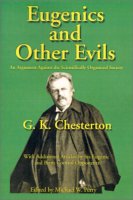
Eugenics and Other Evils: An Argument Against the Scientifically Organized State, by G. K. Chesterton. With Additional Articles by His Eugenic and Birth Control Opponents, including Francis Galton, C. W. Saleeby and Marie Stopes, as Well as Articles from Eugenics Review and Birth Control News. Edited by Michael W. Perry. (Inkling Books, Seattle, 2000)
In a day when our political views are more polarized than ever, and we tend to choose and judge what we read or watch by its political and social slant, there's a delightful keenness about a book that cannot be so classified. It is simultaneously far right and far left, which means nothing more than it is something else altogether.
Eugenics and Other Evils was first published shortly after World War I, though most of the material was written before the war. Lest you think it a quaint relic of a bygone era, tilting at windmills that no longer exist: if the name "eugenics" has been justly disposed of, the ideas and arrogance behind the movement are with us in many forms and guises.
Although I recommend Chesterton's book wholeheartedly, I've been debating whether or not to recommend this particular edition. The editor's comments can be annoying, and his habit of disrupting the flow of Chesterton's prose with pull-quotes even more so. Nonetheless, he does provide important context information, without which the topical references would be even more confusing. To quote from the introduction,
Why have I chosen to devote a quarter of this book to the writings of his opponents? Because I want Chesterton to get proper credit for his great achievement. He wrote in the heat of battle, when the debate over eugenics was at its fiercest.... [N]o scholar alive has done as much to expose that strange blend of silliness, scientific bigotry and politically correct arrogance which once went by the proud name of eugenics.... [A]s a writer he stood virtually alone against a juggernaut that threatened to sweep all before it. In 1924, a eugenist could speak proudly of a scholarly bibliography listing thousands of articles on eugenic-related topics. Today, eugenics has few open friends (though many secret admirers). But when Chesterton wrote its ranks were a [virtual] "who's who" of the respectable and powerful. Apart from him, almost no one of importance spoke out against it.
From the book itself I cannot quote. After affixing the 15th sticky note to mark a passage worth sharing—from a book of only 119 pages, pull-quotes and all—I stopped keeping track and despaired of choosing. Eugenics may be the substrate, but Chesterton brings forth wise commentary on industrial capitalism, socialism, anarchy, slavery, the loss of common sense in the legal system, how a downtrodden medieval serf might be considered more free than a homeless man in modern England, why a poor thief wants his victims to be rich but a rich thief wants his victims to be poor, the tyranny of social reform movements that begin by taking away a man's ale and do not stop with taking away his wife, how "science" became an oppressive state religion, and even the contrasting effects of alcohol on European Catholics and Scottish Protestants.
I was wrong; there is one quotation I can't resist sharing, the first paragraph of the first chapter:
The wisest thing in the world is to cry out before you are hurt. It is no good to cry out after you are hurt; especially after you are mortally hurt. People talk about the impatience of the populace; but sound historians know that most tyrannies have been possible because men moved too late. It is often essential to resist a tyranny before it exists. It is no answer to say, with a distant optimism, that the scheme is only in the air. A blow from a hatchet can only be parried while it is in the air.
Having waited at home for an expected delivery, it was late when I was finally free to take my accustomed walk. By the time I was on the homeward stretch, but little of the lingering twilight illumined the trail. What's more, I usually walk with my glasses off to rest my eyes, so when a small animal scooted across the trail in front of me I was not immediately certain of its identity. I thought "cat," but when it turned around and came back, it moved more like a rabbit. Except that rabbits don't move toward people; they scurry away. I was sure it would be gone by the time I fumbled my glasses out of my belt pack, but it was still hopping around; definitely a rabbit: small, and as cute as a rabbit can get—and in my mind, rabbits go rather far in that direction.
Then the game began.
After watching him run back and forth a bit, I continued on my walk. He followed. He more than followed: he'd come from behind me, then dart in front of my feet so close I'd stop for fear of stepping on him. When I resumed walking, he'd loop around back and do it all over again. We must have repeated this a dozen times when I tired of the game and decided it was time to do some running.
Silly me. Have you ever tried to outrun a rabbit? My ancestors may have been able to run down dinner, but I've eaten too many good dinners to run down anything I couldn't serve to a vegetarian. The rabbit positively exulted in this new version of the game, in which I looked even goofier slamming on the brakes from a run than I had when walking.
Finally, as we neared the place where the trail crosses a major road, I said to him, "You're going to have to give this up soon, because you don't want to get too close to that street." At that moment he vanished, and I saw him no more.
When my forebears saw animals behaving in an unnatural manner, they attributed the aberration to witchcraft. (When they weren't being accused of witchcraft themselves, that is.) Tonight I proved that I am not so far removed from them as I would like to believe, because I couldn't shake the question, "Do rabbits get rabies? What's wrong with this bunny?" But he never attacked me, never touched me; he only acted like an adolescent boy who attempts to trip up his friend as they walk along—and he looked for all the world as if he were laughing.Permalink | Comments
Category Everyday Life
The latest version of Thunderbird, 3.01, includes a number of significant changes from Version 2. I think I'm going to like it, at least once the fix a major bug, which I understand they are working on. The old Thunderbird allowed the assignment of nicknames to e-mail addresses, so, for example, I could set up simple two-letter codes for people I write frequently, and typing those codes into the "To" field auto-completed the correct address. The new Thunderbird still allows nicknames, but they work differently: the named address becomes merely one of many suggestions made by the auto-complete engine, and it's rarely the first. Hence I, and from the word on the Internet, many others, have been embarrassed by sending e-mails to the wrong people. What's more, the auto-complete engine insists on searching all addresses for possible matches. I have three address books in Thunderbird: my Personal Address Book, one I call Archives, into which I put addresses I might want once in a blue moon, and one Thunderbird adds, called "Collected Addresses," which it populates from e-mails sent and received. All of these are useful, but I'd like to be able to tell Thunderbird to ignore all but the Personal Address Book.
Like Firefox, Thunderbird now uses tabs. In Firefox (and Internet Explorer) it's annoying, because the button to open a new tab is right next to the button to close the tab, and I'm forever closing tabs by accident and often losing work in the process. But Thunderbird doesn't have the "add tab" button to foul me up, and it's handy to be able to have several search results and a few e-mails all open in tabs. Thunderbird remembers what tabs you had open when you exited the program, and restore them when you open it again.
Speaking of search results, I've run into a few glitches with the new, much-changed search, but mostly it's great. When I first upgraded, Thunderbird spent a fair amount of time indexing all my e-mails, but now it can search through my very large archive so quickly that it's almost as easy to search the body of every e-mail as just the subject or sender. The way search results are displayed is much more useful also, showing excerpts from each match, and the distribution of matches by year (further subdividable), people, folder, and tags, and probably more I haven't yet discovered.
You can now add and e-mail sender or recipient to your address book with one click. There's also an attachment reminder that responds to certain keywords in the body of your message. I haven't tried this yet, but as I frequently forget to add attachments, this could be a boon.
One new feature I doubt I'll ever use, but which will no doubt appeal to the same folks who buy "skins" for their electronic devices, is "Personas," which allows you to customize the look of your Thunderbird. The few Personas I experimented with did nothing but make the words hard to read. Plain vanilla works best for me.
What I like best of all is the Archive button. Thunderbird comes with a new Archive folder, and creates subfolders for each year. When you're done with an e-mail you don't want to delete, press "Archive" (or type "A") and, presto!, it's moved to the current year's folder. What I like best about this is that it fits exactly with my own archiving scheme (all I had to do was move my own year-named folders under the new Archive folder), and it now saves me a lot of mouse clicks.
I've been having a lot of fun with the new Thunderbird, but that auto-complete problem needs to be fixed yesterday.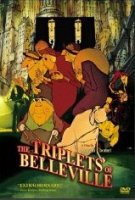
Les Triplettes de Belleville (2003, Sony Pictures, directed by Sylvain Chomet, PG-13)
Also known as The Triplets of Belleville, this is the quirky, sometimes funny, animated story of a bicycle racer, his grandmother, his dog, the French Mafia, and has-been singing trio. The award-winning film is meant for adults, but were it not for a couple of brief scenes (a music hall show, and some in-passing shots of prostitutes in the hallway), I think our six-year-old grandson would love it. (Hmmm, there is a funny part that might be tough for his frog-loving mother, however.)
We enjoyed it, too, though we found it a bit like a Presbyterian sermon: they could have said the same thing better in a third the time. Maybe that is just my American impatience.
I found it quite amusing that for such a very French film, the only language options available on the DVD Netflix sent were English and Spanish. Not that it matters: there's almost no dialog, and what there is, is inconsequential.
For some reason I haven't pinned down, the movie brought to mind the Asterix comics. Perhaps it was the French setting, perhaps something about the drawings, maybe something in the humor.
You can get a taste from the trailer: Les Triplettes de Belleville. (Link provided because some feedreaders don't pick up the embedded video.) The trailer is safe for granchild eyes, at least as far as Grandma can tell.
The good news is, there's a new orchestra in town: The Orlando Baroque Orchestra. Some area musicians observed Central Florida's lack of concerts featuring baroque music and stepped up to remedy the situation. We attended the third area performance of their first concert.
The venue was a small church, and we sat in the third pew. The experience of music in such an inimate setting is worlds different from that in a large concert hall, and to my mind significantly more enjoyable. It is not as much fun as making music yourself in a group, but comes closer. For this reason, I thoroughly enjoyed the concert, despite having numerous complaints, most of which had to do with disappointed expectations. But when your experience of baroque orchestras is Boston's Handel and Haydn Society; of lutists is Paul O'Dette; of harpsichordists is Kristian Bezuidenhout; and of oboists is, well, a whole host of marvellous performers; it's difficult not to set yourself up for a fall.
The Program
Handel - Arminio Overture
Bach - Suite No. 2 in b minor
Bach - Italian Concerto
Marcello - Oboe Concerto in c minor
Intermission
Bach - Air on G String
Reymann - Fantasia & Variatio triplae
Vivaldi - Violin Concerto Op. 3 No. 3
The ensemble included four violins, two violas, cello, bass, and harpsichord, and sometimes oboe, recorder, and/or lute.
It took half of the first offering for me to overcome the disappointment of my expectations for the instrumentation. From a baroque orchestra I was expecting baroque instruments. However, even though the orchestra's website states, "Wherever possible we use authentic period instruments...," apparently "possible" does not yet include most of the instruments in the ensemble. In particular, all the bowed strings were modern, with the result that it was difficult if not impossible to hear the lute and the recorder. The cello and bass managed to tone themselves down somewhat by playing very near or often on the fingerboard. The upper strings appeared to be trying to do that now and then, but often forgetting. Violins are the sopranos of the orchestra, and the music is so often "all about them": they soar, they stand out, and—especially in Orlando's difficult Bob Carr Auditorium—they often need to work to be heard. So I can't blame them for playing with all their hearts, and if they'd had period instruments it would have been fine.
The music itself was fun, particularly since I was familiar with much of it. I was greatly looking forward to hearing the Marcello oboe concerto performed on a baroque oboe! So my heart sank when the performer came out with a modern oboe in her hands. She did a creditable job, particularly on the third movement; it was my hope for the baroque oboe that caused the disappointment.
In sum, I wish the Orlando Baroque Orchestra all the best; they are a welcome addition to the Central Florida music scene. I expect that as they gain more experience they will iron out the sound balance problems. And I encourage them to expand their use of baroque instruments. I wouldn't, at this point, call it a baroque orchestra. But it is an orchestra that plays baroque music, to which I say, "Hear, hear!"
Now if we could only get more Renaissance and medieval music here!
Permalink | Comments
Category Reviews Everyday Life
Nanosurf—the company that put an atomic force microscope on Mars and good Swiss bread on Janet's table—has a cool promotional video.
Permalink | Comments
Category Just for Fun
Most of you can stop reading right now. The Pap smear is not a subject of general interest, but I spent five years working in a cytopathology automation research laboratory, part of an attempt to make the reading of Pap smears easier and more accurate. Thus the following headline was sure to catch my eye: Should HPV Test Replace the Pap Smear?
The primary purpose of the Pap smear is the early detection of cervical cancer, it is argued, but testing for human papillomavirus is easier and actually does a better job, although it generates more false positives, especially in younger women.
What I find most interesting is the unmentioned, but logical implication that those who are at no risk of contracting HPV, due to the simple expediencies of virginity or faithful monogamy, can dispense with both tests—surely a course of action the medical industry would not wish to endorse! Gastroenterologists have adopted a once-every-ten-year colonoscopy recommendation for low-risk patients, perhaps gynecologists should follow their example.[This] recommendation is based on a study that found that the human papillomavirus (HPV) test prevented more cases of cervical cancer than the conventional Pap smear. Results of the study were published online Jan. 19 in The Lancet Oncology.
The HPV test should become the screening tool of choice for women 35 and older, the researchers said. It could be done less frequently than the Pap test, which could be used only in women who have tested positive for HPV, they said.
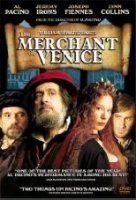 The Merchant of Venice (2004, Sony Pictures, directed by Michael Radford, R)
Not since Kenneth Branagh's Henry V and Much Ado about Nothing have I seen a movie that brings Shakespeare to life as does this version of The Merchant of Venice. I'm not familiar enough with the play to guess how much might have been left out, but as it stands, it is exceedingly well crafted and acted. Unique to this performance is the empathy I felt with all the characters; all are portrayed with a depth of humanity that made me care about what happened to them. The play is funny, tragic, poignant, and memorable.
The R rating is not as bad as might be: sexual suggestiveness that would go over the head of anyone I'd worry about, and some brief nudity that wouldn't. It's a pity movie makers don't think about children when they produce Shakespeare; the elements that keep me from recommending this to our grandchildren are not at all necessary for the film. Children can get value from the rest of a book, play, or movie while remaining oblivious to descriptions that adults can fully understand and appreciate without explicit portrayal.I have three further reflections on what I learned from It Happened in Italy, which didn't fit nicely into my review.
The first is some thoughts on why the story of Jews in Italy during World War II is so little known. These are my speculations only, and not from the book.
"Relative comfort" is perhaps one key idea. Holocaust survivors from Italy would most likely feel a bit uncomfortable in a gathering of Holocaust survivors from anywhere else. Can one talk about lost homes and possessions to one who has seen his children murdered? Of wasted days to slave laborers? Of hiding in a neighbor's cramped shed to those whose neighbors betrayed them? There is a fellowship of suffering: Amongst those who survived German concentration camps, I'd imagine those from Italian camps might feel they had not suffered "enough."
"The head of the camp in Ferramonti took the Jewish children away in his truck—but they went to get ice cream. My little sisters were taken away from me immediately, not to go get ice cream but to go to an oven."
On the other hand, the Italians who hid and helped their Jewish neighbors might be reluctant to talk about that era because of feeling they had not done enough. After all, the treatment of Jews in Italy would have earned mass condemnation had it not been dwarfed by Hitler's atrocities. Elizabeth Bettinga's work in bringing the Jews and their neighbors back together released the stories on both sides.
Secondly, I have gained an appreciation for the Italian way of life that I never had before. I've only been to Italy once, and then only to Como, so my experience is very limited—but that trip left a negative impression that has lasted more than 40 years. The contrast with Switzerland, our previous stay, was dramatic: spotlessly clean vs. littered and dirty, polite vs. rude (my point of view as a female), organized and efficient vs. disordered and unreliable.
I suspect the contrasts are still pretty much valid—though I'm willing to give Italy another chance under the right circumstances  . However, I've learned that "organized and efficient" is not necessarily a positive attribute when the world has gone insane. After a frustrating encounter with unhelpful police during a reunion visit to Rome, one Jewish survivor gently reminded his annoyed American companion, "That is why I survived. I am here because things like that are not important to the police." Official orders concerning Jews in Italy could be ignored, lost, or minimally obeyed because such attitudes were not unusual in Italy. In efficient Switzerland, such behavior would have been discovered and punished at once. What's more, I fear the law-abiding Swiss would not do as well as the more casual Italians when it comes to choosing obedience over compassion. I hope I'm wrong, because I still like my country-in-law best.
Finally, there are the questions: How do we best prepare for a time when our own country—whatever it may be—goes crazy? There's no point saying that it can't happen, because there's too much evidence, from tribal Africa to highly educated and modernized Germany, that it can. Is there a "tipping point" at which what I might call "ordinary" human sinfulness becomes otherwise unthinkable evil? If so, how do we keep ourselves from reaching that point? And what can we do to mitigate the effects of such evil? Can we have sophisticated systems of surveillance for catching increasingly sophisticated criminals without giving our governments the control Hitler could only dream of? Can we have trains that run on time and still have a bureaucracy loose enough to let innocent victims slip through? Is the current obsession with controlling speech and thought (rather than merely behavior) a sign of proximity to the tipping point? And how can we prepare ourselves to be the kind of people who will help their neighbors rather than betraying them?
Permalink | Comments
Category Random Musings
Carl Maria von Weber: Ruler of the Spirits, J.109, op. 26, E-flat major
Schubert: Symphony No. 9 D.944 in C major, The Great C major
Beethoven: Violin Concerto, op.61, D major
I deplore much of the current "superstar" movement, be it in music, academia, sports, business, or elsewhere: the astronomical pay scale and near-idolatrous attention given to the very few, to the detriment of the field as a whole. That did not, however, stop me from enjoying Itzhak Perlman's performance of the Beethoven. The OPO's own Aaron Goldman* can put on a show at least as exciting and excellent as James Galway's, but much as I respect most of our string players, the difference in Perlman's playing was striking. And there's no doubt he draws a crowd: the concert was sold out.
 Food, Inc. (2008, Magnolia Home Entertainment, directed by Robert Kenner, PG )
I first heard about Food, Inc. seven months ago, and at that time posted the trailer, a couple of links, and my determination to see the movie when it became available on Netflix. Just before Christmas the disk arrived in our mailbox, so we packed it in our luggage and were able to enjoy it with my brother and his family, which was only fitting, as they are the ones who alerted us to the movie in the first place.
Everyone who eats should see this film. Alas, it only touches the surface of the problems in our food industry and doesn't have time to say much about solutions—but it's quite enough to inspire further research. The film's website might be a good place to begin.
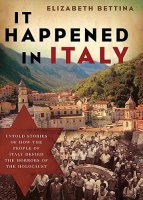 It Happened in Italy: Untold Stories of How the People of Italy Defied the Horrors of the Holocaust, by Elizabeth Bettina (Thomas Nelson, Nashville, 2009)
Imagine: You are suddenly torn away from your home and possessions and are removed with others of your kind to a place where you must check in daily with the police and obey a strict curfew. You can't leave, practice your profession, carry anything that might be used as a weapon, visit a bar, or attend any meeting or any form of entertainment. You are imprisoned there for years, and yet for the rest of your life you will be passionately grateful to your captors and will remember your incarceration as pleasant. You are a Jew during World War II, sent to a concentration camp—in Italy.
Elizabeth Bettina, a third-generation Italian Catholic from New York City couldn't get over the picture: Taken in the 1940's of a gathering on the steps of the church where her grandparents were married, in the tiny, Catholic town of Campagna, the snapshot clearly included a priest, a police officer, and a rabbi. A rabbi? Bettina's research into the unmentioned history of her grandmother's hometown reveals a surprising tale of ordinary goodness in a time of extraordinary evil.
The writing and style of It Happened in Italy are only mediocre, but the story itself is compelling and well worth reading. Italy was Hitler's ally in World War II, and Mussolini enacted laws against Jews that would have been terrible in a better time and place. Yet Bettina uncovers a bright candle in the darkness of the Holocaust, told mostly through stories of people who survived only because they lived in Italy, protected by exceptional heroes like Giovanni Patalucci ("The Italian Schindler," a police official who saved thousands of Jewish lives before being discovered and sent to Dachau, where he died); by ordinary townsfolk who endangered themselves and their families with their stubborn resistance to the idea that Jews were anything other than "people like us"; and yes, even by the maddeningly inefficient Italian approach to life and government, which enabled official orders concerning the Jews to be tossed in a drawer and "lost."
Bettina also deserves credit for her tireless efforts to find these survivors, document their stories, and in many cases facilitate highly emotional and deeply meaningful reunions. The story of her quest is interesting in itself, although it dominates the book more than I would like, often overshadowing the greater story.
You can preview It Happened in Italy, or purchase it from Thomas Nelson. (I get no kickbacks; I'm including the link because they provided my review copy of the book. You can, of course, buy it from other stores.)
Blame me, my parents, or my schools as you see fit, but after half a century as an American citizen, 13 years of public education, and a college degree, I couldn't name all of the presidents of the United States, much less in order. The mystery is why no one ever tried to teach me, given how easily I learned them when I put my mind to it, and how handy it has been (and would have been in history class!) to have even a rough idea of who fits in where.
Actually, I did not even have to put my mind to the problem, only my ears. I bought a copy of Sue Dickson's "Song of the U.S. Presidents," and after a few hearings it stuck. It's not a great song, but as with many not-so-great songs, that seems to make it stick all the better. (The link takes you to an updated version that I haven't tried yet (mine ends with Clinton), but the sample suggests it is basically the same.) Of all the U.S. President songs, that one is my favorite, because it is short, simple, and easy to rattle off mentally when needed—such as when I'm playing the "put the pictures of the presidents in chronological order" game with my nephews. However, it teaches only the order (no numbers) and gives last names but not first, so you have to know which Adams is which, and which Harrison, and that both Clevelands are the same person.
There are other songs designed to teach the presidents, most of which I find more obnoxious than helpful, but I recently discovered one I like a lot for the other information it presents. Along with each president's name (sometimes full, sometimes unfortunately only the surname), you hear his number and a clue to something special about him or that happened during his presidency. For this reason, it's not as good for quick recall as Dickson's song, but I expect it to be a valuable tool for sorting and organizing our country's history.
The song was written by Genevieve Madeline Ryan in response to a challenge by her father to memorize the presidents for Father's Day. You can see a Flash presentation with pictures at the White House Historical Association website ("The American Presidents," about 2/3 of the way down on the right-hand side of the page). You can also obtain a version for yourself. I found their system for downloading somewhat confusing (the "Download" button actually takes me to a podcast feed), but you can download the video, audio, and lyrics by right clicking on the links I've provided and saving the files to your computer.
The Occasional CEO is one of my favorite non-family blogs, not only because Eric Schultz is a good writer, but also because he is a good compiler: He's great at weaving into a coherent essay the common threads from varied sources I'd never find on my own. His most recent post, with the unassuming title of Odds and Ends, led me to Paul Campos's excellent Wall Street Journal article, "Undressing the Terror Threat."
Both essays are well worth reading in their entirety. The first quote box below is from Mr. Schultz; the rest are Mr. Campos's words.
[W]e are buried by data, and are constantly searching for ways to separate signal from noise....Someone wants to take flying lessons: that’s noise. Someone wants to take flying lessons but doesn’t want to know how to land the plane: that’s signal. Similarly, someone gets on an international flight, pays cash, and checks no bags—that might be signal. Someone sews explosive into his underwear: Signal. Panic.
The question is, how much do we pay to find out? What’s the real risk of dying at the hands of a terrorist in America? And if 1,900 Americans [under age 65] die today from a variety of preventable causes, how much are we willing to invest to save those lives?
I'm not much of a basketball player. Middle-age, with a shaky set shot and a bad knee, I can't hold my own in a YMCA pickup game, let alone against more organized competition. But I could definitely beat LeBron James in a game of one-on-one. The game just needs to feature two special rules: It lasts until I score, and when I score, I win.
We might have to play for a few days, and Mr. James's point total could well be creeping toward five figures before the contest ended, but eventually the gritty gutty competitor with a lunch-bucket work ethic (me) would subject the world's greatest basketball player to a humiliating defeat.
The world's greatest nation seems bent on subjecting itself to a similarly humiliating defeat, by playing a game that could be called Terrorball. The first two rules of Terrorball are:
(1) The game lasts as long as there are terrorists who want to harm Americans; and
(2) If terrorists should manage to kill or injure or seriously frighten any of us, they win.
These rules help explain the otherwise inexplicable wave of hysteria that has swept over our government in the wake of the failed attempt by a rather pathetic aspiring terrorist to blow up a plane on Christmas Day.
As to the question of what the government should do rather than keep playing Terrorball, the answer is simple: stop treating Americans like idiots and cowards. It might be unrealistic to expect the average citizen to have a nuanced grasp of statistically based risk analysis, but there is nothing nuanced about two basic facts:
(1) America is a country of 310 million people, in which thousands of horrible things happen every single day; and
(2) The chances that one of those horrible things will be that you're subjected to a terrorist attack can, for all practical purposes, be calculated as zero.
No amount of statistical evidence, however, will make any difference to those who give themselves over to almost completely irrational fears. Such people, and there are apparently a lot of them in America right now, are in fact real victims of terrorism. They also make possible the current ascendancy of the politics of cowardice—the cynical exploitation of fear for political gain.
Unfortunately, the politics of cowardice can also make it rational to spend otherwise irrational amounts of resources on further minimizing already minimal risks. Given the current climate of fear, any terrorist incident involving Islamic radicals generates huge social costs, so it may make more economic sense, in the short term, to spend X dollars to avoid 10 deaths caused by terrorism than it does to spend X dollars to avoid 1,000 ordinary homicides. Any long-term acceptance of such trade-offs hands terrorists the only real victory they can ever achieve.
It's a remarkable fact that a nation founded, fought for, built by, and transformed through the extraordinary courage of figures such as George Washington, Susan B. Anthony and Martin Luther King Jr. now often seems reduced to a pitiful whimpering giant by a handful of mostly incompetent criminals, whose main weapons consist of scary-sounding Web sites and shoe- and underwear-concealed bombs that fail to detonate.
Terrorball, in short, is made possible by a loss of the sense that cowardice is among the most disgusting and shameful of vices. I shudder to think what Washington, who as commander in chief of the Continental Army intentionally exposed himself to enemy fire to rally his poorly armed and badly outnumbered troops, would think of the spectacle of millions of Americans not merely tolerating but actually demanding that their government subject them to various indignities, in the false hope that the rituals of what has been called "security theater" will reduce the already infinitesimal risks we face from terrorism.
What then is to be done? A little intelligence and a few drops of courage remind us that life is full of risk, and that of all the risks we confront in America every day, terrorism is a very minor one. Taking prudent steps to reasonably minimize the tiny threat we face from a few fanatic criminals need not grant them the attention they crave. Continuing to play Terrorball, on the other hand, guarantees that the terrorists will always win, since it places the bar for what counts as success for them practically on the ground.
Permalink | Comments
Category Politics Random Musings

