
Some things one can never tire of, like the light of understanding in a child's eyes, the leap of the space shuttle into the sky, and the magesty of animals in their natural surroundings.
As a rule, on most days I take time out for a four-mile walk/run, followed by a swim when the weather permits. My legs are short, so this usually excises an hour and a half from my day. Being a procrastinator by trade, too much of the time I find myself attempting to squeeze it in before sunset.
It doesn't help that here in Florida we do not have the long twilight that northerners enjoy, so I need to watch the clock rather than the window. I can leave home in broad daylight, and by the time I return it is dark. The halfway point is in a small, nearby park with a jogging trail through the woods, and before I finished my circuit the other day, dusk was well-settled. I prefer not to run under those conditions, since it's harder to see the potentially treacherous dips and hills in the path—but there are advantages.
Like the sudden, silent flight overhead of a huge barred owl, who obligingly paused on a tree branch long enough for me to admire it briefly.
I continued my run with a lighter step.Permalink | Comments | Edit
Category Everyday Life
Recently I enjoyed the position of Grandma-in-charge for Jonathan and Noah while the rest of the family spent the day in Pittsburgh. It was loads of fun, but by the end of the day I could identify with Zoe in the Baby Blues comic below.
Jonathan discovered language early, and has been exceedingly verbal ever since. He also shares with his Aunt Janet a vivid imagination and an endless capacity for story-telling. Unlike his aunt, however, his stories have a decidedly Y-chromosome twist.

Permalink | Comments | Edit
Category Everyday Life
When we first moved to Central Florida in the mid-1980s, the region was setting record lows. Freezes, and the subsequent descent of developer-vultures, killed off most of the local citrus industry. No one who was not here during those times can believe we had fired up the furnace by the end of September—we, who were fresh from the north country and happy to keep our home cooler than was comfortable for our neighbors.
I won't be tempted to cite our current heat wave as evidence of global warming, because I understand Central Florida experienced a similarly miserable October back in 1961, but our experiences here certainly attest to the variability of climate. It's hot. And humid. And miserable.Theoretically we should be no more miserable than in mid-summer, or even less. Our 90-degree highs this week are, after all, an improvement over 95 or 98. But it doesn't feel like it. Somehow the body rebels, knowing that it's October and high time we were given a respite from the unrelenting heat. In my case, having recently returned from a visit to Pittsburgh, where the temperatures were decidedly not in the 90s, it could also be that my internal thermostat has been reset. Whatever it is, I'm looking forward to the time when I can go on my daily walk without needing a bath and a full change of clothes on my return.
On the other hand, who am I to complain? The pool feels really great after that walk, and October swimming is definitely not the norm in our pool, which due to its lovely overshadowing trees, portends the onset of autumn earliest of our sensors. Although this week has warmed it a few degrees, it was 69 when I returned from Pittsburgh—a fall of nearly 10 degrees during my absence.Permalink | Comments | Edit
Category Everyday Life
My recent visit with our grandchildren reminded me of why I don't like video/computer games. I don't mean I don't like to play them; I know all too well how addicted I can get if I allow myself to get started.
It began, of course, with television. When the technological wonder entered my home when I was seven, I was already familiar with its delights, thanks to the generosity of our neighbors. We matured together, television and I, and with such a sibling it's no wonder we bonded strongly as the years passed. It was not a healthy bond, and I'm thankful that I went to college before televisions were ubiquitous in the dormitories, because those four years of abstention were the beginning of my liberation. It would be many years and much struggle before I could declare myself free, but never again would the glowing opium box control my life.Well, not that glowing opium box, anyway.
It was Marie Winn's The Plug-In Drug—confirmed by my own experience—that showed me the greatest problem with television, as a medium, and it's not the content. Certainly, content is important: it's better to eat nutritious food than junk food, and better to eat either than poison. But as many of us can attest, even good food, in quantity, becomes poison to our bodies. Television, at its best, is an unparalleled tool for learning and cultural enrichment. But it has a terrible tendency to become addictive, fostering increasing demand and decreasing quality. There is a version of Gresham's Law for television viewing, apparently.
Eschewing broadcast and cable television for carefully selected DVDs, while certainly a good thing, often misses the main point. The question ought always be asked, "Is this a better use of my (or my children's) time than the alternatives, e.g. reading, making Lego creations, or playing outside?" One of television's very unfortunate effects is to make itself more attractive than other, more valuable activities, just as lesser shows are almost inevitably more attractive than the better ones. Why this is true is a mystery. Some have posited physical changes made to the brain by the medium itself, which would also explain the similar addictive properties of video/computer games and computers in general.
As a mother and homeschooler I learned that children have a marvellous capacity to entertain and educate themselves, and can be trusted to make good use of every waking moment—and to accept sleep when that is the best use of their time. The more I observe, however, the more I realize that what has been true for millennia is no longer. Children who have been crippled by television and other video screen experiences have lost this capacity. Even in our grandson I saw the terrible tendrils of whatever it is that sucks the life from us: although his family owns no television, and only occasionally watches DVDs; although the computer games he sometimes plays with his dad are of the older, less flashy variety; although he has a wonderful, vivid imagination and can entertain himself (and his siblings) for hours; nonetheless, when I was in charge for a day, pretty much the only thing he wanted to do was play video games—at least until Grandma hardened her heart and proved she wasn't quite the soft touch he had hoped.
Who has not known college buddies who will spend every free moment (and many that are not, technically, free) with online, multi-player games? Whose Second Life is more important than their first? Teenagers retreating to their iPods/iPhones and choosing games over real-life interaction? Young children in cars with the wonders of the countryside flowing past them but their eyes unmoving from their flickering portable DVD players? Middle-aged wanna-be writers and amateur genealogists who spend so much time at the computer that OSHA would crack down if it were a workplace scenario?
Computers, video games, and television are wonderful, useful additions to our collection of tools for living and learning. Even for loving; if e-mail, Skype, and blogging will never replace physical interaction, anyone who has family in faraway places knows how valuable they are for nurturing human relations. The price exacted may be terribly high, however, if we cannot be the masters of our tools rather than their slaves.
Abstention, if difficult, is always easier than control, as any Alcoholics Anonymous member knows, but when the thing is good, control is the better path. Sometimes, as with eating, it's a necessary path. These days, computer use is nearly in the category of necessity, and therein lies my problem. Nearly everything I do involves sitting down at the computer. Writing, reading, researching, communicating, paying bills, organizing photos, staying informed, shopping, creating educational materials, keeping track of finances, organizing addresses and other information—all these and much more are now done, and often done better, with the use of a computer. No doubt this tool saves us time, but as with most so-called time-saving devices, it may give us minutes with one hand only to take away hours with the other.
As I once asked when contemplating allowing our children to watch Mr. Rogers' Neighborhood on a daily basis, "What is not being done during the time dedicated to this activity?" There is an opportunity cost in time as well as in money, a far more serious cost, because if time can be saved, it cannot be banked, and moments wasted are lost forever. The time we spend in front of the television, playing video games, and working on the computer was, not that long ago, available for other projects. What have we gained? What have we lost?Permalink | Comments | Edit
Category Computing Children & Family Issues Everyday Life
School at the Daley household could hardly have been called normal, since Grandma was there as a distraction and Mommy was sick for the first part of my visit. Nonetheless, I enjoyed my glimpse into the official, sit-at-the-table side of their 24/7 educational process.
Jonathan is not at the moment as excited about math as he is about reading—unlike his Aunt Janet at that age, for whom reading was all right but math was a bowl full of candy. He's doing well, though, with basic addition and subtraction (and even some simple multiplication and division), and enjoys the "math paths" that Grandma sends him in the mail, problems like this one:
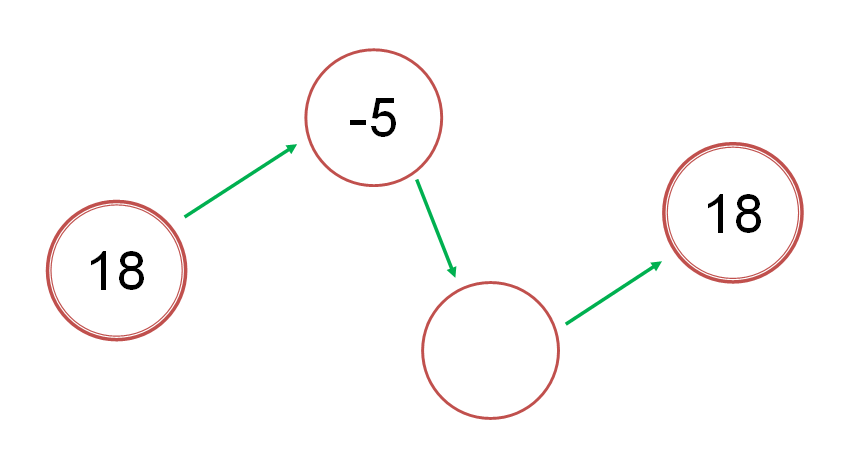
Permalink | Comments | Edit
Category Education Children & Family Issues Everyday Life
Thirty years ago today was one of the most difficult and delightful days of my life. To our wonderful firstborn, I wish a
HAPPY 30th BIRTHDAY!
(You were worth the effort.)
Permalink | Comments | Edit
Category Everyday Life
Our own homeschooling experiences were far shorter than I would have liked, so it has been fun watching other family members in their adventures. (It has also been nothing short of astonishing to see what resources are now available, rather like the difference between a gas station convenience store and a Super-Wegmans grocery store.)
It is especially fun to watch the grandkids' schooling, since our own children were in public school at this stage. On the one hand, school time is very short, even for kindergarten, when measured by organized, sit-at-the-table time, and Heather's still working on the best way to balance everyone's needs. On the other hand, education, if not school, is clearly going on 24/7, and one cannot argue with the results.
Jonathan can read. It is still laborious enough that he tires easily, but he has reached the stage where what he needs most is simply to read, which he is happy to do, whether to himself or to others. And not only books, but signs, maps, computer screens, anything and everything.
I think more reading goes on here than anything else. Noah asks to be read to at any spare moment (or not so spare), usually the same books over and over and over again, until he knows the story well enough to "read" it himself. It's a hoot to hear him tell The Three Billy Goats Gruff: You wouldn't understand much if you didn't already know the story, but he has all the nuances and tones of voice down pat, from "It only I, the little billy goat," to "I coming to GOBBLE YOU UP!"
This post clearly isn't going to cover all I had planned, so I'll cut it short and post it anyway. Being part of the adventure doesn't leave much time to write about it.Permalink | Comments | Edit
Category Education Everyday Life
If there's an advantage to Mommy being sick, it's that Grandma got to supervise, i.e. watch, Noah doing his chores. His is not a difficult regimen, but still pretty impressive for a three-year old, particularly the enthusiasm with which he demonstrated his skills.
- Clear his own breakfast dishes off the table and put them in the dishwasher.
- Brush his teeth.
- Make his bed.
- Sweep under the table, which is only fitting, since most of the crumbs seem to be his.
- "Help Mommy," which on this particular day meant cleaning the tub in the bathroom.
If you were to suspect that a tub cleaned by a three-year-old does not get quite as clean as it might, you would be right, particularly since his cleaning agents are baking soda and water. But the result is good enough, and the investment in future "help Mommy" assistance priceless.
I did not watch Jonathan doing his chores, so I can't chronicle them, but he did proudly show me his sparkling clean bathroom sink.
The boys also do laundry, taking the clothes downstairs, putting them in the washer, adding the detergent, and making sure all the settings are correct. (Some strategically placed stickers help with the last.) Later, they do similar honors for the dryer stage. A rug covering the basement floor in the laundry area mitigates any problems when articles of clothing get dropped in the transfer process.
If they are not so good at remembering to subsequently retrieve the dry clothes and bring them upstairs...well, neither is Grandma.Permalink | Comments | Edit
Category Children & Family Issues Everyday Life
Many years ago, Porter attended a course taught by Bill Oncken, which added at least two phrases to his vocabulary: "Don't be a monkey-picker-upper," and "Feed it, or shoot it, but don't let it starve to death." The first advises against meddling in tasks (monkeys) that don't belong to you, especially after you've delegated them. The second requires you to work on tasks, or scrub them, but never let them languish.
I have a backblog of over 100 items about which I want to write—and that's only the ones in my bookmark list, which are less important than those on my mental list. Flush from success with whacking my e-mail inbox from over 200 down to less than 30, I feel Bill Oncken's ghost hovering over my shoulder and challenging me to take on the backblog.
If these were real monkeys, the ASPCA would have had me arrested months ago. Some of them have already died of starvation; all I must do is dispose of the bodies. Some intrigued me at one time, but I now don't find them worth the time and effort; these I will happily execute with a click of the delete key. Some remain healthy enough to go into a "priority pen" until they can be tended to properly...after I extend Oncken's options a step further: I intend to take most of these monkeys and turn them loose to forage on their own.
Thus I am reviving my "Casting the Net" series, and you will see, in the coming days, posts with several short comments and associated links. I hope to put in enough detail to enable readers to decide quickly whether it's a subject worth pursuing or ignoring, but you won't get the detailed commentary and quotations I normally like to include.
It's either that, or declare blog bankruptcy.Permalink | Comments | Edit
Category Computing Everyday Life
Google Fast Flip seemed like just another gimmick, but having given it a test drive I'm already hooked. Pick a newspaper, say the New York Times. Or a topic, such as Health. You're presented with an eye-catching snapshot of the beginning of the first article. You can see the headline, the first several paragraphs of text, and probably a graphic, pull-quote, or summary. Oh, and also some ads—but (shhh, don't tell Google) the ads are blessedly easy to ignore.
If you like what you see in the article, you can click on it to read the rest. Or you can hit your computer's arrow key and move quickly on to the next article. Did I say quickly? That's why I'm so excited about this. No point-and-click, no waiting for a page to load, just one keystroke and you're there. In a flash. It takes me about a second per article to determine whether or not I want to know more—usually not, it doesn't take much time to scan a lot.
This is far more satisfying than scanning news headlines in a feed reader. The headline itself does not usually give enough detail, and I find myself wasting too much time clicking on links that might have been interesting but are not. With Fast Flip I can take most stories with a single glance, while for many others I find that reading the first several paragraphs tells me what I want to know without having to bother to click through to the whole article. When I want more detail, it's there—but doesn't intrude unless I seek it out.
What will Google think of next? I hope this catches on in a big way; as yet there is not a great choice of sources. Chances are, whatever you got for a high school graduation gift, it wasn't what Steven Perezluha received: the opportunity to ride his bicycle to Alaska and back. It was Steven's idea, but if you want that kind of adventure, it certainly helps to have Danny Chew, former Race Across America (RAAM) champion, as your uncle. Steven's part of the trip began June 8, when he departed Florida for Pittsburgh, where Danny lives.
There the real adventure began. They biked north, then across Canada's vast spaces until they entered Alaska. There they met up with Steven's parents and toured the state together for a while before heading homeward on a more southerly course. The journey's not over yet.
You can read the Orlando Sentinel story about Steven and his trip, at least as long as the link still works.
And I thought our grandkids had a "long leash." Must be the Pittsburgh air....
Update One hundred forty days and 13,769 miles after Steven pedaled out of his driveway, he and Danny returned. As the follow-up Orlando Sentinel article reports, if the trip to Alaska was exhilarating, the return was excruciating, plagued by accidents, illness, and blizzards. But thanks to friends; some kindly churches that opened not only their doors but also their pantries to the exhausted travellers; Steven's dad, who relieved them of their heavy trailers for the last leg of the journey; and most of all to their own grit and near-incomprehensible determination, they never gave up.
"It was one of the best feelings in my life. Ever," Perezluha said.
Here are some pictures, and a map of their journey.
Update 22 January 2010 Articles from the Pittsburgh Tribune-Review:
Family, Friends not Surprised by Pair's Ride
Million Mile Man Chew Completes an Epic Trip
Permalink | Comments | Edit
Category Everyday Life
My Google Calendar, into which I've imported the US Holidays collection, has been reminding me for a couple of weeks that tomorrow is Patriot Day. Something seemed wrong about that, but I put it down to the careless omission of the "s"—and perhaps an apostrophe. Whether you choose to spell it Patriots' Day, Patriot's Day, or Patriots Day, there's supposed to be an "s" there. In these hurried days, it seems, no one has time for effective proofreading (moi aussi).
But wait! There's more wrong than that—Patriots' Day is, of course, in April, commemorating Lexington and Concord and all that flurry that started the American Revolution. Boston Marathon 2009 (traditionally held on Patriots' Day) has already been run. So what's with Google Calendar and tomorrow? Tomorrow? Ah, September 11.Where have I been for the last six years? According to Wikipedia*
On September 4, 2002, President Bush....proclaimed September 11, 2002, as Patriot Day. On this day, the President directs that the American flag be flown at half-staff at individual American homes, at the White House, and on all U.S. government buildings and establishments, home and abroad. The President also asks Americans to observe a moment of silence beginning at 8:46 A.M. (Eastern Daylight Time), the time of the first plane crash on September 11, 2001.
That's Patriot Day. No "s." I had no idea. If the mail is delivered and we don't get presents, it must not be a holiday, right?
I do remember where I was on that day in 2001, and not just because I was alone with the strangers who were dismantling our home for the move to Boston. I was already so numb I hardly had room to register more distress. But I remember, and honor those who died, especially those who put themselves in harm's way to save others.
Stay safe out there tomorrow, especially those of you who (1) are in New York City, (2) are travelling, or (3) both.

Permalink | Comments | Edit
Category Everyday Life

If you were given an unexpected two weeks in New York City (actually 8.5 weekdays), how would you spend them? Not the way I did, it's a safe bet. While I did manage one or two obligatory tourist trips (more on that later), most of my time was spent at the New York Public Library—you know, the place with the magnificent lions out front, where everyone goes who wants to film something in a library because it's so beautiful. Though in truth I never saw the main part of the building. I made my home in Room 121, the Irma and Paul Milstein Division of United States History, Local History and Genealogy. One of the best resources in the world, a perfect complement to my beloved New England Historic Genealogical Society Library in Boston.
As with February's research trip to Boston, this was an intense time. I estimate I spent 40 hours of those eight and a half days in the library itself; it turned out to be more blessing than bother that it didn't open till 11 a.m., as I needed the morning time to prepare. The library is less than half a mile, a mere eight minute walk, from the Times Square Hilton hotel where we stayed, and what a pleasure it was to sling on my backpack, descend via the Hilton's two elevators to 42nd Street, walk past Bryant Park, and enter the cool, dark research room with its intoxicating smell of old books; then to re-emerge—after gentle prodding by the librarians, who reminded me that the building was about to close—and reverse the trip with a head swimming with new data, and my sweet, hard-working husband and a late dinner to look forward to.
Researching, writing, sitting for hours at a desk poring over books—that which was anathema during my school years gives me such great pleasure now. Who'd have thought?Permalink | Comments | Edit
Category Genealogy Everyday Life
(You know who you are.)
Permalink | Comments | Edit
Category Everyday Life
I made cheese today, my first effort since succumbing to the lure of Ricki Carroll and her New England Cheesemaking Supply Company. It was not, perhaps, an auspicious beginning, since the never-fail, easy-enough-for-a-seven-year-old mozzarella recipe...failed. Maybe I need a grandchild or two to help.
On the other hand, what I did manage to produce is a great, lower-fat substitute for cream cheese, and if I knew what it was I did wrong, I could replicate it. My biggest mistake was clearly to ignore Ricki's instructions to keep a cheese journal, logging everything from ingredients to procedures to the ambient temperature and humidity. Cheesemaking is an art, and at some point you're bound to create something you'd like to be able to make again; keeping a log doesn't guarantee that you'll be able to, but it greatly increases the odds.
For now, I'l enjoy my "cream cheese," and try again with the mozzarella another day.Permalink | Comments | Edit
Category Everyday Life Food


