
There are many reasons people won't talk about the cracks in the bridge, one of which is that our lives are too frantic. A deadly waterfall may be waiting for us downstream, but it takes all our energy and effort just to keep our boats upright in the rapids right now. Another is a shutdown from overstimulation. All news stories, from the tragic to the trivial, are presented by hyperventilating news anchors desperate to keep us from changing channels. Everything is of critical importance; every event is a crisis. And when everything is special, nothing is.
I used to be more negative about how much worse the world is than it was, until I realized I was cutting the feet out from under our children. This is their world, and they aren't negative about it; they think it's full of opportunity and promise. Realizing how bad things have become is a privilege and a sign of age.
Actually, I see lots of reason to hope, if, and it is a big if, we can hang on to our freedoms. We must allow nonconformity, permit people to take risks, and encourage innovative thinking. I am greatly encouraged by people I've seen who have said, "STOP!" to the world as it is, families who sacrifice much to gain more. Two parent, single income families. People who ride bikes and take public transportation by choice. Homeschoolers. Large families with small, homestead farms. Women who have rediscovered the joys of non-institutionalized childbirth. Men who turn down promotions to preserve family time. Families who dare turn off the television and eat dinner together. I speak only from my own experience—you can think of many more examples.
Of course you may say that Peggy Noonan is speaking of a larger arena, of presidents and world events, of large-scale cultural problems. And there's every possibility that her concerns may be the tsunami that sweeps away the families and the farms. But I believe that if we are to survive this crazy trolley ride, it won't be governments, schools, or megachurches that hold back disaster, but individuals and families taking a stand.
I would restate Neil Postman's excellent advice from The Disappearance of Childhood, given in response to the question, "Is the individual powerless to resist what is happening?"
The answer to this, in my opinion, is "No." But, as with all resistance, there is a price to pay. Specifically, resistance entails conceiving of parenting as an act of rebellion against American culture. For example, for parents merely to remain married is itself an act of disobedience and an insult to the spirit of a throwaway culture in which continuity has little value. It is also at least ninety percent un-American to remain in close proximity to one's extended family so that children can experience, daily, the meaning of kinship and the value of deference and responsibility to elders. Similarly, to insist that one's children learn the discipline of delayed gratification, or modestly in their sexuality, or self-restraint in manners, language, and style is to place oneself in opposition to almost every social trend. Even further, to ensure that one's children work hard at becoming literate is extraordinarily time-consuming and even expensive. But most rebellious of all is the attempt to control the media's access to one's children. There are, in fact, two ways to do this. The first is to limit the amount of exposure children have to media. The second is to monitor carefully what they are exposed to, and to provide them with a continuously running critique of the themes and values of the media's content. Both are very difficult to do and require a level of attention that most parents are not prepared to give to child-rearing.
None the less, there are parents who are committed to doing all of these things, who are in effect defying the directives of their culture. Such parents are not only helping their children to have a childhood but are, at the same time, creating a sort of intellectual elite. Certainly in the short run the children who grow up in such homes will, as adults, be much favored by business, the professions, and the media themselves. What can we say of the long run? Only this: Those parents who resist the spirit of the age will contribute to what might be called the Monastery Effect, for they will help to keep alive a humane tradition.I don’t have time to do justice to this wonderful book, only to say that every mother, grandmother, mother-to-be, and potential mother should read it—and that goes for fathers, too. When Eliot expresses her opinions on the data she presents, I don’t always agree, but as a collection of clear, readable reports on the latest research on brain development, this book is invaluable. I’d love to post large quantities of this amazing information, but will content myself with a few more or less random samples.
Elevated temperature is dangerous for developing babies; pregnant women should avoid electric blankets, heating pads, saunas, and hot tubs, should reduce high fevers, and—I wouldn’t have thought of this—should limit exercise to levels that don’t cause their bodies to overheat.
The birth process itself is amazingly good for babies. Some of the advantages require actual passage through the birth canal, but some come earlier in labor and thus it is recommended that even for planned Caesarian sections the mother be encouraged to undergo at least the early stages of labor. When compared with babies delivered by c-section, vaginally delivered babies take their first breaths sooner, experience a more rapid rise in blood oxygen levels after birth, are less likely to have respiratory problems, are better able to maintain their body temperatures, have larger reserves of glucose, and have better reflexes, muscle tone, and sensory responses.
Touch is enormously important to babies. Infant massage, long practiced in India, has been shown in several studies to promote physical, mental, and emotional health as well as brain development.
The dads are right. Dads fling their babies around in the most frightening manner while the babies crow with glee and the moms cringe. Of course proper precautions must be taken to protect the baby’s neck and brain—no one is advocating “shaken baby syndrome"!—but stimulation of the child’s vestibular system confers enormous developmental benefits. In one study, babies ranging in age from three to thirteen months sat in a researcher’s lap and were spun ten times in a swivel chair, each spin followed by an abrupt stop. The babies experienced spinning on both directions and in three different positions, to stimulate each of the ear’s three semicircular canals. After four sessions a week for four weeks, the results were clear. Compared with control groups (one with no treatment, another where the child sat in the researcher’s lap but did not spin), these babies showed clear advancement in both their reflexes and their motor skills (sitting, standing, crawling, walking). One set of three month old twins was split up in the study, and by the time they were four months old the one twin had control of his head and could sit independently, while the control twin was just beginning to hold his head up.
Babies are aware of odors in utero, are calmed by the smell of amniotic fluid, and prefer to nurse on a breast moistened with amniotic fluid.
Back in the days when women assisted in (or even soloed) their own deliveries, their hands were probably covered with amniotic fluid, which was then transferred to the breast as they attempted their first feedings.
Babies as young as six days can distinguish the smell of their own mother’s breast from that of another lactating woman, and even formula fed infants prefer the smell of an unfamiliar nursing mother to that of a non-nursing woman. Infants are also comforted by the scent of their own bodily secretions, which is why a well-chewed blanket or stuffed animal makes such a good “transitional object,” and why having them washed is so upsetting to the child.
It is interesting that children in non-Western cultures do not show as much attachment to these kinds of comfort objects as Western children, perhaps because the former continue to have a great deal of touch and olfactory contact with their parents. (They often keep nursing and sleeping with their parents well past infancy.)
Hearing, too, is acute in the womb. Newborns have been shown to recognize, and enjoy, sounds they heard before birth, from Dr. Seuss stories to concertos, and can distinguish not only familiar voices but also familiar languages.
The evidence for the superiority of breastfeeding is simply too overwhelming to summarize. For the baby’s physical, mental, emotional, intellectual, social, immunological, and every other kind of health, there is no arguing that breast milk—and the nursing process itself—is by far the best. One thing I hadn’t realized was the preponderance of evidence that breastfeeding makes babies smarter. Even after all efforts to correct for other variables, such as home environment and parental attitudes, there is compelling evidence that breastfed children are developmentally and cognitively superior. So that’s my problem….
Reading What’s Going On in There? will make you stand in awe of the tiny baby whose chief accomplishments you once thought were eating, screaming, and excreting.
Our local library has a subscription to Ancestry.com, the genealogical research site. Unfortunately the response time is slow, and one day a couple of months ago I was working near enough the “New Releases” shelf to do some browsing during the otherwise interminable wait between entering my request and the return of the results.
The bright cover of Brett Kingstone’s book caught my eye. I was not impressed by the title, which sounded Limbaugh-esque and evoked images of conspiracy theorists. I brought the book home, thinking Porter might enjoy it, but did not expect to read it myself. It didn’t sound like my kind of book.
Porter picked up The Real War Against America in the evening and hardly came up for air until he finished it several hours later. It was obviously compelling, but why would I want to read a book that caused my husband to come to bed, spluttering with anger, at three in the morning?
But read it I did, and if I knew better than to read till nearly dawn, I did find it hard to put down. The tale of Super Vision’s struggle against international piracy takes place (mostly) in Orlando, and it was delightful to recognize familiar places, events, and people. Of the story itself I had heard nothing previously, perhaps because much of the action took place while we were in Boston. Nor were we prepared to find the name of a friend pop up in the middle of the book, a friend who though mentioned only briefly was close enough to the events to assure us that this is no right-wing propaganda piece but a true story, no matter how much it reads like a made-for-TV action movie.
Brett Kingstone’s entrepreneurial adventures started in a dorm room and eventually grew into the Super Vision company. If you’ve never heard of Super Vision, you’ve certainly seen their fiber optic lighting products, from Disney World and Times Square to the Moscow airport, from children’s toys to gigantic signs, from swimming pools to Christmas trees. You have seen Super Vision’s products, I say—and you have probably also seen the Chinese counterfeit products that nearly destroyed the company, the visible result of an unbelievably brazen scheme involving common thugs, company traitors, crooked bankers and lawyers, a bureaucratic legal system that favors the criminal over the victim, and an evil Chinese businessman who might have leapt full grown from Ian Fleming’s head.
I had never given much thought to intellectual property theft, beyond making a reasonable effort to respect copyrights. Nor have I had much experience with the American legal system. But just as Hurricane Katrina convinced me that the quality of local government really matters, and that nothing is an adequate substitute for personal effort and preparedness, this tale of untruth, injustice, and perversion of the American way has opened my eyes to a threat as dangerous as any scheme of Osama bin Laden's. Without economic freedom, few other freedoms can stand. And when legal victories are ultimately won by those who, like the “house” in a casino, have the funds to drag out the process until they bankrupt their opponents, what hope is there for justice?
Justice is driven back, and righteousness stands at a distance; truth has stumbled in the streets, honesty cannot enter. Truth is nowhere to be found, and whoever shuns evil becomes a prey. (Isaiah 59:14-15)
I can't say as I recommend Nobody's Fool, since it's the kind of book that makes me want to wash my brain out with soap afterwards. However, I will admit that his characters are somehow so human (if not humane) that the sleaziness seems essential to their characters and not gratuitous.
The incentive for reading a book that would not otherwise have attracted me was learning that its fictional town of North Bath is based on Ballston Spa, New York, which is not far from where I grew up. It was easy to recognize Schuyler Springs as the real-life Saratoga Springs, and other places that I know (Albany, the Northway, the Adirondacks) are not disguised. Unfortunately, all I know about Ballston Spa itself comprises one family, one home, and one church, none of which is evident in this story, for which they all should be deeply grateful.
My experience reminded me of another time I read a book solely for its setting: Catcher in the Rye is set in Wayne, Pennsylvania, another of my home towns. That book was no better, though probably no worse, than this one. It's been a long time since I read it, and I have no intention of doing so again, setting or no setting, so I can't say for sure.Not so with the sixth book. It held my attention from beginning to end, not easy to do when the competition is an adorable 20-month old grandson, a flock of other wonderful family members and friends, and a lovely converted houseboat on the Connecticut shoreline. It did help that I found Harry's behavior less obnoxious this time. There were a few annoying points—I never did care to read about the tribulations of adolescent love—but they were minor.
Grace, sacrificial love, and persistent hope for the salvation even of one's enemies show more clearly here than in previous books. As always, Rowling's great contribution to children's literature is that she does not sugarcoat evil, nor minimize the cost of the battle, yet still manages to produce a book full of goodness, hope, and fun.So what did we do without our Cattlemen's? I tried one alternative brand of barbecue sauce after another; I even tried making my own. Several were good, nothing was what I remembered. Perhaps my memory was fooling me, as it often does, and Cattlemen's wasn't really that good. Or so I reasoned, until we went to a commercial barbecue (put on by our credit union, of all things!) and with my first bite, I exclaimed, "This is IT!" Come to find out, from the cooks, that they were indeed using Cattlemen's, which was still available to restaurants.
Yesterday I walked into our local Albertsons grocery store, and what did I see staring at me from the condiment aisle, boldly proclaiming itself amongst all pretenders? Cattlemen's! Once again in retail sizes. Not only the two I remembered, the original ("Award Winning Classic") and the Smoky ("Authentic Smokehouse"), but also a new variety, "Golden Honey." I snatched up one bottle of each, and am looking forward to assuring myself that the quality has returned along with the name.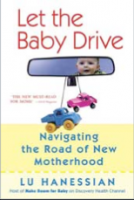
Let the Baby Drive, by Lu Hanessian (St. Martin's Press, New York, 2004)
Recently we opened a bottle of wine of far higher class (and expense) than I could hope to appreciate. (I can occasionally enjoy half of a small glass of wine, but my discernment rarely goes beyond "I like this" or "I don't like this"; I can distinguish red from white with my eyes closed, but "redolent of old oak with faint hints of chocolate, raspberry, and mushroom" is beyond me.) After my first sip or two, I said, "This isn't my kind of wine." By the third sip I had changed my mind, and thoroughly enjoyed the rest of the bottle over the next few days.
That's how I feel about Let the Baby Drive. I saw it advertised in The Compleat Mother magazine, and borrowed it from our local library. For the first several chapters I was thinking, 'Yeah, this is mildly interesting, but I wouldn't recommend it to anyone. Why does this lady make such a big deal out of life with a newborn, something women have been handling for millennia? She is 'way too focussed on herself, her angst, the minutiae of her feelings."
By the third sip I had changed my mind. I stood in awe as her son became the focus of her detailed observations. Let the Baby Drive is a rare, almost unique, look into the first few years of life. Nicholas began talking at 10 months, providing an invaluable window on the surprisingly sophisticated thought processes of children at an age when they are too often considered mere lumps of clay. Banging his spoon on his high chair tray, as every baby does, Nicholas proclaims, "Mah-mee! I'm chopping wood!"
Hanessian's habit of carefully observing Nicholas enables her to get through the stage when he hates her, doesn't need her, wants to throw her in the garbage and never see her again. Thirteen? No, three. Three years old, and dealing with terror over the knowledge that things change, people grow, water goes down the drain and you never see it again. Had she viewed this strictly as an issue of discipline, of misbehavior, instead of respecting her son enough to unravel the puzzle, she would never have known.
When Nicholas is 18 months old, she suddenly hears,
...a rhythmic crashing sound coming from down the hallway in our house. It sounds as though somebody's trying to break in. I hurry toward the bedroom to find Nicholas standing in his crib with his baby fists wrapped tightly around the railing, hurtling himself back and forth like a baby gorilla. For a second, I think I see a glint of delinquency in his eye. I see trouble. Class clown. Street kid. Jailbird. Baby behind bars. Before I can take my thoughts any further, he yells above the noise, "Mah-mee! I make muzak!" Now, the diabolical glint in his eye is more of a twinkle. Suddenly, the baby gorilla is a brilliant child turning inanimate objects into musical instruments. The mother ready to indict her baby on one count of reckless endangerment with intent to destroy private property now sees him as a budding musician.
At three, Nicholas goes to preschool, where his enthusiasm and intelligence fit poorly with the teacher's approach. After much observation, investigation, and agonized soul-searching, his parents conclude this is the wrong school, the wrong teacher, the wrong age, the wrong fit...something is wrong and the best solution is to stop. Now.
Sometimes, you can't tell what's missing until it comes back. And so it was with Nicholas in the weeks after he waved good-bye to the stone school on the hill. We didn't realize how much of his smile had faded until it was restored, until the bounce was back in his step.
Hanessian's habits of observation, and her efforts to know and understand her child, remind me of Nancy Wallace, whose books Better than School and Child's Work have long been among my favorites. Everyone knows that a child needs love; it's a rare parent (and rarer author) who understands how much he needs respect as well.
As part of their efforts to understand Nicholas's problems in preschool, his parents visited a counsellor whose wise comment is a fitting summary of this book:
The world will try again and again to turn out your son's light. It will be your responsibility to keep his light on, and to teach him how to do the same.
UPDATE March 18, 2012 Seven years? It's been seven years since I wrote this? Impossible, yet that's the date stamped on the post. At that time, our only grandchild was barely 17 months old. Now we have six grandchildren, from eight weeks to eight years, and upon re-reading Let the Baby Drive I find I love it all the more. Did I really once find the first several chapters dull, and write, "[The author] is 'way too focussed on herself, her angst, the minutiae of her feelings"? This time I hung on every word, and her inner struggles made fascinating, and important sense. Good books, like good wines, age well.
On Saturday we went to the Central Florida Fair, old-fashioned fun with rides, a midway, cotton candy, and hundreds of exhibits. I particularly enjoy the 4H and Future Farmers of America presentations. What I like best, perhaps, is that it is SO NOT DISNEY.
 This year I again visited my favorite fair vendor, Our Vital Earth. I like them because they sell worm condominiums. That's Porter's term for the product, which I like better than the official name, Can-O-Worms. Whatever the appellation, it's a nifty system for dealing with home garbage. The tiered container (shown here expanded) takes up about as much room as a large kitchen garbage can. You put your organic garbage—scraps (except meat and bones), grass clippings, leaves, newspapers, dryer lint, old cotton socks—into one of the three trays (the bottom tier holds liquid) along with the garbage-eating worms. When that tray is full, put another on top; the worms migrate upward as they run out of food. After a while the worms are out of the bottom tray, leaving fine fertilizer behind. Water and worm urine collects in the bottom; the resulting liquid makes a good, natural insecticide as well as fertilizer. (They also say it's good for sunburn, but I don't think I'd try that one.) It's supposed to be a rapid, odorless process, big in Australia, where I'm told the device is often kept in the kitchen. I'd probably opt for the back porch, but the one I saw at the fair would not be out of place in a kitchen. It smelled better than most garbage cans.
We have no affiliation with Our Vital Earth, nor any other Can-O-Worms seller. We don't even own a worm condo; I just think it's a cool idea. And we may get one yet, once I figure out how to keep a straight face when arranging for a worm babysitter when we go on vacation.
Permalink | Comments | Edit
Category Reviews Everyday Life Conservationist Living
In May of 2001, Martin and Gracia Burnham took a one-day holiday from their busy work in the Philippines for the New Tribes Mission, celebrating their 28th anniversary at the Dos Palmas Resort in Palawan, a Philippine island province in the South China Sea. Their 29th anniversary would mark a year’s captivity among the Abu Sayyaf, a Filipino Muslim terrorist organization with ties to Osama bin Laden. They would not reach their 30th anniversary. Kidnapped from their beds along with several other people at Dos Palmas, the Burnhams were held for ransom under horrific conditions until a less-than-successful rescue attempt by the Filipino army on June 7, 2002. Gracia, wounded, was the only hostage to survive the rescue.
In addition to being a page-turner of an adventure story, In the Presence of My Enemies, along with Christianity Today magazine’s full coverage of the story, brings up several issues:
The problem of unanswered prayer Despite the prayers of thousands—maybe millions—worldwide for their deliverance, the Burnhams were held captive for over a year, and only one of them lived through the rescue. One day, frustrated after many months of seemingly unheard prayers for release, Gracia prayed for something small but apparently equally impossible: a hamburger. A few days later, they were brought hamburgers, French fries, and Cokes.
The question of ransom The purpose of the kidnapping was to gain ransom money, a major source of funding for the Abu Sayyaf. Many of the Filipino hostages were released because their families and/or businesses “knew the drill” and did what was expected. New Tribes, along with other missionary organizations and the American government, were operating under standing policies against paying ransom on the logical grounds that it both funds terrorism and encourages further kidnapping.
International politics There is little question that the U.S. military, with their experience and technology, could have brought about a more speedy, safe, and effective rescue. The constitution of the Philippines, however, forbids foreign troops fighting on Philippine soil, and despite much anguish our government chose to honor the laws and official policies of our ally.
Media accuracy Gracia had been warned, and was careful to read from written, prepared statements when talking to the press. Nonetheless, many inaccuracies crept in. “The one that really upset me originated with the Associated Press and was picked up by Time magazine. They quoted me as saying of Martin’s death: “That is God’s liking. That is probably his destiny.” I would never say such a thing. In fact, this sounds more like an Abu Sayyaf comment than anything else. I wrote Time to protest the blatant misquote and got back a letter passing the buck to AP. The magazine refused to run a correction.”
Grief and recovery One of the burdens of tragedy is that it is impossible to respond in a way that everyone thinks is right. If you grieve too much, you are mentally unbalanced and “need to get over it.” If your grief isn’t visible and you are getting along with your life, then you are also mentally unbalanced, in denial, or perhaps uncaring. If you pray and grieve for those who have hurt you, you are suffering from “Stockholm Syndrome.”
Preparing for the worst Despite having had “kidnapping training” as part of their missionary preparation, the Burnams were not as well prepared as the more worldly-wise Filipino hostages. During captivity, Martin often said, “If I had known this was going to happen, I would have paid attention in that seminar.” One thing they did remember was that obedience to the kidnappers is of prime importance in the first few moments, because that is when they are the most trigger-happy, and that soon after it is important to make eye contact and become a “real person” rather than an item to them. Some of the other captives were aware and prepared enough to grab suitcases and water to take with them. Clearly kidnapping was the last thing on the Americans’ minds, but others were more “street smart.” It reminds me, on a lesser level, of the time I was rousted in the middle of the night by a hotel fire alarm. I wasted what could have been precious moments struggling to find my pants, my shoes, and my key. Now when I stay in a hotel I make sure they are handy before retiring. A basic knowledge of your captors is also useful. The American hostage who was chosen to be beheaded by the Abu Sayyaf had, possibly unwittingly, offended against the values of his Muslim kidnappers. Finally, the time to develop a strong faith is before you find yourself in a difficult situation. Even with all their preparation and strength, the Burnhams found their faith tried and tested at every turn. Others, who had not given spiritual matters much priority in their lives, fared far worse.
The cluelessness of their captors The Abu Sayyaf may have been quick to be offended by those who don’t conform to Muslim values, but only two of the hundred or so the Burnhams knew about had actually read the Qur’an through—and it’s a small book. Even those two had only read it in Arabic, which they didn’t understand, on the grounds that translating it into a language they knew would have corrupted it. They were quick to quote what they had been told, such as “In Islam, if you're a thief, they cut off your hand. That's how things ought to be,” spoken by the man who had stolen Martin’s wedding ring. They were shocked when Martin suggested their actions might be wrong: “I hope my children don't take up the same attitude you have,” he told them. “I hope my kids back home in the States don't ever get a gun and shoot some Muslim because of what you have done to us.” “Done to you?” said one. “What's my sin against you? I've never done anything to you!”Let me state at the outset that I am in favor of vaccinations. I’m very grateful to all those folks whose work has given us some measure of victory over so many horrible diseases. (And to the animals involved, whose sacrifices are usually even greater.) That said, it needs to be more clear that those little jabs to which we subject ourselves, our babies, and our soldiers, are neither miracle nor magic.
There are always risks, and the only reason for a vaccination is if the risks from the disease exceed those from the vaccine itself. I first had my eyes opened to this when I asked my doctor why smallpox wasn’t on the list of recommended vaccines for our children: With smallpox all but wiped out, and biological terrorist attacks not even on the horizon, it would have been foolish to subject children to the dangers of the smallpox vaccine when their chance of being exposed to the disease was infinitesimal.
Worse than the natural, inherent dangers are the human failings: mistakes, hasty or slipshod work, ignorance, pride, political infighting, collusion, and cover-ups. Much of what I said in my comments on The Virus Within applies to this book as well.
When I first heard that the polio vaccine that my generation received as children had been contaminated because it was produced using monkey kidneys, I was incredulous. What did monkey kidneys have to do with producing vaccines? As Edward R. Murrow asked, when he interviewed Jonas Salk, the vaccine’s creator, “The only thing I know about this vaccine is that it starts with a monkey’s kidney and it ends up going into a child’s arm. Could you explain a little to us the process in between?”
Polio was a terrifying disease that reached from the poorest slum dweller to the president of the United States himself, and pressure to develop a vaccine was enormous. (The recent theories that Franklin D. Roosevelt had Guillain-Barré Syndrome rather than polio are immaterial—whatever the actual cause of his problems, it was believed at the time to be polio.) The task was especially daunting because the polio virus could only be grown in living monkeys: Inject monkey with virus, wait for monkey to get sick, kill monkey, extract virus-containing fluid from ground-up spinal cord. Repeat until you have enough virus to work with. Develop a vaccine to test. Inject vaccine into monkeys. If they get sick, start over—the vaccine isn't safe. If they don’t, infect the monkeys with the virus. If they get sick, start over—the vaccine doesn’t work. If they are protected, proceed to human field testing, first on a small scale that would require the use of hundreds of monkeys, then a larger trial with more monkeys, and finally mass testing requiring hundreds of thousands of monkeys. If your vaccine passes all the tests and is approved for production, it will take tens of millions of monkeys to produce enough for mass immunization. Even if that were possible, it would take years—and America in the late 1940’s did not want to wait years.
Enter the Harvard Medical School laboratory of John Enders, which demonstrated that it was possible to grow the polio virus in certain tissue cultures. (Enders and two of his coworkers eventually received the Nobel Prize in medicine for this work.) Their report was largely ignored by polio researchers, but Dr. Jonas Salk, then at the University of Pittsburgh, grabbed the idea and ran. By growing the polio virus in ground-up monkey kidneys suspended in a nutrient broth, Salk was suddenly producing large quantities of virus in little time. At last, a vaccine seemed possible.
And so it was. Those of us who were born post-vaccine cannot fully appreciate what a miracle the polio vaccine seemed to parents who lived in terror of this disease, which killed and paralyzed and particularly targeted children. But it wasn’t quite a miracle, because there was a time-bomb hidden in the vaccine: SV-40, a monkey virus that survived inadequate purification procedures to contaminate nearly every dose of polio vaccine between 1954 and 1963, affecting about a hundred million people in the United States alone. Even after the contamination was discovered, the dangers were downplayed—contaminated batches were not recalled, but continued to be used—because it was widely accepted that the monkey virus, being from a different species, would do no harm.
Unfortunately, that proved to be a false and costly assumption. SV-40 is now known to be carcinogenic, and since the mid-1990’s has been discovered in many formerly rare brain and bone cancers, as well as lymphomas and leukemias. Is this a cause and effect connection, or a coincidence? The government is still downplaying the issue, as you can see from the CDC’s much less alarmist version of the story. They may be right, and I certainly understand their dilemma, since they must weigh the risks of vaccines against the dangers of disease. Eradication of polio worldwide had nearly been accomplished by 2003. However, some Muslim clerics in Nigeria expressed fears that the vaccine had deliberately been contaminated in order to give Muslims AIDS or to render them infertile, and the vaccination program fell apart in that country. Before long polio had returned to twelve neighboring, polio-free countries, and hundreds of children had been paralyzed. So I understand why the government might be afraid of panicking parents into refusing all vaccinations for their children. Still, I’d be a lot less likely to panic if I were convinced that the government were doing its best to find, publish, and advertise the truth. The Virus and the Vaccine has not increased my confidence that this is the case.Strictly speaking, this is not a review of Stephen Covey’s new book. The 8th Habit is in great demand at our library, so all I have done is read through it, making little attempt to think about the concepts, much less apply them. (I still have a long way to go in applying the concepts from Covey’s The 7 Habits of Highly Effective People and First Things First.) I will, however, allow myself a few comments:
The critical 8th habit is “Find Your Voice, and Inspire Others to Find Theirs,” which I'll admit doesn’t make much sense out of context. I believe there is much of value to be found here, although it’s not going to happen in a single reading—nor in any reading at all that is not accompanied by application. I was a bit frustrated in that it did not read as smoothly as Covey’s other books; I kept bogging down in what appeared to be repetitiveness, in the many charts and graphs, and in the business/corporate/organizational applications. The examples were wonderful to read, however, and I know the principles are applicable on a smaller (e.g. family) scale. I’ll probably come back to this book after I’ve done better at applying what I learned in the earlier books.
I wonder how much Stephen Covey, Richard Ryan, and Edward Deci are aware of each other. There’s much in The 8th Habit that reminded me of what I learned from a seminar Deci and Ryan gave at the University of Rochester, and from Deci’s book about understanding self-motivation, Why We Do What We Do.
The principles expressed in The 8th Habit are timeless and universal. The format of the book is not. Included with the book is a DVD, and the narrative is frequently interrupted by an exhortation to stop reading and watch a short movie. No doubt this works well for many people, but is annoying to those of us who do not own a DVD player, or who may be reading in the car or at the dentist’s office. That’s another reason I can’t review the book, because I don’t know what I’ve missed by not being able to watch the movies. Several footnotes suggest websites to visit for further information, which is useful, but also a sign of an author who is writing for this year’s readers, not those who might pick up his book ten or a hundred years from now.I know that my brother had roseola when he was 14 months old, because I found mention of the episode in one of my father’s journals. Although it was not documented, I assume the rest of us also contracted the disease. Most children do, before they are two years old, often with symptoms so mild they evade diagnosis.
Although roseola was officially described in 1910, and studies in the early 1950’s led scientists to believe that it was caused by a virus, it was not until the 1980’s that the virus was isolated and named: Human Herpes Virus-6 (HHV-6). What was being discovered about this virus would have roused great concern, had not the attention of the scientific and medical communities, and the media, been overwhelmed by the more obvious medical problem of the time: AIDS.
Although most children apparently handle roseola with little difficulty, for others an HHV-6 infection can be devastating, often swiftly fatal. Furthermore, just as chicken pox (another herpesvirus, HHV-3) sometimes resurfaces as painful shingles after years of lying dormant in the body, HHV-6 can reactivate. Research is still in the preliminary stages, but reactivated HHV-6 infections have been implicated in a wide range of serious illnesses, including multiple sclerosis, chronic fatigue syndrome, some cancers and mental illnesses, and an array of other neurological or immune system diseases.
The Virus Within is not only a frightening medical thriller, it’s a sad object lesson in the politics of medical investigation, which I glimpsed briefly in my research laboratory days. As much as we would like to believe that the governmental agencies responsible for overseeing our health, and the academic institutions pursuing the conquest of disease, are primarily interested in truth and the benefit of mankind, in reality the support, funding, and publication of scientific research is tainted by politics, self-seeking, and prejudice at all levels.
I found The Virus Within to be frightening and frustrating, but not discouraging. It has strengthened my opinion that the most serious “health care crisis” in the United States is not lack of universal medical insurance, nor litigation and high malpractice rates, nor the vagaries of managed care. It is that we depend too much on the blessings of medical and technological breakthroughs, to the neglect of critical lifestyle concerns. HHV-6, like so many other diseases, preys primarily on those with weakened immune systems. Very few of us can influence governmental health policies or make medical breakthroughs, but most of us can take steps to strengthen our immune systems.
Eat healthy foods. Avoid junk food. Exercise more. Have a positive attitude. Breastfeed your babies (good for their immune systems and yours!). Get plenty of rest. Drink plenty of water. Minimize your exposure to harsh chemicals (smoke, pollution, food additives). Avoid legal drugs whenever possible and illegal drugs at all times. Drink alcohol only in moderation. Practice sexual restraint (an act of rebellion against modern culture if there ever was one, but you will save your immune system from a host of assaults). Smile a lot. Practice forgiveness. Reserve your anger for injustice against others rather than yourself, and even then indulge in it only when you can translate it into action. Meditate on the good, the true, and the beautiful. Make music. Do whatever is necessary to strengthen your family life. Turn off the television. Learn to appreciate silence. Read an uplifting book. Achieve and maintain a healthy weight. Reassess your schedule, your job, your expectations, and your priorities. Know the difference between healthy and unhealthy stress. Consider getting your food more from “organic,” or “natural” sources, and less from factory farms with their artificial fertilizers and feed, their added hormones and antibiotics, and their highly-stressed animals. Take a long walk in the woods or by the ocean. Hug a child. Spent time with uplifting, optimistic people. Think more of others than you do of yourself. Relax. Look at the sky. Count your blessings.
I cannot do everything, but still I can do something; and because I cannot do everything I will not refuse to do the something that I can do.
