
Micro Mobility Systems makes classy scooters, and look what I discovered when I ventured onto their website from a FRK article:

I like to take the bus to the airport, but the mile and a half walk to the bus stop is hard on luggage wheels. They're not designed to take long distances on concrete. But this is! It's a scooter, zipping one to the bus stop and then folding to cabin-baggage size.
On second thought, it wouldn't really solve my problem, as cabin-baggage isn't that hard to haul to the bus; my real problem comes whenever I have to bring a bag big enough to check—the weight is much greater and the wheels no better. With Lufthansa having an 18-pound carry-on weight limit, the scooter part probably adds an unreasonable amount of overhead, anyway. But it's still a cool idea.
Micro Mobility's scooters in general look pretty classy. They might make a nice addition to bicycles and trams in the Swiss commuting arsenal.
Permalink | Comments
Category Everyday Life Conservationist Living
I have another post on Free-Range Kids. You've probably read most of it here already, in my review of the Melendy books, but I mention it because the comments over there are brimming with other good book suggestions that you may want to check out.
Permalink | Comments
Category Children & Family Issues
Gustav Mahler's Symphony No. 2, "The Musician's Stimulus Package"
Okay, so that's not the name Mahler gave to this symphony, but he didn't call it "Resurrection," either, which is what usually shows up on concert programs, so I claim the right to my own title.
Last night was the Orlando Phil's season opening concert, consisting of but this one work. The ticket-takers thoughtfully warned us, as we entered, "Ninety minutes, no intermission!" causing an immediate run on the bathrooms.
Gustav Mahler pushed the limits of orchestral size, and it was a mite crowded on the stage of the Bob Carr Auditorium. I counted (in the program, not live) 156 musicians, including two full sets of timpani (maybe more—some percussion was off stage), eight trumpets, ten French horns, and as many strings as could fit. No wonder Mahler isn't played as much as he should be—who can afford it? Kudos to the OPO for taking on the problem of musician under-employment in this magnificent way.
This was my first hearing of this particular symphony, and I wish I had had Bob Greenberg to explain it to me. It seemed disjointed, random, and haphazard—but I know it wasn't. There's hope that it will grow on me, for I love Mahler's First, and in fact kept recognizing brief musical snatches from that symphony in this. It was finale of the First that echoed in my mind on the drive home. Mahler is so Mahler.
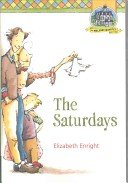


The Saturdays
The Four-Story Mistake
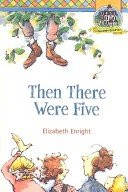
Then There Were Five
Spiderweb for Two: A Melendy Maze
by Elizabeth Enright (Holt/Square Fish, New York, 2008)
I've heard it said—and often by teachers—that it doesn't matter what children read, as long as they're reading. I couldn't disagree more.
Actually, there's just enough truth there to be dangerous: When one is learning to read, the very best path to the next level is merely to read, and read, and read. It doesn't matter if it's Dr. Seuss, Calvin & Hobbes, Star Wars, or Anna Karenina—almost anything will do that is decent and holds the reader's attention long enough for the practicing to work its magic. When my father was sick and terribly thin, we pressed upon him high-fat, high-calorie, high-sugar foods that would normally have been anathema to a sensible diet.
The trouble with carrying forward a laissez-faire attitude toward the content of children's reading is that our early experiences influence so strongly the habits and tastes we will take with us into adulthood. If our childhood has been reasonably happy, it's almost impossible not to retain an uncritical fondness for what we enjoyed then. It's as important to encourage in our children a taste for nourishing books as it is a taste for nourishing food.
I find Elizabeth Enright's Melendy Family books to be exactly this sort of nourishing book, so much so that on a recent rereading I probably enjoyed them not one bit less than my first enchanted encounter. Maybe even more, because they reminded me so much of my favorite families, many of whom read this blog. Noisy, lively, adventuresome children who occasionally make bad choices and get in trouble—but always repent and are forgiven by loving adults. (I do like a book where "bad choices" means things like climbing out the window when one is supposed to be sick in bed—remember when sick kids were supposed to stay in bed?) Siblings who love each other, and enjoy each other's company, even if they occasionally quarrel a bit. Children who respect the adults in their life. Adults who know how to give their children both roots and wings. (I know it's a cliché, but it's true, and important.)
What struck me most this time as I read the books was how very much they are a Free-Range Kids manifesto. The kids are far less worldly-wise than today's average children, but far more competent. They are entertained and even awed by things that would cause most modern American kids to yawn with boredom and make rude remarks. But they wander New York City on their own at 10 years old (with permission) and even six (without); they love Beethoven, and Shakespeare; they wander over hill and dale (in the country), sometimes gone all day and returning home after dark; they sew, and cook, and build things; they put on plays and arrange benefit concerts for the war effort (the books were written in the 1940's); they get into scrapes and get out of them by a combination of their own ingenuity and knowing when to ask for help from the adults around them. They know the "don't talk to strangers" rule, and more importantly they know its many exceptions.
Yes, I know this is fiction! And I'm not saying the family is ideal—no family without a mother can be. But it's a lot more true to what I knew when I was growing up than most of today's "realistic" children's fiction. The people over at Free-Range Kids are an eclectic lot, and I doubt they'd all enjoy Enright's books, but to me the Melendys are a shining example of the "normal childhood" that many Free-Rangers are working hard to promote. Books like these can encourage both children and their parents in that endeavor, promoting simultaneously family love and loyalty, parental authority, and children's competence and independence. I'm keeping them for the day the grandkids are ready for them (and enjoying them myself in the meantime).
Or maybe I just like the books because the Melendys' attic playroom looks an awful lot like our grandchildren's room even now!
Permalink | Comments
Category Reviews Children & Family Issues
It shouldn't have been so hard, though I'll admit I'm stubborn. Firefox has been nagging me for days to update my Flash player, but I have to check the box that says I've read the EULA, and every time I tried to download the pdf, it gave me an error at best—and sometimes crashed my machine.
I tried on another computer with the same result.
I don't mind skimming EULAs, and even fudging on the part that requires me to say I actually understand them, especially when half the agreement is in French. But I refuse to say I've read something when it's not even possible to get a copy of it.
After checking the Adobe site, forums, and Google to no avail, finally inspiration struck: I copied the url of the recalcitrant file out of Firefox and into Internet Explorer—and it worked. Then I could go back into Firefox and complete the update. Even that required several attempts and a couple of Firefox restarts, though.
And that was just for one computer. For the other I still haven't been successful, as the update refuses to download, telling me a plug-in is missing—without telling me what plug-in is missing, and when I search for the missing plug-in, nothing is found.
What a waste of time!
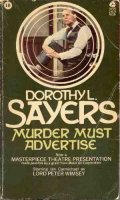 Murder Must Advertise, by Dorothy Sayers (Avon, New York, 1967)
Dorothy Sayers is one of my favorite authors, both fiction and non-fiction, and her Lord Peter Wimsey mystery stories among the best of that genre. I've read them all so many times that quotations from them worm their way up from the depths of my brain unbidden, enabling me to appear knowledgeable in fields where my ignorance is nearly complete, as happened earlier this year while I was sitting in on a class about medieval manuscripts.
The beauty of Sayers' writing makes re-reading her murder mysteries delightful even when you know whodunit. I was nursing a cold, and trying to forget the agony of descending from high altitude with completely clogged ears, as well as the frustration of not being able, at that hour, to purchase real Sudafed, but only the ersatz variety that proudly proclaims on the box that it contains none of the ingredient that really works. In the mood for something that would distract without taxing to my befogged brain, I shunned my burgeoning "to read" pile and reached (again) for Murder Must Advertise.
This tale of Lord Peter's ventures into the British equivalent of Madison Avenue is a full of philosophical observations as it is of murder and intrigue, and the following passage struck me as particularly appropriate today. Sayers—who herself worked as an advertising copywriter for a number of years—wrote Murder Must Advertise in 1933.
Where, Bredon asked himself, did the money come from that was to be spent so variously and so lavishly? If this hell's-dance of spending and saving were to stop for a moment, what would happen? If all the advertising in the world were to shut down tomorrow, would people still go on buying more soap, eating more apples, giving their children more vitamins, roughage, milk, olive oil, scooters and laxatives, learning more languages by gramophone, hearing more virtuosos by radio, redecorating their houses, refreshing themselves with more non-alcoholic thirst-quenchers, cooking more new, appetizing dishes, affording themselves that little extra touch which means so much? Or would the whole desperate whirligig slow down, and the exhausted public relapse upon plain grub and elbow-grease? He did not know. Like all rich men, he had never before paid any attention to advertisements. He had never realized the enormous commercial importance of the comparatively poor. Not on the wealthy, who buy only what they want when they want it, was the vast superstructure of industry founded and built up, but on those who, aching for a luxury beyond their reach and for a leisure for ever denied them, could be bullied or wheedled into spending their few hardly won shillings on whatever might give them, if only for a moment, a leisured and luxurious illusion.
Permalink | Comments
Category Reviews Random Musings
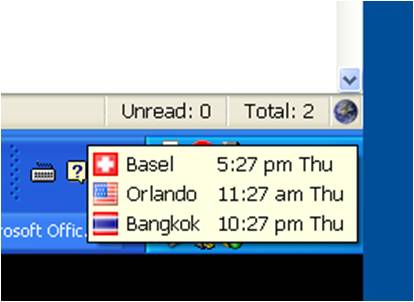
Having family all over the globe makes for an interesting life, but sometimes it's hard to know which end is up—or more importantly, who is up when. Enter FoxClocks, an add-on for FireFox, which has made that task much easier for me. There's also a version for Thunderbird, and I use both to my advantage.
My two favorite display formats are (1) showing the city, time, and day in the status bar:

and (2) a tiny icon in the status bar which pops up that information when I hover my mouse over it.
Regular readers of Lift Up Your Hearts! know I'm a fan of Lenore Skenazy's Free-Range Kids blog, though I blush to admit I haven't (yet) read her book of the same name. I've written quite a few comments there, and a recent letter I sent evolved into a guest post, which you can find here: A List that Sums Things Up Nicely.
To anyone who may have wandered over from the link at FRK, welcome! Things are pretty random here, as this is where I post, for family and friends, whatever happens to be on my mind. That way they don't have to hear me talk about it quite so much. Okay, so it's really just a small portion of what is buzzing around in my brain; fortunately, life imposes time limitations.
In the upper right hand corner you'll find links to what it's all about here, and various disclaimers and disclosures. Thanks for visiting!
Permalink | Comments
Category Children & Family Issues Everyday Life Food
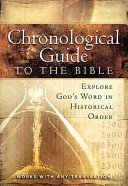 The Chronological Guide to the Bible (Thomas Nelson, Nashville, 2010)
My review copy of this book arrived from the publisher at a fortuitous time: I happened to have recently begun reading Susan Wise Bauer's History of the Ancient World. Each book is good; together they are a great window on the historical and cultural settings for Biblical events.
The book meant to be read with the Chronological Guide, however, is the Bible, and I look forward to that adventure in the future. A Bible itself, arranged in chronological order, would be easier than flipping back and forth, but the Guide is small (not much over 200 pages) and easy to read even though dense with facts, works with any Bible translation, and lets the reader decide how to proceed in places where historical order is uncertain or controversial. It really is just a guide; you must do the work of actually opening the Bible yourself.
Each book of the Bible is set in its historical and cultural context, which both brings it to life and provides clues for understanding. It also leaves me hungry for more—there's only so much a book this size can do—which is not a bad thing.
I have but one complaint: Although the Guide touches on the Apocrypha and the historical period between the Old and New Testaments, it provides none of the informative analysis for the Apocryphal books themselves that it does for the Canonical books. Even Martin Luther called them "useful and good to read," and it would be helpful to understand more about the history, culture, and philosophies that set the stage for Jesus' time.
Even so, The Chronological Guide to the Bible is a worthwhile addition to the library of anyone who wishes a better understanding of the Bible and how its stories fit into their cultural and historical context.
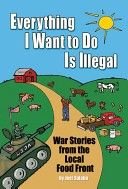 Everything I Want to Do Is Illegal: War Stories from the Local Food Front. by Joel Salatin (Polyface Inc., Swoope, Virginia, 2007)
Until now, I've written more about Joel Salatin than I've read by him: almost a year ago in Strange Bedfellows? Not Really, and three months later in my review of The Omnivore's Dilemma. Wanting to correct that sin of omission, I grabbed the only one of his books available in our local library: Everything I Want to Do Is Illegal.
On every side, our paternalistic culture is tightening the noose around those of us who just want to opt out of the system. And it is the freedom to opt out that differentiates tyrannical and free societies. How a culture deals with its misfits reveals its strength. The stronger a culture, the less it fears the radical fringe. The more paranoid and precarious a culture, the less tolerance it offers. When faith in our freedom gives way to fear of our freedom, silencing the minority view becomes the operative protocol. — Joel Salatin
Salatin wants to opt out of a little more of the system than I do, but I hear his cry. You could call him bitter, but if you consider the miracle that is Polyface Farms, you have to wonder why our government is working so hard to stamp out such elegant, inexpensive, healthy, delicious, and truly "green" (in a conservationist sense) endeavors.
There's another whole blog post in the answer to that—involving sustainable agriculture, home education, midwives, family businesses, free-range kids, raw milk, and even the Duggar family—so for now I'll move on to the quotation section of this review. Otherwise I'll never get it back to the library tomorrow today, when it's due.
The quotes are selected from collection of pink sticky notes bristling from pages all over the book, as I marked passages I found especially interesting. Unfortunately, they're rather random, and generally miss the most important thrust of the book, which is that
- Both governmental regulations and societal expectations (i.e. the belief that governmental regulations guarantee safe food) have devasted small, local, sustainable agriculture, because they greatly favor large corporations and factory farming.
- Governmental regulations and inspections do not, in fact, promote a healthier food supply, because the big guys (from Archer-Daniels-Midland to Wal-Mart) can afford high-powered attorneys and lobbyists, and because too many bureaucrats are more concerned with healthy paperwork than with healthy food. (When you read about what the bureaucrats and big companies did to the very word "Organic," you will no longer be so happy in that section of your grocery store.)
- Small, local, sustainable agriculture is our best hope for producing safe (from salmonella to bioterrorism threats), healthy food. And taste! Don't forget about taste!
When it comes to trying to protect our food system, both from internal carelessness and external attack,
[T]he things we're moving heaven and hell to stop are not the things we need to be concerned about. The stuff that we turn a blind eye to and don't even care about is the bigger problem. We really do worry about the wrong things. And we devote precious resources inspecting, measuring, and vilifying the antidote to the wrong things.
Did you really think food regulations were all about ... food safety?
I spoke with an attorney who represents one of the largest food businesses in the world. He came to the farm for a visit, a delightful gentleman. ... He said he would put it to me straight, "People don't trust the large corporations. If you're a large corporation, you need that trust to survive. How do you get that trust? You create a system that makes it look like you care. People want to see you doing something that protects them. ... But, and here's the other part of the equation, if you're the chief executive of a large business, you don't want to pay for it. Instead, you wine and dine politicians to convince them that they will curry favor with their constituents if they demand this program. Now you have people's faith without having to pay for it."
And what did you think an ambassador's job was supposed to be?
Allan Nation, editor of Stockman Grass Farmer magazine ... took a group of American grass farmers to Argentina to tour the world's best grass-based farms and ranches. When the American ambassador found out a group of American farmers and ranchers was in town, he invited them over to the Embassy for refreshments.
"What are you all doing in Argentina?" he asked.
"We're here to study grass-based agriculture and see firsthand how to finish beef on grass instead of in feedlots," replied Nation.
At that point, Nation said the ambassador nearly kicked them out of the embassy, proclaiming, "Don't you understand why I am here? I am here to make Argentina quit grass-finishing beef and begin using corn in a feedlot." There's the good o' USA, friend of environmental agriculture, respecter of other cultures. Yessireee.
Salatin may be strident at times, but he's not a conspiracy theorist.
At the risk of sounding completely naïve, I will say flat out that I do not sense a conspiracy behind this effort. Like so many other government plans, this is another well-intentioned idea with incredibly terrible consequences. I happen to believe that when the food police say raw milk will kill you, they actually believe it. When they say my outdoor chickens are dangerous to the Tyson houses, they sincerely believe it. When they say consumers are too stupid to make food choices, they actually believe it. I think people sincerely believe a lot of stupid things. This is just stupidity, not conspiracy. It's a fraternity of stupidity, to be sure, but we need not label it a conspiracy.
I've never worried much about eggs and salmonella—always let the kids lick the cake bowl and eat raw cookie dough, if they beat me to it. But I'm less worried about the eggs I scooped from under the hen myself at a local farm than about the free box of factory-farmed eggs I picked up at Target. The recent salmonella outbreak, due to tainted eggs from large, federally regulated egg farms, makes even more significant the following story of Salatin's encounter with a health department representative who had accused his unwashed eggs of carrying salmonella:
Although she admitted that the regulations did not require washing, she simply sniffed and said, "An unwashed egg is inedible." Then I told her we did in fact culture the eggs, including the manure, and they were clean. It was like talking to a fence post: "An unwashed egg is inedible." End of discussion.
I hung up and immediately the phone rang, even before I could take my hand off the receiver. I answered and it was Allan Nation. ... He and his wife, Carolyn, had just returned from a fact-finding trip to Europe, with a heavy emphasis on range poultry in France. Without any prompting from me, he started the conversation with, "Hey, guess what? In France, you can't sell a washed egg. If it has to be washed, it must go into a pasteurized product in liquid form. Only unwashed eggs are legal to sell as shell eggs."
More about eggs in Europe:
I was showing my eggs to a chef once and he wanted to buy them right away. To be perfectly transparent, I warned him that in the winter they wouldn't be as deeply orange as they are in the green grass season. ... He immediately cut in. "Oh, that's no problem. In chef's school in Switzerland we had recipes for March eggs, recipes for June eggs, and other recipes for October eggs in order to accentuate the nuances of that particular season's eggs."
Of animals, people, and politics. One reason I like Salatin is his rejection of the political boundary lines that are hardening like arteries in our society and constricting the healthy flow of ideas: Republicans and Democrats are both helpful—and hurtful—to his cause. His views land him squarely on both the Left and the Right.
When the only interaction between people and animals is in a pet situation, it jaundices the historical and natural relationship between the two.
Amazingly, the [animal rights activists who object to] abortions in the third-trimester of a bovine pregnancy tend to support that action in humans. ...
... It's as inconsistent as the pro-lifers eating disrespected, factory farmed meat out of Costco ... The people who should be most concerned about respecting and honoring animals are the members of the religious right. Instead these folks defend the right to abuse animals, to disrespect their chickeness and pigness. And they even applaud their own ability to find the cheapest food. I wonder if they think the best church comes from hiring the cheapest pastor.
What good is the freedom to worship, the right to keep and bear arms, and the freedom of the press if we don't have the freedom to choose what to feed our bodies so we can go sing, shoot, and speak? The only reason the founding fathers did not grant the freedom to choose our food was because it was such a basic, fundamental personal right that they could not conceive that special protection would be needed. Granting citizens the right to choose their food would have been similar to granting them the right to see the sun rise, or to breathe.
We believe that our pluralistic society is stronger for allowing home schooling and private schooling alongside public schooling. Our culture is stronger by letting people buy different kinds of cars or none at all; have health insurance or none at all; build a house or none at all. The freedom to opt out of the mainstream paradigm is the cornerstone that preserves the minority view, differentiating between top-down societies and bottom-up societies. Our opponents favor coercing consumers to buy only government-approved food, thereby denying opt-out freedoms.
[Modern society thinks] we can save things from the top down ... but ... the only safety comes in our communities, our homes, our families, from the bottom up. And these institutions must be free to experiment, to innovate. I confess that I do not hold optimism for our culture as a whole. Indeed, we are destroying agrarianism and seeing the same political graft and moral debauchery that brought the Roman culture to ruins. I am, however, optimistic about the power of one. The strength of you and me and others, touching our spheres of influence, taking individual responsibility.
And finally, this is a minor side story, but I love it:
I have a friend who at 13 decided he wanted to cut firewood for a living. His family had an old 1965 International loadstar dump truck with a two-speed rear axle. A little big for his age, he began cutting firewood—yes, with a chain saw. He could drive that truck as well as any adult, and delivered a load to a customer in Waynesboro about 15 miles away.
A neighbor saw the load being dumped and walked over to ask for one himself. The boy said he'd be there the following Saturday with the load. He cut the wood after school and in a week had another dump truck load. He arrived at the man's house on schedule. The customer was dubious about the boy's ability to back the truck around a crooked driveway, swing set, picnic area, and dump it onto a concrete pad in the corner of the back yard.
The boy assured the customer that it was no problem and proceeded to back the truck expertly right up to the pad. He dumped the load and pulled out. What I didn't tell you was that this man happened to be a city policeman, and this week happened to be in uniform because he was getting ready to go to work. When he got ready to pay the boy, he asked him: "Son, how old are you?"
My friend, who confesses that his heart skipped a beat when he pulled in and realized he was delivering wood to a policeman's house, just looked down from the cab and confidently but with a mischievous grin responded, "How old do you want me to be?"
Taken aback, the policeman asked him, "Do you have a license?"
To which the 13-year-old replied, "I have a couple, but I'm not sure I have the one you're interested in."
Completely enthralled by the whimsical youngster, the policeman said, "Listen son, I'll follow you to the edge of the city limits. And please, please don't drive that truck back into this city."
Two weeks later, the boy had another load to deliver to Waynesboro. As luck would have it, when he entered the city, there on routine traffic patrol was his firewood customer friend. They locked eyes, and the policeman just shook his head, took off his hat, and covered his eyes. Now there is a true public servant. That boy could drive that truck as expertly as any adult. Ho could anyone deny this self-motivated, bright-eyed and bushy-tailed boy his firewood business? To be honest with you, I wouldn't let my 13-year-old do this. And it probably wasn't the wisest thing to do.
But for crying out loud, must we criminalize everything we don't think is wise?
Permalink | Comments
Category Reviews Politics Children & Family Issues Food Conservationist Living
For friends and family who prefer to ignore Facebook:
Jonathan: Dad, the spaceship book gave me an idea, and I'm going to be working on a project. It requires liquid oxygen....
Anyone have some spare LOX for an ambitious six-year-old?
Permalink | Comments
Category Everyday Life Just for Fun
I wasn't going to write about the two recent examples of September 11-related hysteria run amok, because (a) there has already been too much reaction, and (b) believe it or not, the fate of the world does not hinge on what I write on the Internet. But in another context I was invited to share my opinion, and you know how I love to get double duty out of the effort it takes to write.
First, the "Ground Zero mosque" flap. Whether a mosque, or Islamic center, or church, or store, or apartment building, or library, or strip club is built in New York City is none of my business. Nor is it the business of 99% of the others who have weighed in on the issue, including President Obama, foreigners, and talk show hosts. It is New York City's business, at whatever level zoning regulations are made. If the neighbors object to a proposed project, they have the right, and possibly the duty, to oppose it at zoning board hearings, to write letters to local papers, to make local speeches, to go from door to door with petitions. My opinion is irrelevant, as is that of the President of the United States.
The second bruhaha hits closer to home, because Terry Jones is in Florida, not much more than two hours away from me. I've been trying to ignore him, because he seems to be the kind of person who revels in publicity, be it positive or negative. (Like rebellious teenagers, and like terrorists.) His actions should also have been none of my business: he's not my pastor, nor my neighbor, and I would no more forbid him to burn a Qur'an—or a cross—on his own property than I would forbid the building of a Mosque within sight of Ground Zero, even though both get people hot under the collar. But he and the news media together have made it my business, threatening my family, my state, and my country.
Fear and anger make people do very unwise things, and one of the unwisest is the willingness to set aside the Constitution, the very foundation of our country. I was asked about using hate speech laws to shut Jones down: the very idea chills me to the marrow. Freedom of speech is one of our greatest treasures, and that includes the freedom to say very unpopular things. Even hateful things. Labelling someone's opinion, however much you think it wrong, as "hate speech," and trying to control it, makes a very wide gate though which totalitarianism can enter.
Refusing to outlaw something is not the same thing as approving or deeming it wise, however. And in the case of Jones, he himself has deliberately made his actions public business. The First Amendment notwithstanding, there is precedent for controlling some forms of speech: laws against slander/libel, yelling "Fire!" in a crowded but flame-less theater, and giving "aid and comfort to the enemy" in time of war, for example. Jones is most definitely doing the last, giving credence to the enemy's propaganda and deliberately undercutting both military and civilian efforts to promote peace.
If there is anything good about his motives, he is at least incredibly stupid and not acting in accordance with his professed faith. I haven't read much of the hoopla, but I did catch that he responded to questions of offense with the retort that he, himself, is offended when "they" burn the American flag, or the Bible. What he obviously misses—besides the idea that we're supposed to love our enemies, or at least behave better than they do—is that an insult to the Qur'an is not nearly the same thing as an insult to the Bible, let alone to a flag. To a Muslim, if my understanding is correct, it would be more like spitting on the consecrated Host. The book itself is sacred. I don't know if that applies to translations, which aren't considered the "real thing," but I suspect the insult would be taken similarly by most Muslims. And the analogy I made probably wouldn't mean anything to Pastor Jones, since I suspect his church doesn't have a sufficiently high view of Communion to understand it. But my point is, his analogy is flawed, maybe fatally.
I heard great story about a Canadian medical team in Afghanistan, known for its very good treatment of Taliban prisoners. Explaining this, the doctor pointed out that, first of all, it was the right thing to do; second, since the battle was over a difference beliefs and values, it was important to act upon those values at all times. That's also the attitude of the U.S.-based aid organizations that I know about, even though the Taliban is attacking them, verbally and physically. And, come to think of it, that's the attitude of Jesus on the Cross, which one would hope would give Rev. Jones food for thought.
What's more, the doctor said, good actions, especially in the face of danger and provocation, will cause a cognitive dissonance between what the soldiers have been told by the Taliban and their own experience, which might lead to them questioning Taliban authority. The Taliban knows this, of course, which probably explains their antipathy towards those who are sacrificing themselves to bring health, education, and infrastructure to these countries.
Jones, however, is doing exactly the opposite; I'm quite sure the Taliban, Al-Qaeda, and other militant Islamic groups are thrilled with his Qur'an-burning plan, no matter how personally offended their members might be. There are better ways to express your belief that not all religions are equally true, or good, or beautiful (and with that I agree), without making your own look odious, and defaming the name of Christ.
I blame the news media, also. We would have been much better off if Jones had been ignored, but he makes great copy. The vast majority of Americans, who think he's nuts, and who are bending over backwards to say so, in word and action—are just boring. The press is pouring (metaphorical) gasoline on Jones's flames. Freedom of the press is another essential First Amendment right, but I do wish we all had more common sense.
Permalink | Comments
Category Politics Random Musings
In George MacDonald's novel, Salted with Fire, I encountered the following statement:
He would never rise from a finished job, however near might be the hour for dropping work, without having begun another to go on with in the morning.
I read it long ago, but it has never left me, and is the inspiration for this month's resolution. It's likely that Getting Things Done has also inspired me, with its emphasis on "next actions."
Whatever the impetus, I know from experience that finishing a job, however satisfying, soon gives way to feeling at loose ends, uninspired, and sometimes depressed. I still have plenty to do—so much that I can't seem to get started on any of it. Life goes much better when I'm in the middle of a project and know just what the next step is.
So this is the crux of this resolution: to keep my GTD "next actions" lists well-populated with specific, actionable, non-threatening tasks; to remember that a task or a project is not completed until the next task or project is ready for action; and to sleep well, knowing that tomorrow's work is ready to begin when I awake, and needs no attention (a.k.a. "worry") until then.
Progress Report
#1 Read More Books August proved once again that it takes determination to read, even for someone who loves it as much as I do. One of the two books in August's tally I began months ago, but at some 800 pages I'm not beating myself up over having taken so long to finish it.
#2 Rediscover Feasting Having been away from it for a month and a half, I found it hard to readjust to Fasting Wednesdays—I'd eat breakfast before realizing what day of the week it was. But I think I'm back into the pattern now. What still needs a lot of work is an Ordinary Time pattern; too many days still qualify as feasts to make feasting as special as it should be.
#3 Learn to Relax I continue to think about consciously relaxing my muscles, and it does help. The GTD process (see #8) is also helping. But I still have a long, long way to go. I now have a friend whose working on this whole stress response/reduction thing with me, so maybe that will help. What I really need to do is give it higher priority. In a go-go-go society, working on relaxing is hard.
#4 Like More Things I can now eat very small portions of olives without gagging. Does that count? I need to make this less about food and more about other parts of life.
#5 Pay Attention I still multitask a lot, and haven't thought much about this one recently.#6 Cast Away Fear There were a few occasions where I did remember to respond to fear with praise, and it helped.
#7 Talk Less, Listen More Not much to report here.
#8 Enjoy Spontaneity I still fret too much about what I could be doing if I weren't trapped in this stupid X situation—but I am making progress. My GTD post needs an update; the progress I have made thus far in implementing the program has helped me know better both what needs to be done and when I will have a chance to take care of it. More than once I have been able to say, "I can give my full attention to Y now and enjoy it, because I know W and X are done, and Z can wait till tomorrow."
The resolution I need most is apparently one to remember my other resolutions, so I've added "review resolutions" to my Tickler File. :) We'll see if September shows more progress.
Permalink | Comments
Category Everyday Life
This is a short post, because I don't have a lot to say about electricity in Switzerland, but I like their home outlets. I'd rather the world adopt our 110 volt system, for safety reasons, but if I could I'd change our plugs to the Swiss type. See how sturdy the prongs are? No worries about accidentally bending them when you stretch the cord too much, straining to get the vacuum cleaner to reach to the far corner. Some outlets are combined with light switches, and many are recessed—a neat safety device that makes it impossible for the prongs to be connected to the electricity and touching your fingers at the same time.

Permalink | Comments
Category Travels Everyday Life
Maybe this post should be "readjustments," since I'm now home and experiencing reverse culture shock, but it's still worth talking about transportation.
Basel is a city, albeit one of the nicest cities I know. It's the third largest in Switzerland, a little smaller in population than Providence, Rhode Island or Tallahassee, Florida, but a lot more dense. I'm not fond of cities, in general, but if you wanted to design a situation that is perfect for public transit, walking, and biking, you could hardly do better—and Basel made a conscious choice, back in the 1970's, to encourage those modes of transport.
 Trams and buses The best I've ever experienced. Clean, quiet, frequent, dependable, on time. You can count on the schedule—for a tram to be late by three minutes is shocking—and at most times, if you miss a tram, there's another coming in just a few minutes. I love their innovative approach to ticketing, too. You must have a ticket—which you can buy and punch at the tram stop if you don't have a pass—but don't expect someone to collect it. You simply hop on the tram or bus, ride it to your destination, and hop off. (I only wish you could by your ticket on the tram. It's frustrating to miss your ride because you're still fighting with the ticket machine.)
Do some people ride without buying a ticket? Sure. But the penalty, if you're caught, is stiff enough to encourage good behavior. Rarely—but you never know when—the tram police (in plain clothes, so you get no warning) block all the exits and ask to see everyone's tickets. If you don't have one, the fine is 80 francs (about $80), and it goes to 100 francs if you don't pay right then and there. The system works because it is consistently enforced—and not sabotaged by lawsuits, which is what I suspect would happen in this country.
 Biking Trams are great, especially in inclement weather or if you're carrying bulky packages, but they're not as fast as biking from A to B. Bikers are everywhere, and are accommodated with ramps like the one to the left, and plenty of parking places. This is one reason backpacks are so popular. One of my favorite memories is of a nattily-attired man biking along in a business suit, with proper tie—and bright orange backpack. In the U.S., bikes and backpacks for anything other than recreational purposes are too often associated with children—or losers who have had their drivers licenses revoked. Switzerland wins this one big time in my book.
(That said, the only way businessmen could reasonably bike to work here in Florida would be if their place of employment provided showers—and in that case, they wouldn't be wearing their suits.)
Bikers are second only to trams and pedestrians when it comes to right-of-way on the road, and drivers are much more aware of their presence than in America. Still, I wish more of them would wear helmets. (Kudos to our son-in-law for setting a good example.)
Walking I walked nearly everywhere I wanted to go in Basel during my visit: to the grocery store(s), the post office, the train station, the organic farm delivery stop, school, church, the park, and a lot more. I thought I was getting a lot of exercise tramping all over the city, but a few calculations showed the shocking truth. Walking distances from home to:
- the corner store: about 350 feet
- the tram stop: 0.2 miles
- the train station: 0.3 miles
- the big grocery store: 0.5 miles
- the Basel Hilton: 0.5 miles
- Barfüsserplatz: 1.0 miles
- Marktplatz: 1.1 miles
- church: 1.5 miles
- all the way across the Rhine to Claraplatz: 1.7 miles
By contrast, back in Florida, it takes 0.8 miles just to get out of our neighborhood, which is nothing fancy at all, I would say a pretty average middle class neighborhood with comparatively small lots. We also live in a city, though a small one—the population is a quarter that of Basel. Walking distances from our house to:
- the bike trail: 0.8 miles
- the playground: 0.8 miles
- Best Buy: 1.3 miles
- the bus stop: 1.4 miles
- the post office: 1.5 miles
- the park: 1.6 miles
- the grocery story: 1.6 miles
- Office Max: 1.7 miles
- the mall: 2.7 miles
- the library: 5.5 miles
Claraplatz seems far away from Janet's home, because it's clear on the other side of the city. Office Max I consider very close, "just down the street." Yet they are the same distance. Blows my mind. The effect is probably because I go by Office Max more often by car than on foot.
What really makes walking nice in Basel is the traffic lights. First of all, if there is no light, a pedestrian in any crosswalk has the right of way over anything except a tram. (That doesn't mean it isn't sometimes necessary to stare down the approaching cars, and it's always important to look before stepping into the intersection, as non-resident drivers do not always know they are expected to stop if they see you at the curb.) If there is a light, the pedestrian must stop, but the great thing is that the wait is always short. The cycles are designed to keep pedestrian traffic flowing, unlike the walk lights here, at which a five-minute wait is not unheard of.
Car sharing By car is not the nicest way to get around Basel—parking is a big problem, for one thing—but there are times when you need one. For this you can take advantage of a car sharing system, sort of like a short-term rental. It works quite well, at least if you don't mind driving a stick.
I'd love to import Basel's transit system here, but—as I keep telling European friends who think the only reason the U.S. doesn't have such a system is that we're all a bunch of lazy SUV-lovers—it's not that simple. What I think could and should be imported is the farsightedness and strength of will that made Basel decide, some 35 years ago, to turn away from the more cars / more and bigger roads transit model, and commit to a cleaner and friendlier path.
Permalink | Comments
Category Travels Everyday Life Conservationist Living

