
This morning, the mp3 player that powers the perpetually random assortment of music emanating from our stereo system struck up Stacey Lynn Regan's, I Offer My Isaac. Seven years after our firstborn's firstborn made his grand entrance and agonizing departure from the stage of this world, Stacey's song still has the power to stop me mid-anything and tap into deep wells of sorrow. So do In Christ Alone, which our church programs into the service with alarming frequency, heedless of the fact that one choir member can never make it all the way through the song (breaking down at "from life's first cry to final breath" if not before), and also There Were Roses, a powerful song made all the more poignant because I first heard it, around the time of Isaac's death, in the Green Linnet version—where the name of one of the protagonists is Isaac.
Music has such strange power. These songs call forth deep sobs of agonizing grief, but it is not a miserable sorrow. There may be wounds that time cannot heal, but the lively presence of Isaac's subsequent siblings is a powerful healing agent, as is the certainty that Isaac is safe in God's keeping and we will be reunited at the right time.
Without any justification for such images, other than that he was born blond, I have a definite picture of Isaac in my mind: a cross between C. S. Lewis's Prince Caspian (from the books, not the movie) and George MacDonald's Sir Gibbie; of no particular age, blond, blue-eyed, and almost always laughing.
Here's to our firstborn grandchild, with joyful sorrow, on his birthday.Permalink | Comments
Category Everyday Life
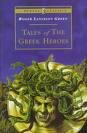
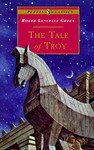 Tales of the Greek Heroes by Roger Lancelyn Green (Puffin Books, London, 2002) and The Tale of Troy by Roger Lancelyn Green (Puffin Books, London, 1994)
These two books are meant to be read together, with the story of Troy second.
After my very positive experiences with Green's books on Robin Hood, King Arthur, and ancient Egyptian stories, I expected too much of these two. I still recommend them; they are worth reading, and I found that within a week something I read there helped me understand a story I heard later. Nonetheless, there are drawbacks.First, they are ambitious, especially Tales of the Greek Heroes. Green's scrupulous attention to historical and literary accuracy is commendable, as is his desire to present the stories in a manner that demonstrates their logical and chronological connections. However, although I consider myself moderately familiar with Greek and Roman mythology, I soon found out how little I really know. These books are written for children—for example, he gives a clear, age-appropriate explanation of why the Immortals had so many wives, not pressing the distinction among wives, lovers, and victims of assault—but with children I wouldn't begin here. Perhaps the D'Aulaires' Book of Greek Myths would be a better introduction. I found all the names of the Greek Heroes, Immortals, and mortal men (and women) to be terribly confusing—I, who had no trouble whatsoever keeping track of all the characters in The Lord of the Rings. Pronunciation would be a read-aloud nightmare, too.
Then there's the matter of content. I am reminded of why I never made it through The Iliad, getting heartily sick of all the battle scenes early in the poem. And why G. A. Henty's With Lee in Virginia left me groaning, "Not another eight paragraphs on battle strategy!" even though I've like most of the Henty books I've read. Those who enjoyed the endless battles in the movie version of The Lord of the Rings may do fine with this, but there's only so much swaggering pride, battle lust, and vengeance I can take.
One surprising effect it all had one me: I came through it with a better appreciation for spectator sports. By all means, let the screaming, foaming-at-the-mouth Gator fans swear vengeance on the equally insane Seminole fans. As the history of man goes, it wasn't all that long ago they were tossing boulders instead of basketballs, swinging clubs instead of baseball bats, throwing spears instead of footballs, and sacrificing daughters instead of holding tailgate-party barbecues.
In some ways, however, things haven't changed much.
The ancient Greek stories, like the Bible, Shakespeare, and much of what is called classic literature, are important to know because of the insight they give into human nature, history, and culture, whether or not one appreciates the content. And like all great literature, they won't be mastered through one book, nor in a single reading. Green's books may not be the best introduction to the topic, but they'd be a great second or third step.[Heracles] wandered far and wide until at length he came to another cave in which he found a mysterious creature. [He asked,]
"Strange maiden, have you seen my horses?"
"Yes," she replied, "it was I who took them in when they strayed this way. But I will never give them up to you, unless you wed me, according to the custom of this country. Here we are married when we have kissed thrice; and the marriage lasts only for as long as we both wish it."
Permalink | Comments
Category Reviews Children & Family Issues
RootsMagic, my favorite genealogy database program, has released RootsMagic Essentials, a version you can download that is absolutely free! In case anyone is wondering, I don't get a thing for this endorsement; I just like RootsMagic, and I like encouraging interest in genealogy. It looks as if one can do a lot with Essentials, and it might be a great, commitment-free way to keep track of family information even if one doesn't have (yet) a desire to delve any further. Sadly, one of my favorite features, color coding of families, is not part of the stripped-down version, but—tanstaafl—if there is, sometimes, a free lunch, the full-course dinner always costs.
If any of my family members decide to download RootsMagic Essentials, I'll be happy to send along a copy of my database. :)Permalink | Comments
Category Reviews Random Musings
Some things one can never tire of, like the light of understanding in a child's eyes, the leap of the space shuttle into the sky, and the magesty of animals in their natural surroundings.
As a rule, on most days I take time out for a four-mile walk/run, followed by a swim when the weather permits. My legs are short, so this usually excises an hour and a half from my day. Being a procrastinator by trade, too much of the time I find myself attempting to squeeze it in before sunset.
It doesn't help that here in Florida we do not have the long twilight that northerners enjoy, so I need to watch the clock rather than the window. I can leave home in broad daylight, and by the time I return it is dark. The halfway point is in a small, nearby park with a jogging trail through the woods, and before I finished my circuit the other day, dusk was well-settled. I prefer not to run under those conditions, since it's harder to see the potentially treacherous dips and hills in the path—but there are advantages.
Like the sudden, silent flight overhead of a huge barred owl, who obligingly paused on a tree branch long enough for me to admire it briefly.
I continued my run with a lighter step.Permalink | Comments
Category Everyday Life
In Forgetting the Unforgettable, I remarked on how ordinary were my diary entries when the Berlin Wall was breached. In a subsequent comment, Stephan mentioned that he barely remembers the event, despite living so close to Germany.
Soon thereafter, while taking my customary walk and listening to a history lecture on my trusty mp3 player, I was reminded that the Cuban Missile Crisis occurred when I was the age Stephan was when the Wall fell. I have no memory of the event whatsoever, nor of any particular anxiety because of the imminent threat of nuclear war. We had "air raid drills" in our elementary school, but that was nothing new; they were a normal part of school, like the equally-frequent fire drills. If the adults in my life worried about the situation, none of that filtered down to me. My life comprised surviving fifth grade, playing with my friends, and enjoying my new baby brother.
Curious, I delved into the journals that my father had kept, hoping there would be entries for October 1962, and there were. I looked forward to hearing how he and my mother had dealt with the fears that, I'm told, caused families eating breakfast to wonder if they'd still be alive at dinnertime.He had written absolutely nothing.
The closest thing to a political comment came on November 6: "This was election day, and therefore a holiday. We voted a little before 9 a.m....Most of the evening was spent in front of the television set watching election returns." No mention of the results, nor how he felt about them.
As for the rest, he wrote a wonderful chronicle of everyday life. He wrote about the speed-reading class he was taking in the evenings, the meetings of the Beukendaal Volunteer Fire Department (almost 50 years later, it's still volunteer, and still uses yellow trucks!), and a little about his job (not much, since much of that was Classified). He noted my three-year-old brother's reaction to his smallpox vaccination ("Nothing serious, just a little fever that makes it obvious he is not feeling real well"), and my reaction to my first Civic Music Concert ("I think Linda truly enjoyed it. I am sure part of her enjoyment came from the fact that she went somewhere new and part from the fact that she stayed up late. On the other hand, she has always liked classical music, and has recently been exposed to The Fire Bird Suite* in school."). He chronicled Saturday errands in town with his son, a visit to Rochester to see his father ("All three children behaved beautifully!"), and a Columbus Day holiday venture in which he took my Girl Scout troop climbing in the Adirondack Mountains ("All the troubles of going up were forgotten on the top and the girls were soon busy admiring the view and eating lunch in that order. They were all thrilled at being on top and for many it was a new experience....Just as we were almost packed up to leave, the skies opened up and we got rained on....At least they know why we said to bring a change of clothes."), and Hallowe'en ("Linda's costume this year was a parking meter. She made a box that covered her head with an opening in front and a rotating disc in the opening that indicated the time left on the meter. She wore the aluminum-colored shirt and gray slacks that she wore last year as her suit of armor....[My brother] wore the clown suit that Lynn made for Linda at about that age."). He spoke of raking leaves, turning the compost heap, and planting bulbs, of making applesauce from two bushels of apples we had picked ourselves at a cost of $3.50, and of the unusually warm weather (October 18: "We still have not had a killing frost."). There were always repairs to be made: to the car, to the baby seat, to the radio ("mostly by replacing a tube"), and of course there were school meetings ("Social Studies...tries to be as timely as possible, especially with regard to government. 'A big part of 5th grade is getting the children interested in something other than themselves.'"). There were lovely evenings by the fire, with popcorn and games, and visits to and from friends and neighbors.
But there was no politics. It hard to imagine that the subject did not come with their friends across the bridge table, but if it did, I did not hear it—and I did eavesdrop from time to time. I think back then it was considered more important to protect children from the harsher realities of life, and we weren't immersed, as children are today, in a sea of unrelenting media coverage. Those were also the days when politics, religion, and one's ailments were not considered suitable topics for general conversation.
My parents were both intelligent and well-educated folks, and my father especially loved history. But of their political views they said little, and I'm not all that sorry for it. They believed so strongly in the secret ballot that they almost never revealed for whom they had voted.
Later in life, however, my father did make one memorable political statement that expresses both the climate of the times and his own personality. "They told me," he intoned, "that if I voted for Mr. Goldwater for president, our country would become mired in a war in Vietnam. Well, I did vote for Mr. Goldwater, and sure enough it came to pass, just as they had said."
Permalink | Comments
Category Politics Random Musings
This day in 1918 marked the end of the War to End All Wars. Less than a handful of veterans of that war remain to be honored. But where there are people, there will be wars; where there are wars, there will be veterans; and where there are veterans, they deserve honor and respect. In any conflict there will be some, to be sure, who serve dishonorably, for their own gain, with evil intent, or with twisted logic, as recent events attest. The hanging scene in Shakespeare's Henry V is intense, and shocking to our modern sensibilities, but makes the point that in a civilized society wrongdoing in members of the armed forces is even more offensive than civilian crimes.
Horrendous exceptions to the contrary, soldiers and sailors, be they enemy or ally, are standing "between their loved home and the war's desolation." As J. R. R. Tolkien reminds us in The Return of the King: "It must often be so ... when things are in danger: some one has to give them up, lose them, so that others may keep them."
Thank you, veterans and current members of our Armed Forces.Permalink | Comments
Category Random Musings
Where were you 20 years ago today?
My own journal entry is remarkably filled with the mundane details of life with two young children. There is one exclamatory sentence, "Would that every day could be like this!" but it was referring to Heather's having awakened with her alarm clock, showered, dressed, made her bed, cleaned her room and finished all her chores before school. Not as momentous as events on the other side of the world, but a personal triumph.I chronicled the minutia of my own work: volunteering at the local middle school, sewing patches on our Indian Princess vests, making Bay Punch, and writing letters. I mentioned Porter and Janet's Indian Princess meeting in the evening. There was even the recurring whine about school, in this case my frustration with Heather's fifth-grade teacher, who, I thought, was putting undue restrictions on the books the children were allowed to read in class.
Mrs. C. responded to my letter, and the response was not at all what I had hoped. She praised the required books as “Sunshine State Young Readers Award” winners (which means little more than that a lot of kids voted that they liked the books) and defended restricting the kids to those books during English reading time, “because I then can control what books the students are reading, feeling confident they are reading from an approved list.” I don’t object to her wanting to have some control over the reading the kids do in school, but I do object to her using an “approved list” without exercising good judgement. Even Newberry Award winners are not necessarily all good, and there are plenty of good books excluded from each list. The Sunshine State awards are heavily biased toward modern books; I don’t believe a deceased author has a change of winning. Perhaps Mrs. C. really does think that astral projection and high school romances are good topics for fifth graders to read about, but I’d rather hope it isn’t so. She could at least admit that Little Women, Robin Hood, and similar books are also good reading, but she will not include those in her “approved” reading. Even Heather is frustrated by this; she is beginning to be able to tell a junk-food book when she reads one. We talked about it a bit; perhaps she will become frustrated enough to be willing to “play the game.” She can pick out an “approved” book to read for the restricted 10 minutes, then set it aside until the next day and spend the other reading times with a more appropriate book. It’s silly to have to do that, not to mention frustrating to leave a book in the middle, but it may be the only way.
Only at the end of my entry did I mention the momentous occasion of the day, and my reaction was characteristically subdued. When something almost too horrible to think about has been a given for most of your life, it is hard to believe that change is really happening. Unlike Porter, I had not been through Checkpoint Charlie with all its horrors, but I remembered well the Soviet invasion of Czechoslovakia, and feared that Eastern Europe's new freedoms would be short-lived.
Today the East German government announced that its citizens were free to travel to any country, whenever they want to. This is the most remarkable news I ever expected to hear. It is in the government’s best interest; the only way they can reasonably slow the exodus of East Germans through the recently more relaxed borders of other East European countries is to give some assurance that things may be getting better at home. But the East German government has not been known for being reasonable, and they could have started building walls between their country and the others. Let us hope that “hardliners” in the USSR and other Communist countries don’t get so fed up with reforms that they take over to “save” their countries. Except for Albania, I expected East Germany to be the last country to reform.
The next day I wrote, "I wish I knew what K. and G. are thinking. How exciting to be in Germany (and within sight of the border) in these times. People are dancing on top of the Berlin Wall." There were friends of ours who were on sabbatical in Germany. For Christmas that year, they gave each girl a piece of the Berlin Wall. They were, and maybe still are, too young to fully appreciate the significance of those gifts, more precious in their own way than moon rocks.
It is the gift, and curse, of each younger generation, not to appreciate the horrors that have gone before. CNN's report on today's upcoming festivities was clearly written by someone for whom the events remembered are mere history. The human face of what East Germany was like with the wall in place is completely missing in the report.
It's a shame Ronald Reagan can't join them: "Mr. Gorbachev, tear down this wall!"[German Chancellor Angela] Merkel, the first former East German to lead the reunified country, will join former Soviet leader Mikhail Gorbachev in a symbolic walk through the point where the first people crossed the Wall on the night of November 9, 1989.
Permalink | Comments
Category Education Politics Random Musings
What do hippies and Christians have in common? A lot more than you might think.
The stereotypes: Hippies are free-lovin', goddess-worshipping ultra-liberals who rebel against society's norms and customs; Christians are moralistic, hyper-conservative corporate capitalists; and never the twain shall break bread together.
Quite the contrary. Christians and hippie types alike tend to look at society's conventions with a skeptical eye.I first noticed this in the early days of homeschooling, when our "fellow travellers" were united by just one thing: an unconventional view of the meaning and purpose of education. This view made good friends and staunch allies of conservative Raymond Moore and liberal John Holt, vocal and active leaders in the movement who had little else in common.
Years later I saw the same pattern in the home birth movement. Then in small and home-based businesses, and on small, sustainable, organic farms.
The Good Shepherds is an inspiring and encouraging article on the last.
Scott was skeptical when his wife said that she felt God wanted the family to raise sheep. "Excuse me," Scott replied. "I can't even stand to mow my own yard. What makes you think I'm going to start doing things like that?" ... Today, Lamb of God farm supplies about 40 families every week of the summer with fresh fruits and vegetables, and sells produce at farmers' markets around Chicago. Wool from their sheep is sold at a nearby knitting store, owned by their daughter. ... It would [now] take a miracle to get him to suit up again for a corporate boardroom, Scott says. "[Farming] is the most satisfying work I've ever done. It's because God's got his hand in it. There's something very elemental about tending this piece of his creation."
Called Christian agrarians, these families are tapping into broader cultural trends: interest in organic and locally produced food, back-to-the-land movements, and conservation and environmental concerns. They are resisting other trends: large-scale conventional agriculture, population flight from rural communities, and fragmented suburban life.
Joel Salatin is a kind of elder statesman of this small movement. He's been working Polyface Farm in Virginia since he was a kid, and he has made a living at it since graduating from college. Though it would be fair to call him an evangelical and an environmentalist, Salatin fights labels. He calls himself a "Christian libertarian environmentalist capitalist." He complains that evangelicals have been inconsistent. "We look at the liberal, who wants to abort babies and hug trees. We say, 'What is it with you?' " he says. "Well they look at you and me and say, 'What is this about you pro-lifers who want to genetically engineer food and eradicate everything?' "
Neither liberals nor traditional evangelicals are flocking to the countryside, but another group is, says Salatin. "Thirty years ago, 80 percent of all visitors to our farm were hippie, cosmic-worshipping, nirvana earth muffins," he says in his typical rambling manner. "Today, 80 percent are Christian homeschoolers."
"Once you opt out of the conventional paradigm [of public schooling] and find it satisfying, then you begin searching for other paradigms to opt out of," Salatin says. [F]amilies that homeschool often start looking for ways for fathers to leave their office jobs. "How do I leave my Dilbert cubicle at the end of an expressway," Salatin says, "and instead invest in my family, my kids, my community?"
Homeschoolers, home birthers, homemakers, family businesses, and small farmers—for whom I pray daily—may never be more than fringe groups in our society. Not everyone—and perhaps only a few—can follow all, or any of these paths. But we would do well to encourage them, to cultivate and not penalize their growth, for they may be the remnant that preserves the good we are rapidly forgetting, like the dedicated conservators who raise heritage crops and farm animals. As Neil Postman said, in another context, Those ... who resist the spirit of the age will contribute to what might be called the Monastery Effect, for they will help to keep alive a humane tradition.Every year on his 550-acre farm, 450 acres of which is wooded, Joel Salatin produces 40,000 pounds of beef, 30,000 pounds of pork, 10,000 broiler chickens, 1,200 turkeys, 1,000 rabbits, and 35,000 dozen eggs. In The Omnivore's Dilemma, Michael Pollan says the land, despite being used so intensely, "will be in no way diminished by the process—in fact it will be the better for it."
That's partly because Salatin's methods are vastly different from those of most contemporary farmers. In contrast to industrially produced chickens that can't leave their cages, that need to have their beaks cut off so they don't peck at each other, and that are ridden with disease, Salatin allows his chickens to poke freely around his pasture.
Salatin says he is just copying creation. "We use God's design and take it as a template," he says. "Our overriding question is not how do we grow the chicks bigger and faster and cheaper. The goal that we have is how do we … create a habitat that allows the chicken to fully express her 'chickenness.' "
Every day, Salatin moves his cows to a fresh spot of grass. The cows eat all day. At night, Salatin moves them to another spot. He then moves his chickens to where the cows were. The chickens eat the bugs and larvae growing in the cowpats. This "sanitation crew" cleans up after his cows. "Just like in nature, birds always follow herbivores, like the egret on the rhino's nose," he explains. Chickens' droppings, combined with cows', fertilize the grass, which in two weeks will have regrown enough to be ready for the cows again.
Symbiotic relationships are at work all over Salatin's farm. Without fertilizer, without hormones, and without cows and chickens forced into industrial factories, Salatin produces a healthy amount of food—and it is healthy food, too, for which customers come directly to him and pay top dollar. "What is it worth to have chicken that reduces your cholesterol instead of increasing it?" Salatin says. "We've had our chickens tested. They're 25 times cleaner than what's in the supermarket."
Permalink | Comments
Category Random Musings Conservationist Living
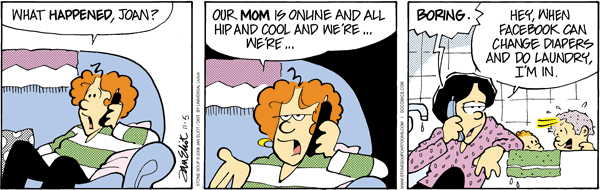
Today's Stone Soup says it all. Far from being boring, the people I know who are not active on Facebook are choosing instead to live their First Lives. :)
Permalink | Comments
Category Just for Fun
More from the backblog . . .
The Strange Double Standards of Abortion John Stackhouse muses on the murder of abortion doctor George Tiller, vigilantism, and hypocrisy.This past week, a teenager in Vancouver was arrested by police because friends of his had noticed a “hit list” of over 100 people posted on his Facebook page. When the police seized the Grade 12 student, they found an arsenal of knives, guns and batons. That young man attends my son’s high school.
Suppose he lived next door. Suppose I read the Facebook page one evening because my son brought it to my attention. Suppose the next morning I saw him loading weapons in the trunk of his car. What would I do to stop him from killing innocent people?
Reflections on My Termination Peter Augustine Lawler, former member of the President's Council on Bioethics, considers what is lost by President Obama's approach to the moral issues of the day.
For Obama, a valuable Council does nothing but offer advice to the administration. The Bush Council was actually given the additional mandate of public education, of developing a national dialogue on controversial bioethical issues. It's with that Socratic second mandate in mind that President Bush chose for his first chairman a man trained in medicine, natural science, and the wisdom about being human embodied in the Great Books from Plato through Shakespeare to Genesis--Leon Kass. For Obama, it would appear, there's no need for such moral and political discussion or such "humanistic" guidance because the experts know the nonideological and objective answer to the key questions that face us in our high-tech and increasingly biotech world. Personal opinion is trumped by what the "studies show," and public opinion should be guided toward a consensus based on those studies.
For many of the bioethical issues that face us, there's no obvious, objective solution—meaning one that emerges from experts without real moral and political deliberation. That doesn't mean that the contending parties involved should be narrowly ideological or blindly fundamentalist. It's their duty to be and in fact they often really are guided by what we can really know through science. But as Socrates himself constantly reminded us, for the most reasonable of men and women the key questions often remain more obvious than their answers. There's no substitute, in a democracy, for thinking together about who we are before deciding what to do, and it's not "anti-science" to sometimes conclude that science alone doesn't resolve every dilemma we face about human freedom and dignity.
The rule of experts might be fine if they were philosopher-kings who had united in themselves not only technological power but perfect wisdom. But of course, it's much more clear that the human power over nature and human nature is growing faster than is our wisdom to use it well for authentically human purposes. The experts, we have to remember, very often hide their own personal opinions and ideological agendas behind their impersonal claims to merely be following what the studies say. We can learn from them, but as long as they fall short of perfect objectivity based on perfect wisdom, we shouldn't trust them. These days, the people, above all, should distrust meddlesome, schoolmarmish judges and bureaucrats (and presidents who enable them) who want to deprive them of the capacity of thinking for themselves.
State Slaps Dr. Do-Good Insurance laws have a purpose, as most well-intentioned laws do. What laws rarely have is common sense, something judges sometimes, but increasingly rarely, provide.
The state is trying to shut down a New York City doctor's ambitious plan to treat uninsured patients for around $1,000 a year. Dr. John Muney offers his patients everything from mammograms to mole removal at his AMG Medical Group clinics, which operate in all five boroughs. "I'm trying to help uninsured people here," he said. His patients agree to pay $79 a month for a year in return for unlimited office visits with a $10 co-pay.
But his plan landed him in the crosshairs of the state Insurance Department, which ordered him to drop his fixed-rate plan—which it claims is equivalent to an insurance policy.
He says he can afford to charge such a small amount because he doesn't have to process mountains of paperwork and spend hours on billing. "If they leave me alone, I can serve thousands of patients," he said.
The state believes his plan runs afoul of the law because it promises to cover unplanned procedures—like treating a sudden ear infection—under a fixed rate. That's something only a licensed insurance company can do.
The doctor's plan is no substitute for health insurance, since it doesn't cover anything he can't do himself, eliminating the catastrophic, big-ticket items that are the raison d'être for insurance. People who are generally healthy might find $1000 plus per year a bit steep for simple office visits, but what could be wrong with offering fixed-fee services, as long as he's not the only game in town?
Unplugging Grandma Isn't the Problem The problem is getting Grandma care in the first place. The article also debunks the much-thrown-about life expectance statistics.
[President Obama] has no plans, as he put it, to "pull the plug on Grandma." The problem with government health systems is not that they pull the plug on Grandma. It's that Grandma has a hell of a time getting plugged in in the first place. The only way to "control costs" is to restrict access to treatment, and the easiest people to deny treatment to are the oldsters. Don't worry, it's all very scientific. In Britain, they use a "Quality-Adjusted Life Year" formula to decide that you don't really need that new knee because you're gonna die in a year or two, maybe a decade-and-a-half tops. So it's in the national interest for you to go around hobbling in pain rather than divert "finite resources" away from productive members of society to a useless old geezer like you. And you'd be surprised how quickly geezerdom kicks in: A couple of years back, some Quebec facilities were attributing death from hospital-contracted infection of anyone over 55 to "old age."
I had an elderly British visitor this month who's had a recurring problem with her left hand. At one point it swelled up alarmingly, and so we took her to Emergency. They did a CT scan, X-rays, blood samples, the works. In two hours at a small, rural, undistinguished, no-frills hospital in northern New Hampshire, this lady got more tests than she's had in the past decade in Britain—even though she goes to see her doctor once a month. He listens sympathetically, tells her old age often involves adjusting to the loss of mobility, and then advises her to take the British version of Tylenol and rest up. Anything else would use up those valuable "resources." So, in two hours in New Hampshire, she got tested and diagnosed (with gout) and prescribed something to deal with it. It's the difference between health "care" (i.e., going to the doctor's every month to no purpose) and health treatment—and on the latter America is the best in the world.
Daughter Saves Mother, 80, Left by Doctors to Starve Speaking of unplugging Grandma . . .
Hazel Fenton, from East Sussex [England], is alive nine months after medics ruled she had only days to live, withdrew her antibiotics and denied her artificial feeding. The former school matron had been placed on a controversial care plan intended to ease the last days of dying patients. Doctors say Fenton is an example of patients who have been condemned to death on the Liverpool care pathway plan. They argue that while it is suitable for patients who do have only days to live, it is being used more widely in the NHS, denying treatment to elderly patients who are not dying.
Fenton was admitted to hospital suffering from pneumonia. Although [her daughter, Christine Ball] acknowledged that her mother was very ill she was astonished when a junior doctor told her she was going to be placed on the plan to “make her more comfortable” in her last days. Ball insisted that her mother was not dying but her objections were ignored. A nurse even approached her to say: “What do you want done with your mother’s body?” On January 19, Fenton’s 80th birthday, Ball says her mother was feeling better and chatting to her family, but it took another four days to persuade doctors to give her artificial feeding.
Permalink | Comments
Category Health Politics Random Musings
Despite my efforts, my backblog appears to be growing faster than I can deal with it. Here's a quick look at several interesting health-related issues that have come my way recently. (Where "recently" is defined as "sometime within the last year or two"; that's how old some of my backblog is.)
Acknowledging Preindustrial Patterns of Sleep May Revolutionize Approach to Sleep Dysfunction Do you worry when you awaken in the middle of the night and can't get back to sleep? Your body may be rebelling against unnatural sleep patterns imposed by artificial lighting and our frantic schedules.In the course of gathering information for his book, At Day's Close: Night in Times Past, which is about night in preindustrial times, A. Roger Ekirch, professor of history at Virginia Polytechnic Institute in Roanoke, uncovered the fact that in preindustrial times before artificial illumination was widely used, persons typically slept in 2 shifts. They called the shifts "first sleep" and "second sleep." In those times, sleep was more closely associated with sunset and sunrise than it is now. Within an hour or so after sunset, persons retired to bed, slept for about 4 hours and then woke up. They remained awake for a few hours and then returned to sleep at about 2 am for another 4 hours or so.
Written records from before the first century onward indicate that the period between first and second sleep afforded persons a chance for quiet contemplation, but persons also rose from bed during this interval and did household chores or visited with family and friends. Although diaries, court documents, and literature of the time indicate that this sleep pattern was widely acknowledged, this bit of history had been lost until the debut of Ekirch's work. The pattern of sleep he describes as the norm in days past is no longer the norm in developed countries where artificial light extends the day. Anthropologists, however, have observed a similar pattern of segmented sleep among some contemporary African tribes, such as the Tiv of central Nigeria, who even refer to their customary sleep patterns as first sleep and second sleep, just as the early Europeans did.
In-Body Stem Cell Therapy Has Enormous Potential for Bone Injuries If you're as sensitive as I am to the violence committed in the name of stem cell research, rest easy: this amazing breakthrough from the University of Rochester Medical Center uses the body's own stem cells, in vivo.
At the heart of the research is the drug teriparatide . . . which was approved by the FDA in 2002 for the treatment of osteoporosis. Astute observations led a team of clinicians and researchers to uncover how this drug can also boost our bodies’ bone stem cell production to the point that adults’ bones appear to have the ability to heal at a rate typically seen when they were young kids.
“I had patients with severe osteoporosis, in tremendous pain from multiple fractures throughout their spine and pelvis, who I would put on teriparatide. . . . When they would come back for their follow-up visits three months later, it was amazing to see not just the significant healing in their fractures, but to realize they were pain-free—a new and welcome experience for many of these patients.”
Circumcision Is Found to Curb Two S.T.D.’s This New York Times article left me both confused and concerned. First, even if subsequent research verifies the protective effects of circumcision, the question still remains, why? What would drive men to choose major, irreversible surgery on a most sensitive and important body part over simple hygiene and sexual fidelity? If we needed further evidence that our sexual drive is broken and gangrenous, this would be it. I am not one of those who would ban circumcision, not even for infants who have no say in the matter. For those without religious or other strong convictions, however, administration of the procedure under the mere assumption that one's newborn son will inevitably engage in illegitimate sex seems bizarre. (I wouldn't subject a daughter to the HPV vaccine, either.) Newborn circumcision is a lucrative practice, however, so I wouldn't be surprised to find doctors using this study as an excuse to encourage it.
Women must toughen up for birth—expert A British midwife is mocked for saying that normal childbirth without anesthesia is better for mom and baby. The article does allude to hospital practices, such as leaving the laboring mother alone, that increase pain and subsequent desire for anesthesia. "He urged women to use yoga, hypnosis and massage to overcome pain."
Or they could swear.
Curses can foil pain, scientist discovers According to an English study, swearing lessens pain, though only if it's an unusual response to the stimulus and not a habitual part of one's vocabulary. This may bode ill for our profanity-saturated culture.
Though both sexes experienced a reduction in perceived pain while swearing, females did so to a greater extent. Similarly, swearing increased the heart rate of both sexes, but more so for females. . . . [T]hat result may have stemmed from differences in the way swearing figures in men's and women's vocabularies.
"I suggested for prisoners who commonly swear, the words kind of lose their shock value, whereas a nun who never uses those words may be more emotionally aroused by cursing."
Permalink | Comments
Category Health Random Musings
Recently I enjoyed the position of Grandma-in-charge for Jonathan and Noah while the rest of the family spent the day in Pittsburgh. It was loads of fun, but by the end of the day I could identify with Zoe in the Baby Blues comic below.
Jonathan discovered language early, and has been exceedingly verbal ever since. He also shares with his Aunt Janet a vivid imagination and an endless capacity for story-telling. Unlike his aunt, however, his stories have a decidedly Y-chromosome twist.

Permalink | Comments
Category Everyday Life

