
We're stocking up on meals, pre-birth, and today made a double batch of our favorite stew. The recipe calls for a hefty helping of paprika. Spices should not necessarily be increased in direct proportion, but I like paprika, so I doubled the quantity—and then, as I usually do, threw in a bit more.
Some of Janet's spices are labelled in English, but most in the Swiss triumvirate of German, French, and Italian. This jar had but a one-word label: "paprica." Perhaps paprika is the same in every language.
Or not. The spice in that jar was decidedly not paprika as I have always known it. Picture a pot of stew seasoned with a heaping tablespoon of red pepper....
The stew was delicious. Even Joseph liked it. (Then again, he asks for "spices" on almost everything.) Hot pepper worked. But it's a good lesson in taking care when cooking in another country. What if "paprica" had actually meant "ginger"?
Permalink | Comments | Edit
Category Everyday Life Food
So, Orlando finally gets a Wawa! Nowhere near us yet, but there's hope.
I'm still waiting for a Trader Joe's....
Permalink | Comments | Edit
Category Everyday Life Food
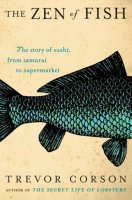
The Zen of Fish: The Story of Sushi, from Samurai to Supermarket by Trevor Corson (HarperCollins, 2007)
Eating sushi is like rearing children: there's always someone happy to point out that you're doing it all wrong.
Not that I care much. So what if many of the rolls I love are American inventions? If the Japanese consider them to be inside-out rolls? If adding more seasoning to your roll is an insult to the chef? (Well, I suppose I care a bit more about the last. I don't like insulting people, especially not those who are providing my dinner. Then again, I'm the one eating it.) I like Japanese sushi; I like American sushi; and I don't mind being too unsophisticated to enjoy the sea urchin and raw quail egg combo that Porter ordered in Boston.
However, I was happy to learn that sushi is meant to be eaten with the fingers, not chopsticks. And eaten in one bite—though I'm not sure how. Do the Japanese have larger mouths than Americans? Seems unlikely.
The Zen of Fish weaves the history, science, and culture of America's unexpected food craze together with the adventures of students at the California Sushi Academy. It's well-written, highly informative, fun to read, and will make you very hungry—when it's not causing you to rethink consuming fish in any form. My only complaint is that the author apparently considered his target audience to be largely made up of adolescent boys. I could have done without most of the sexual references and innuendo—although it was quite cool to learn about the shrimp that start out male, then after a few years become female. The timing of the change assures a gender-balanced population, suggesting perhaps that shrimp are smarter than people.
Okay, even writing about sushi makes me hungry.
Our grocery budget has been taking a hit in the last several months, partly because of a significant general price increase at the stores, and partly because food costs a lot less when half the household has half his meals covered by an expense account, which hasn't happened for a while. (That's not to say it's a bad trade-off for the privilege of working from home.) So it's a very good thing that yesterday was in September, and today in October: I've been having fun.
Yesterday I checked out the new grocery store in town: GFS Marketplace. When they offer you a coupon that takes $10 off a $50 purchase, it would be rude to ignore them.
I had already spent $50 at my regular grocery store this week, but was certain I would have no trouble finding another $50 worth. What I didn't realize until stepping into the store is that GFS is a restaurant supplier. The quantities and sizes would be attractive to a large family, or a large party, but not for everyday wear for a household of two. But I decided to check out the whole store, anyway, and as you might guess my coupon did not go to waste. My first big find was something new and irresistible: three pounds of frozen Alaskan wild-caught salmon burgers for $18. Then five pounds of frozen whole raspberries for $21.50. In my regular store I can find large packages of frozen strawberries and blueberries, but raspberries are only sold in small, expensive packages. And we love smoothies in this household!
Then came the biggest find of all: frozen red, tart cherries! The other stores sometimes carry frozen sweet cherries (also in small, expensive packages), but never this, my favorite type of cherry since early childhood, when my days were brightened with fruit that I'd picked with my own, greedy hands by climbing our very own tree. At $12 for a five-pound bag, I know I'll be going back for more.
That was yesterday; today was even more expensive. I decided it was time for a return visit to Lake Meadow Naturals, the farm which supplies our free-range, local eggs. The farm is a half-hour's drive away, so we normally buy their eggs at one of our local health food stores, especially since they no longer let folks pick their own from under the hens. I'm glad we discovered Lake Meadow Naturals before the policy change, but I understand the need for it. People carry diseases and stress out the chickens: egg production went up ten percent when they closed the nests to the public.
But since our last visit, the farm has branched out to many other products that are not yet carried by our local stores; hence my desire to return. I could easily have spent twice what I did, but my $83 bought me a half gallon of their own honey, a frozen broiler chicken (I could tell it wasn't an agri-business, factory-farmed chicken, because it was the size of a chicken, not a turkey), something over five pounds of frozen, grass-fed ground beef, a gallon of Q-Fresh milk (non-homogenized, from grass-fed cows on a single family farm, but alas, this being Florida, not raw), and a dozen eggs. The whole experience was very pleasant; I especially enjoyed talking with the beekeeper.
We followed this delightful extravagance with a rare trip to Costco. Yeah, I know. How does Costco fit into a locavore, sustainable-agriculture way of life? It doesn't. That's why we try to practice what I call conservationist living: doing what we can in small ways, avoiding legalism, promoting joy rather than guilt.
Stretching the budget, but not breaking it.
Permalink | Comments | Edit
Category Everyday Life Food
 The Raw Milk Revolution: Behind America's Emerging Battle Over Food Rights, by David E. Gumpert (Chelsea Green Publishing, White River Junction, Vermont, 2009)
That the forward to The Raw Milk Revolution was written by Joel Salatin—whose Polyface Farms is the poster child for independent, sustainable farming—gives the reader a good idea of where the book ends up. That's a lot more than the author knew when he began his investigation. He was over 50 when he had his first glass of raw milk, and hadn't given milk of any form much thought for some 30 years.
But for a writer with interests in both small businesses and health, the growing demand for unpasteurized, unhomogenized milk—and the increasing governmental interference with the small dairy farms that are its only source—was a natural field to investigate.
I had my first glass of raw milk at lunch, with a homemade chocolate chip cookie.... Suddenly I was back in my childhood, with my all-time favorite snack. The milk was as creamy and rich tasting as it looked, with a slight sweetness I didn't recall from my childhood milk. ... But I'd be lying if I didn't admit that overhanging the experience was an anxiety-laden question provoked by my American history classes highlighting the importance of pasteurization in saving lives: Might this wonderful milk kill me? I actually went to sleep wondering whether I'd wake up. ... Of course, there was no bad reaction of any sort, and I became a regular customer.
Gumpert is lucky. The places one can legally purchase raw milk are few. In Switzerland Janet lives an easy walk from a local dairy, where she can buy all she wants at a good price. Pennsylvania is one of the few states in the U.S. where raw milk is legal, and Heather can get some for the cost of a long drive and a lot more money than the grocery store charges for their agri-business milk. In Florida we can't buy it legally at any price, except as (very expensive) pet milk, "not for human consumption."
In most places one can still drink the milk from one's own cows (though even that right is in danger), and some farmers have set up "cow share" programs in which the customers actually own a share of the cow and are thus entitled to a percentage of her milk; the farmer's role is caretaker, not owner. This neat little device reminds me of the old days of homeschooling, where families would incorporate as private schools and thus satisfy the law requiring either public or private schooling. The legality of that arrangement for homeschoolers was in many cases questioned, and such is now the case with raw milk cow shares. Worse, really, because education is still very much a local and state concern, but the federal government is putting its muscle behind the campaign against raw milk.
Gumpert does a good job of analyzing the supposed risks versus the supposed benefits of raw milk, while exposing the strong-arm tactics and illogical reasoning being used against small dairies. He has clearly become a raw milk devotee; however, his concern is not simply about milk, but about similar threats to small farmers and the local/natural/sustainable agriculture movement in general.
A month ago, CNN published an article which used the completely unrelated E. coli outbreak in Europe to call for a total ban on raw milk and juice. The Raw Milk Revolution is an excellent refutation of the scare tactics. But here's an interesting quote from the article:
Consuming a diet loaded with fat and salt is unhealthy, but the government has no business regulating that. Raw milk, however, is different.
Really? Why? How is raw milk different? Well, for one thing, the risks associated with raw milk are probably less than the risks of the kind of diet he would keep far away from governmental regulation (as would I). Even if you exclude the long-term, less-quantifiable risks of heart disease, a study reported in The Raw Milk Revolution showed that for listeria, a disease of concern with raw milk, the per-serving risk is ten times greater with deli meat. I don't hear anyone calling for a ban on Subway. (Nor would I; it's my second-favorite fast food restaurant, after Chick-Fil-A.)
I'm not saying the government doesn't have an important role when it comes to food safety. Inspection and certification can provide necessary information that consumers don't always have access to on their own. I'm in favor of state certification of dairies for raw milk—as long as the requirements are reasonable and take into account the great differences between small-scale production and factory farming. (Full disclosure: my great-grandfather, Willis Langdon (1854-1932), was one of the first dairy farmers in the State of Washington to offer certified milk to his customers.)
If you wonder why raw milk enthusiasts are so passionate about the issue, or if you'd like to try raw milk but, like the author at the beginning of his quest, wonder if it will kill you in your sleep, or if you're even thinking about supporting a ban on unpasteurized foods, The Raw Milk Revolution is a great resource for intelligent decision-making.
I know you're all—one or two of you, anyway—waiting with bated breath for the next installment of the Hawaiian Adventure. I'm working on it. But it's not going to happen tonight, so instead you get a quick story of today's enjoyable shopping trip.
Yes. I did just use "enjoyable" and "shopping" in the same sentence.
Thirty-plus years ago we visited Brazil. One of the delights of foreign travel is the opportunity to expand one's taste in food, and that trip introduced us to, among other treasures, jabuticaba jelly, Antarctica Guaraná, and suco de maracujá sem açúcar. The last is passion fruit juice, without sugar, and was my staple breakfast drink every day I could get it.
It is hard to find passion fruit juice here, and when I do, it's always sweetened. Our local Albertsons did start stocking plain, frozen passion fruit purée a few years ago, so when, in my new-found enthusiasm for smoothies, I decided that passion fruit flavor was just what I needed, I turned to them.
Alas, they no longer carry it. But the willing-to-be-helpful clerk suggested we try a Bravo Supermarket. We have several nearby food stores, but Bravo is not one of them. Research, however, revealed one not far from our church, so this morning we ventured in.
Success! We came home with not one but three different brands of passion fruit purée: one from Colombia, one from Ecuador, and one from the Dominican Republic. Mmmm—smoothies tomorrow!
Finding a long-lost love is enough in itself to take the sting out of shopping, but Bravo did us one better by being such an interesting store. Even if it were closer, it wouldn't do for everyday use, because it's a small store with not much general selection. But it abounds in what I'd call, for lack of better information. Hispanic foods. The produce section was amazing, with half a dozen different kinds of bananas, and dozens of fruits and vegetables I know not of.
I look forward to other after-church excursions in the future.
I dislike shopping. (Those who know me, also know how understated that is, but "loathe" seems too strong a word to use about something so trivial.) On top of that, I have an aversion to adding "stuff" to our home. Until proven otherwise, if it takes up space, it's as welcome as an undocumented worker in Arizona.
It only took me a couple of years of waffling before opening the door to this immigrant, but it immediately proved itself a trustworthy and productive citizen: a Cuisenart hand blender.
Why buy a hand blender when you have a perfectly good regular blender already? That nagging question also postoned this purchase, but the answer soon became obvious: despite the similarity of their names, the two appliances serve different purposes, and the hand blender is far superior for making sauces, soups, and—our favorite—smoothies.
The blender itself takes up little space. (The accessories take up a bit more, and I actually haven't used them yet.) No more laborious transfer of hot sauce bit by bit from the pan to the blender: in a few seconds the hand blender delivers a smooth sauce right in the cooking pot. Throw some frozen berries, yoghurt, milk, orange juice concentrate, and almond flavoring (for example) into a quart measuring cup, whirl it around with the blender, and—voilá!—an easy, healthy smoothie. Best of all, the hand blender is an absolute snap to clean.
Okay, so I'm lazy. Is it that much trouble to use the regular blender for these things? Maybe it shouldn't be, but with the hand blender I actually do them. These days, I'm very much into arranging my life for success. Glenn Doman's philosophy, "We arrange for the child to win," works for adults, too. Our new hand blender has turned out to be an effective addition to that toolbox.
Here's a quick story for you while I work on the Hawaii posts. First the bad news. The report is from Australia, but the practice is legal in America, though they are supposed to tell us about it in the fine print.
Yes, it's Frankenfood—but you can't deny it has a coolness factor, too.
As far as I can tell, there are two major problems:
- Contamination. Those of us who like our beef to be mooing know that a rare hamburger is much riskier than a rare steak. With the steak, even brief cooking kills surface bacteria, but with the hamburger the "surface" has been mixed all through the patty. Thanks to meat glue, your piece of meat may look like a steak yet have all the contamination risks of a burger.
- Dishonesty. It's like the carton of juice that proudly proclaims, "Unsweetened," but in the fine print admits it contains sucralose. I wouldn't make using transglutaminase illegal, but I would require a clear, open acknowlegement that the food is not natural.
Don't ban the foods; be honest and let the consumer decide.
The Olde Cup & Saucer, Jamestown Place, Altamonte Springs, Florida
This is for our friend, Nancy: I'm taking you to tea at The Olde Cup & Saucer. All you have to do is figure out how to get here from North Carolina.
It's a pity the Olde Cup & Saucer is in a storefront rather than a garden setting, but if you sit with your back to the window and ignore the fact that you can read the menu, you can at least imagine you're sitting in a European café. Better, because no one's smoking.
The restaurant serves lunch and afternoon tea; we went for the former, and will be back to check out the latter. There's a good assortment of teas available, though we chose the specials of the day for the cheaper price and free refills. True, even $1.25 is a lot to pay when we have a store of many excellent teas at home, but hey, I once spent four Swiss francs for a cup of tea in Bern. (As that cup came with shelter from a storm, as well as a cookie, the price was not too high.)
It was a good Irish Breakfast, served in a lovely cup that brought instantly to mind the above-mentioned friend. (Porter enjoyed the Arctic Raspberry, iced.) From the lunch menu, I chose the Classic, with a cup of the soup of the day and two tea sandwiches. The cheddar cheese and bacon soup was served as hot as I like it, which is rare in restaurants, and I could have happily eaten a large bowl. For the sandwiches I chose curry chicken salad, and spinach. They were out of the spinach, so I substituted cucumber. Both were delicious and creatively presented. Porter couldn't resist the dish named for our mutual ancestor, Henry II: shrimp salad, and a side of hearts of palm with Vidalia dressing. Again, the food was creative and delicious: the shrimp salad included, among other, less-identifiable treats, walnuts and olives. Quantities were decidedly un-American, a "tea sandwich" being the size of half of what I'd call a sandwich, and thus even smaller than normal restaurant fare. But it was enough, just right. Smaller portions lend themselves better to savoring.
The Olde Cup & Saucer also sells a modest selection of loose teas; my only disappointment was discovering that what they call Russian Caravan is noticeably smoky, unlike the other teas I've had under that name. Ah, well—we know people who pass through the Basel train station now and then....
Although I generally prefer to have people come to our house to share meals, sometimes folks would rather meet at a restaurant. I'm confident enough in my cooking not to let this bother me (much), but heretofore I've not had a suggestion to make when asked, "Where would you like to meet?" Now I can't wait for the next opportunity.
Not long after we moved to here, we planted a couple of blueberry bushes in the backyard. As with many of our Florida gardening ventures, this one could not have been called a rousing success. Or perhaps it could, in a relative sense, simply on the grounds that the bushes are still alive. But they never seemed to bear more than a handful of berries each year, and the birds always got to most of those before we did.
This year, however, was different. I have no idea why; but look at all the berries on this branch! (Click on the picture for a larger view.)

So Porter decided it was about time we stopped ceding the crop to the birds, and built this:

Was he more clever than the birds? We'll let you know when the berries ripen.
Permalink | Comments | Edit
Category Everyday Life Food
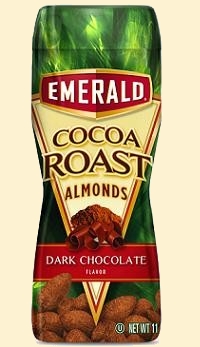 When will I learn not to trust product labels? I tasted these delightful cocoa almonds at the Daleys' and didn't resist when our local Publix had them on a buy one, get one free sale. They were just as good as I had remembered, and Porter agrees with my assessment.
The problem? Hidden away at the bottom of the ingredient list—which otherwise is agreeably small, for a snack food—is that hateful word, "Sucralose."
Now, I'm not opposed to artificial sweeteners for those who want to use them. Xylitol, for example, is an important part of my dental care, and I don't want any well-intentioned busybodies trying to ban it.
But I'm also in favor of full disclosure when it comes to food products, and hiding artificial sweetener behind small print is cheating. One ought to be able to assume that a product is sweetened naturally unless otherwise clearly informed. They could at least have used the same upper case letters that boldly inform me that this product "CONTAINS ALMONDS." Really? A product named "Cocoa Roast Almonds" contains almonds? What is the world coming to?
 I mentioned Speculoos à Tartiner before, when in January this unusual Christmas gift caused both U.S. Customs and the TSA concern on my return from Switzerland. Now that Porter and I have been in the same city long enough to broach the jar, I find it deserves a post of its own.
The giving and receiving of this liquid gold at Christmastime should become a tradition on the order of stockings hung by the chimney with care.
Speculoos à Tartiner looks and spreads like peanut butter, and tastes like a Biscoff cookie. Thus far we have only sampled it on bread—plus a small, furtive spoonful this morning in the interest of journalistic accuracy. For the future I'm thinking pancake, waffle, and ice cream topping, fruit dip, frosting for a creamy vanilla cake, and a new twist on cinnamon rolls. What would you suggest?
It was with much trepidation that I looked at the nutritional data on the label, but it's quite comparable to peanut butter, being higher in sugar, but with fewer calories and less fat.
I'm curious to find out if any of my readers can obtain Speculoos à Tartiner at a local store. Wegmans, for example, is my court of last resort when it comes to unusual foods—what a pity the nearest store is 800 miles distant. But there's always the Internet, where you can buy this confection under the name "Biscoff Spread": $12.95 plus $5 shipping (continental U.S.) will get you two jars. One could easily replace the marshmallow chicks in an Easter basket.
Or you could schedule your own trip to Europe. True, that is somewhat pricier, but also infinitely more rewarding. And in all likelihood it will earn you personal attention from Customs and the TSA upon your return.
What shopping at your standard grocery store, with its standardized food, won't tell you:

The fruit on the left is a lemon, and on the right is a grapefruit. All natural, from local (Central Florida) trees, healthy (as well as healthful), and absolutely delicious!
I should have put something recognizable in the picture for sizing; the grapefruit is about the size of a baseball.
Permalink | Comments | Edit
Category Everyday Life Food
Stephan's thoughtful parents gave Porter a jar of Speculoos à Tartiner for Christmas, and I can't wait to try it. It's made by Lotus, the same folks who make the incredibly delicious Biscoff cookies Porter occasionally brings home from a plane flight.
I don't have as much quarrel with the TSA as many people do, but I am tired of having my luggage singled out for hand inspection nearly every time I fly. On my most recent trip to Switzerland, I wasn't particularly surprised to find the tell-tale TSA notice in my checked bag when it and I were finally reunited (that's another story), because I was carrying a large, metal cylinder filled with dangerous ... candy canes. The can did a great job of protecting the fragile candy, but must have looked intimidating on the x-ray. There is no packing job so good that the TSA can't make a hash of it, but the only victim of their efforts was one crushed chocolate truffle. We promptly destroyed the evidence.
On the way home I thought I had a chance of escaping. I had a few bizarre encounters with airport security—none of which involved pat-downs, I'm glad to say—but it wasn't until I landed in Charlotte that my checked bag became a problem.
First, I was singled out for special treatment at Customs, because I'd answered honestly the question, "Are you bringing any food into the country?" That always gets me into trouble, although normally as soon as I explain that the food is chocolate, cookies, and similar items, they lose interest.
Not this time. Everything, including my purse, went through a scanner. "What's in the jar?" I was asked. "It's kind of like peanut butter," was the best I could do, but it was sufficient. The pleasant Customs officials released me, and I thought I was home free.
Not too surprisingly, however, Customs and the TSA don't share all their information. When I retrieved my bag in Orlando, it was not the unscathed piece of equipment I had re-checked in Charlotte. That my special Towers-Perrin strap was ripped was clearly the fault of some mechanical demon, but what accounted for the odd shape of the bag? When I opened the bag to check for damage, it was clear that someone had gone through the contents. No way would I have left fragile items on the very top, unprotected by several layers of clothing! Amazingly, all appeared to be well, despite the mangling. But who had done the inspection? It must have been done in Europe, I reasoned, because I could see no TSA slip. It wasn't until a few days later, when I removed the Speculoos jar from its protective wrapping, that I found the notice from the TSA, carefully wrapped around the jar.... To give them credit, they did return the glass jar to its bubble wrap, and no damage was done.
I'm really looking forward to tasting that which caused so much concern. If it's as good as I hear, I may be braving TSA and Customs inspections on subsequent trips.
That's all I was going to say. But in researching Speculoos à Tartiner for this post, I came upon this post by pastry chef David Lebowitz. While drooling wandering around his site I also discovered a post about his visit to Lausanne, Switzerland. At least one of my readers will not want to miss it.
On this Thanksgiving Day, as we prepare for a very traditional American feast, I’ll take time to be thankful for the tremendous variety of food now available from other countries and cultures all over the world.
I’m a great fan of the locavore movement; I know from my childhood that nothing tastes as good as food that not only comes straight from a nearby farm, but also has a distinctive local flavor. But there is also something to be said for being able to enjoy fresh fruits and vegetables in the middle of winter.
Even better is the opportunity to enjoy fruits, vegetables, spices, and prepared foods that were unheard of when I was growing up: sushi, satay, tandoori chicken, naan, fajitas, egg rolls, mango lassi, bok choi, passion fruit, kung pao chicken … the list is long of now-common foods that were unavailable to most Americans 50 years ago. I’d never even had a bagel till I went to college with a large crowd from New York City.
What a multicultural feast our table has become!
Permalink | Comments | Edit
Category Food The Good New Days

