
New Year's resolutions are, I guess, a secular version of Lent, though without Easter to look forward to. I've never given much attention to this observance, but I like Lent, and I like new beginnings, so coming up with a few resolutions might be fun.
To those who know what a bookworm I am, resolving to read more books in 2010 will appear about as useful and as difficult as resolving to eat more chocolate or drink more tea. However, despite being an unemployed "empty nester," I've discovered to my shock that I'm now reading fewer books than ever before. I listen to audio books in the car as I run errands; I read blogs, articles, and news stories online; I skim magazines. I read books in five-minute gulps as I can throughout the day—on visits to the "reading room," while eating, while falling asleep at night. But I hardly ever read, i.e. concentrate on a single book for an extended period of time, which is the only way to absorb a book of any substance. I write much more than I used to, and I spend a whole lot of time researching, but to my shock it will apparently take a deliberate determination to once again be able to call myself a reader.
Adopting the management maxim, "What gets measured gets done," and stealing my sister-in-law's idea, I'm creating a page on which to document the books I read this year—see "Books Read" under Links/Personal, in the panel to the right. If I also write about them, I'll include a link to the review as well. And maybe a rating, if I'm feeling ambitious.
Permalink | Comments | Edit
Category Everyday Life
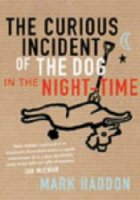 The Curious Incident of the Dog in the Night-Time by Mark Haddon (Jonathan Cape, 2003)
As with Born to Run, I picked up this book because it was lying around and the title caught my eye. I don't recommend it, but that doesn't mean I found it easy to put down. I had intended to take the book on the airplane with me, but finished before my boarding pass was printed. The story is initially compelling and the premise unique: a murder mystery through the eyes of a teen with Asperger Syndrome. Whether the portrayal of the way someone with Asperger Syndrome might think or act is realistic or not, I can't say. But it's an interesting viewpoint, and I loved the math problem at the end (though it was somewhat poorly worded) and the fact that the chapter numbers are all prime.
The age of the protagonist, and the length and easy reading level of the story might mislead someone into thinking this is a children's book, but it's not. Then again, it's not an adult book, either. If the language and subject matter make it unsuitable for the young, the meagre story line (too thin to be called a plot) and unsatisfactory ending make it unsuitable, period. The main character's handicap is no reason for the author to ignore the basic rules of mystery writing.
I am not categorically against profanity in books and movies, although for the most part I find it unnecessary, a cheap and lazy way for authors to make their point—as it is in real life. In the case of this book, however, the foul language is beyond gratuitous. It is pointless, nauseating, and killed what little empathy I had with the characters. It's a bit disconcerting to find I have more in common with autistic Christopher than with his bizarre, potty-mouth parents.
As much as I actually enjoyed reading The Curious Incident of the Dog in the Night-Time, the more I reflect, the more disturbing I find it. Worse than the profanity, worse than the poor story-telling—the book is dismal. There is no joy, little love, less goodness, and only a minuscule potential for hope. Despair and disillusion abound, along with anger, self-centeredness, and minor obscenities that remind me of the Objective Room in C. S. Lewis's That Hideous Strength: nothing so gross as to arouse the protective mechanism of disgust, but everything just a little bit wrong, calculated to reach deep into the unprotected psyche. Some would say this is real, this is life, and books should reflect reality. I reply that it is only part of real life, and that the love, joy, kindness, and triumph I see every day are at least as real and a whole lot more inspiring. If I grant that all of us, at our worst moments, will find within ourselves all the ugliness modern literature can portray, and more, I still insist that depressing books do not help. I need positive role models, not negative ones. A muddy rag cannot clean a grimy face.
What a great idea this was for a book! I wish it had been given a better treatment.
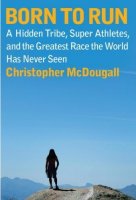 Born to Run, by Christopher McDougall (Knopf, New York, 2009)
A book about running? Not my thing. On my daily walks (where by "daily" I mean five days a week and only when I'm not on the road) I've managed to work my way up to doing a quarter of my four miles at what could charitably be called a slow jog, but there my interest ended. However, my nephew received Born to Run for Christmas, and I was curious enough to flip quickly through it.
Born to Run is a fascinating and groundbreaking book. Actually, it's at least three books, interwoven, and it's no coincidence that when I perused it I couldn't decide if it was meant to be nonfiction or a novel.The first thread—the tale of an ultramarathon race in the nearly-inaccessible Copper Canyon region of Mexico, featuring a bizarre cast of characters from a topnotch American ultramarathoner to primitive Tarahumara Indians to a couple of drunken 20-somethings who just happen to run really, really well—is a moderately interesting adventure story, though the bad language and "adult" content detracts from the tale and prevents me from recommending the book without serious reservations. Perhaps worse is the "docu-drama," fast-and-loose-with-the-truth approach, in which the author reports as verbatim thought processes and conversations which he could not have known. This technique works as fiction, but in this context damages the book's credibility.
Of less interest to me was the second, spiritual, thread, which extols traditional Tarahumara society as an unfallen Eden, and postulates that not running is—I kid you not—Original Sin, responsible for all mankind's problems. You might find this thesis more intriguing if your idea of Paradise includes mad, adulterous, drunken orgies.
The final thread was by far the most interesting, and deserves better than to be commingled with the others.
- People were designed ("evolved," if you prefer), for long-distance running, from the intricate construction of the foot to our breathing processes and sweat glands. We're not the fastest animals on earth, but our heat-dissipation mechanism is not dependent on respiration. Between this advantage and our ability to work cooperatively, we can run down dinner, which is what our ancestors once did. Now we have takeout, and an aversion to sweat.
- Mexico's Tarahumara Indians (the "Running People"), along with a few other dwindling tribes around the world, preserve this ability in their cultures, running ultra long distances with joy rather than pain and exhaustion.
- These primitive tribes are not freaks or savants; running ability is a learned skill, not a genetic mutation. This joy is our birthright as human beings.
- High-tech running shoes have ruined both our feet and our running ability. When it comes to running, less is clearly more. Barefoot is best for the foot, although inexperience and difficult terrain can necessitate some form of protection, in which case a minimalist shoe like the Vibram Five Fingers or other thin-soled shoe is called for. The Tarahumara run in sandals. Even 50s-style Keds are better than the latest springy, gel-filled, microchip-embedded specialty shoes, which weaken the foot and encourage injurious running habits.
- If this inspires you to take up barefoot running, go slowly. Your feet have been imprisoned since you were a toddler, and that weakness can't be overcome all at once.
- Contrary to what most of us believe—and what we are usually told—running is not something we must give up as we age, nor are we locked out of it if we're already old, overweight, and out of shape. Long-distance running is a sport nonagenarians can enjoy, and one in which men have no competitive advantage over women. One woman placed in the top ten of an ultramarathon even though she stopped at the aid stations to nurse her baby as needed!
- Good running is less about speed than enjoyment. The joy is more in the journey than the goal, more in running than in winning.
From my first flip through the book until I reluctantly closed the covers, Born to Run reminded me of Ina May Gaskin's Ina May's Guide to Childbirth. Both are stories of a natural, rewarding function (running/childbirth) lost to modern society through ignorance, laziness, and greed (people, podiatrists, and shoe manufacturers/parents, obstetricians, and lawyers). (That's an oversimplification, but how much can you do in one sentence?) Both postulate that the same medical and technological advancement that has worked miracles has also demonized and dehumanized physiological processes that generally work best with minimal interference. And both bring us into contact with people who we will be tempted to shrug off as irrelvant to our own lives.
Thread 1 of Born to Run will lead you to believe that long-distance runners are folks with a masochistic obsession and a touch of madness, the sort who would bike a million miles, or climb Mt. Everest twice in Pittsburgh. From Thread 2 you would get the idea that they are throw-back hippies, the vegan followers of some never-existed-before blend of paganism and imagined Eastern religion. In other words, runners are Them. Not Us. Definitely Not Me.
But the joy of running is the birthright of nearly every human being on the planet. Whether we have sold our birthright for a couch potato lifestyle, or it was stolen from us by greedy, deceiving, corporate shoe manufacturers, does not in the end matter. The power to change is all ours.
Run.UPDATE: The Second Edition of Phoebe's Quilt, corrected and expanded, is now available.
 My sister-in-law found it in a trunk: an old, handmade quilt. Each block was inscribed with a name, often a city, and sometimes a Bible verse. The cities and many of the surnames were familiar, but no name was identifiable as that of someone in the family. Who were these people? Whose quilt was it, and when was it made? And how did it end up in Prudence's trunk?
Far be it from me to resist a genealogical puzzle, especially when it can be turned into a Christmas present: I would use my genealogical resources to decipher the quilt, and turn my research into a book to put under the tree. Little did I know how much of my life this little project would consume; I'm certain the quilt itself was completed in less time.
Did I say completed? I doubt I've ever used that word in a genealogical context unless accompanied by "not" or "never." But Christmas will come whether or not we are ready, and thus I was saved from my perfectionist tendencies. The project is as done as it is going to get, barring a second edition.
The owner of the quilt was Phoebe L. Scovil, the daughter of Sylvester and Phoebe (Burr) Scovil, who later married Horace Andrew Bonfoey. It was made in Haddam, Connecticut, in approximately 1849. The signers, with their full names—even if they married after the quilt was made—were (maiden names in parentheses): Laura Jane (Prior) Baldwin, Eliza (Burr) Bonfoey, Susan Clarke Bonfoey, Anna Brainard, Clarissa (Thomas) Brainard, Aaron Burr, Amelia M. (Bonfoey) Burr, Elizabeth (Brainerd) Burr, Flora Betsey (Burr) Burr, Rebecca (Bulkley) Burr, Sarah (Johnson) Burr, Willoughby F. Burr, Hannah A. Cory, Louisa (Bailey) Dewey, Adeline F. (Cory) Elliot, Susan M. Flagg, Ann T. (Wright) Gardner, Amelia Bullock (Abrahams) Gay, William Gay, Nancy Smith (Brainerd) Guy, Clarissa (Loveland) Harris, Abba E. Holmes, Almira T. (Hubbard) Hubbard, Lucretia Hubbard, Thankful Hubbard, Mary Ann Hyde, Mary S. (Wright) Hyde, Elizabeth G. (Hyde) Kelsey, Esther Maria (Scovil) Leete, Jane W. Miller, Julia Miller, Phebe A. (Harris) Newton, Cynthia (----) Priest, Joanna Lane (Burr) Prior, Charlotte (Spencer) Redfield, Elnora F. (Bidwell) Roberts, Adalaide (Holmes) Robinson, Cynthia Scovil, Esther Maria (Burr) Scovil, Frances Louisa (Bonfoey) Scovil, Phoebe (Burr) Scovil, Phoebe (Spencer) Scovil, Sarah A. Scovil, Eliza Ann (Smith) Smith, Jane A. (Tryon) Smith, Susan Virginia (Scovil) Stone, Sarah (Burr) Thomas, Albertie Tryon, and Sarah Maria (Wilcox) Wilcox.
Genealogical discoveries are meant to be shared, so for all interested family members, and also because there may be others researching the people represented here, I've attached a pdf of the book: Phoebe's Quilt. I would be grateful to hear from anyone who knows more about the quilt signers, and would also be glad to hear from those who catch the mistakes which I know must have escaped our proofreading. There's always that second edition....
Permalink | Comments | Edit
Category Genealogy Everyday Life Phoebe's Quilt
You read it here first: Steven Perezluha, who this summer rode his bicycle from Florida to Alaska and back, has blown away the record for climbing the University of Pittsburgh's Cathedral of Learning. His uncle, Danny Chew, had held the record at 101 times; that was broken earlier this month by triathlete Diana Marongiu-Lutz. I hope to have more details (and perhaps a link to a news story) later.
Steven's record-setting climb: 132 times!
UPDATE December 31, 2009

Nothing yet from the Pittsburgh papers, but Danny Chew's website has more details than you want to know and some pictures. Several other people joined them for the climb; too bad the former record holder wasn't there to defend her title.
Steven and Danny began their climb at 6:00 a.m. on December 26, and finished 23 hours and 52 minutes later at 5:52 a.m. December 27. Danny broke his own record by ascending 112 times. Steven's record-obliterating climb was a Double Everest: twice the distance from sea levelto the top of Mount Everest.
Not all sports photos show athletes looking their best. But I think I'd look this bad after being awake for 24 hours—never mind climbing Mt. Everest twice.
Photo credit: The Perezluha Family
Permalink | Comments | Edit
Category Everyday Life
The trouble with being a reasonably regular poster is that people start to worry when you get too busy to write. When someone in Europe asks your daughter if everything's okay because she hasn't seen you on Facebook lately...you have to start thinking maybe your online life has been a little too active. Be that as it may, herewith a few highlights. Recently we have:
- Awakened to a Winter Wonderland.
- Shovelled two and a half feet of snow.*
- Zoomed down a hill on fast sleds.
- Enjoyed hot cocoa and a toasty fire.
- Played games. Lots of games.
- Celebrated a nephew's first college acceptance letter.
- Finished (although that's a relative term) a huge genealogical Christmas present project. (To be posted here eventually.)
- Enjoyed cello, clarinet, and guitar music (though not enough).
- Listened to Bartholomew's Passage.
- Made dream cookies.
- Ate dream cookies. And kringle. And M&Ms.
- Watched A Charlie Brown Christmas.
- Stayed up too late.
- Had a wonderful time visiting friends and family.
- Sneezed. (Some of the friends and family had cats.)
- Played at the Connecticut Science Center.
- Enjoyed a few presents and a whole lot of presence.
And it's not even Christmas yet!
Permalink | Comments | Edit
Category Everyday Life
First, our daughter turns 30. Then over Thanksgiving I had the privilege of taking my first nephew-driven car ride (and a great job he did, too). And if that weren't enough, today another nephew received his first college acceptance letter!
Next thing you know, our grandson will be losing his first tooth. Oh, wait, that already happened....Permalink | Comments | Edit
Category Everyday Life
John C. Wright is a science fiction writer, but his essay, On Writer's Block struck me for its wider applicability in his assertion that even the best advice can be counterproductive if it doesn't fit the personality of the recipient. [The emphasis below is mine.]
Each writer approaches his craft in a different way, and advice from one writer to another is useful if and only if you happen to be a writer of the same method and temperament as the first.
Robert Heinlein famously used to advise would-be writers never to rewrite their first drafts, except at an editor’s suggestion. Unless you are a ditherer, that is, someone who wastes his limited writing time rewriting scenes that are already saleworthy, this advice is not useful, or indeed may be counterproductive. Heinlein was warning against the pitfalls of perfectionism. But if you are not a perfectionist, and not a ditherer, the advice is counterproductive, because writers who should rewrite are being told not to. Heinlein was a First Draft man: he could breeze off printable copy his first try. His books sold on the strength of their wittiness, readability, and speculative ideas: one strongly suspects he never went back to his first chapter to set up some plot twist he invented for the last.
If you do not write like him, merely able to breeze off finely crafted copy in your first try, then do not take his advice. Frankly, I thought this one of the worst pieces of writing advice ever, because I suffer the opposite vice. I write impromptu and I like to stick with my first instinct, and therefore I do not rewrite often enough. Hence Heinlein’s advice was the opposite of what someone like me should be told.
Every bit of writing craft advice is only good for you to the degree that it applies to your situation. In this example, Dithering Perfectionists should follow Heinlein’s advice, and never rewrite except at an editor’s suggestion. Impromptuarians should follow the opposite advice that all writing is rewriting.
The catch, of course, is that Impromptuarians are inclined to snatch at the advice best for Dithering Perfectionists, and vice versa. Back in the late 1970s and early 80s, we were frequently urged to do less driving and more walking, advice that I followed with alacrity and even a bit of pride. Alas, there was no virtue in my environmentally-correct response, since at the time getting behind the wheel of a car tended to bring on panic attacks. What I needed to do, at that particular moment, was to walk less, drive more, and conquer my phobia.
Know then thyself.Permalink | Comments | Edit
Category Random Musings
The Franklin Insitute, Philadelphia, Pennsylvania
I don't remember my first visit to the Franklin Institute; I believe it must have been on some visit to Philadelphia when I was very young; all I remember was walking through the heart. Later, however, we moved to the Philadelphia area, and were regular visitors. For two summers I worked in the Franklin Institute Research Labs in the building next door, and even more important to me than my paycheck was the ID badge that allowed me to take the tunnel between the buildings and spend most of my lunch hours in the museum.
After he retired, my dad became a Franklin Institute volunteer, and it was natural for him to take his grandchildren there when they came to visit. By that time, the museum had grown an addition, with new exhibits that made it look like any modern science museum, but the kids' favorite, and my own, was the old building, with its greater educational content and more detailed, written information with each exhibit. Now Dad's grandchildren have children of their own, and on our recent visit to Philadelphia we all looked forward to watching them delight in our old favorites.
The great-grandkids were happy enough, but the rest of us were somewhat disappointed. To our delight, the heart is still there, as is the train that Dad used to drive as one of his docent duties (it's easier to keep a 350-ton locomotive than to get rid of one) but the "new building" style has now infected the old building, too. Many of our favorite exhibits are gone, replaced by displays designed for shorter attention spans and lesser literacy. The math room that had kept our kids entranced for hours was nowhere to be found, and when I finally asked a docent, "Excuse me, it's been a long time since I was here last, and I can't find the math room," he replied, "It has been a long time since you've visited; they took that out years ago."
It took a bit of effort, but we did find Newton's Dream, the kinetic sculpture that so entranced Heather as a child. It's in a different place now, and has been cut down in size, but that didn't stop the children from following it with the same fascination. Also riveting was Der Lauf der Dinge, a Swiss-made movie of a 30-minute Rube Goldberg setup with lots of pyrotechnics and impressive chemical reactions. Thanks to the magic of YouTube, you, too, can see this amazing performance, albeit broken into three segments. (Here are the links as well, since I note that embedded videos don't always show up in feedreaders: Part 1, Part 2, Part 3.
Lest I be seen as a totally hopeless conservative who never likes anything new, the museum's newest exhibit, Amazing Machine, is also excellent, and we could have spent much longer playing with its cams, gears, pulley, and linkages had we not been nearing the end of our visit. (Heather: That's what I want for Christmas. You can turn a mechanical engineer into a joyful homemaker, but the engineer is still there.)
The American Museum of Natural History, New York, New York
On my first visit to the American Museum of Natural History I was probably about as young as when I first encountered the Franklin Institute, but in this case nearly half a century elapsed between visits. The AMNA, however, shows more respect for its old exhibits, and the wonderful dioramas that are all I remember from my first visit are still featured, with all their high information content and long descriptions to read. I could easily have spent the entire day among them. Porter found one, the African buffalo, that was sponsored by George Eastman, and remarked, "He sponsored the Buffalo because there is no animal named Rochester, but he should have sponsored the Kodiak bear." Yes, we're still married; I happen to like that kind of humor.
The museum has several new exhibits as well as the old, most of which were quite good. There was a bit of a "politically correct" feel in a few places, but it was not unbearable, and in general the educational value and written descriptions were sufficient. Despite my primary concern for material to read, I am also particularly sensitive to the layout of displays—color, font, background, use and placement of images and other media—and this, too, the AMNH exhibits did well.
One disappointment was the Hall of Minerals, chiefly because whoever is responsible for lighting must have been on vacation. For several months. It was dark. At first I thought the gloom was meant to provide contrast to the brilliance of the minerals and gems, but many of the lights that should have been highlighting the rocks were also out. We very nearly missed the famous Star of India because it was in the dark.
In addition to the old favorites, we signed up for several special exhibits and shows. Traveling the Silk Road was disappointing, but only because I had expected the most from it. It was well done, but crowded, with not as much information as I had hoped and not enough time in the crowd to do justice to what was there. The best part was the section on silk making and sericulture.
I believe Journey to the Stars was a better-than-average planetarium show (more information, less mindless entertainment), but unfortunately I responded the way I always do when faced with a movie or movie-like substance in a dark room, awakening only at the end.
The Butterfly Conservatory was interesting, though I think I've seen more fluttering in the butterfly garden at our own Leu Gardens.
Frogs: A Chorus of Colors was great; Heather would have loved it. Except the part where we learned about the devastation being wrought by the chytrid fungus.
The American Museum of Natural History is well worth visiting more often than every 50 years. The dioramas alone are a homeschooler's paradise.Where Bd [Batrachochytrium dendrobatidis] thrives, generally in moist cool habitats, 50% of amphibian species and 80% of individuals can be expected to disappear within one year.... Currently it cannot be stopped in the wild and a minority of species seem able to survive with a Bd infection as larvae or as adults and these animals likely serve as a reservoir and vectors for future outbreaks. Notable among resistant species are worldwide invasive pest species including marine toads, American bullfrogs and African clawed frogs.
This morning, the mp3 player that powers the perpetually random assortment of music emanating from our stereo system struck up Stacey Lynn Regan's, I Offer My Isaac. Seven years after our firstborn's firstborn made his grand entrance and agonizing departure from the stage of this world, Stacey's song still has the power to stop me mid-anything and tap into deep wells of sorrow. So do In Christ Alone, which our church programs into the service with alarming frequency, heedless of the fact that one choir member can never make it all the way through the song (breaking down at "from life's first cry to final breath" if not before), and also There Were Roses, a powerful song made all the more poignant because I first heard it, around the time of Isaac's death, in the Green Linnet version—where the name of one of the protagonists is Isaac.
Music has such strange power. These songs call forth deep sobs of agonizing grief, but it is not a miserable sorrow. There may be wounds that time cannot heal, but the lively presence of Isaac's subsequent siblings is a powerful healing agent, as is the certainty that Isaac is safe in God's keeping and we will be reunited at the right time.
Without any justification for such images, other than that he was born blond, I have a definite picture of Isaac in my mind: a cross between C. S. Lewis's Prince Caspian (from the books, not the movie) and George MacDonald's Sir Gibbie; of no particular age, blond, blue-eyed, and almost always laughing.
Here's to our firstborn grandchild, with joyful sorrow, on his birthday.Permalink | Comments | Edit
Category Everyday Life
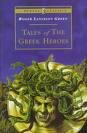
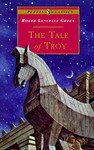 Tales of the Greek Heroes by Roger Lancelyn Green (Puffin Books, London, 2002) and The Tale of Troy by Roger Lancelyn Green (Puffin Books, London, 1994)
These two books are meant to be read together, with the story of Troy second.
After my very positive experiences with Green's books on Robin Hood, King Arthur, and ancient Egyptian stories, I expected too much of these two. I still recommend them; they are worth reading, and I found that within a week something I read there helped me understand a story I heard later. Nonetheless, there are drawbacks.First, they are ambitious, especially Tales of the Greek Heroes. Green's scrupulous attention to historical and literary accuracy is commendable, as is his desire to present the stories in a manner that demonstrates their logical and chronological connections. However, although I consider myself moderately familiar with Greek and Roman mythology, I soon found out how little I really know. These books are written for children—for example, he gives a clear, age-appropriate explanation of why the Immortals had so many wives, not pressing the distinction among wives, lovers, and victims of assault—but with children I wouldn't begin here. Perhaps the D'Aulaires' Book of Greek Myths would be a better introduction. I found all the names of the Greek Heroes, Immortals, and mortal men (and women) to be terribly confusing—I, who had no trouble whatsoever keeping track of all the characters in The Lord of the Rings. Pronunciation would be a read-aloud nightmare, too.
Then there's the matter of content. I am reminded of why I never made it through The Iliad, getting heartily sick of all the battle scenes early in the poem. And why G. A. Henty's With Lee in Virginia left me groaning, "Not another eight paragraphs on battle strategy!" even though I've like most of the Henty books I've read. Those who enjoyed the endless battles in the movie version of The Lord of the Rings may do fine with this, but there's only so much swaggering pride, battle lust, and vengeance I can take.
One surprising effect it all had one me: I came through it with a better appreciation for spectator sports. By all means, let the screaming, foaming-at-the-mouth Gator fans swear vengeance on the equally insane Seminole fans. As the history of man goes, it wasn't all that long ago they were tossing boulders instead of basketballs, swinging clubs instead of baseball bats, throwing spears instead of footballs, and sacrificing daughters instead of holding tailgate-party barbecues.
In some ways, however, things haven't changed much.
The ancient Greek stories, like the Bible, Shakespeare, and much of what is called classic literature, are important to know because of the insight they give into human nature, history, and culture, whether or not one appreciates the content. And like all great literature, they won't be mastered through one book, nor in a single reading. Green's books may not be the best introduction to the topic, but they'd be a great second or third step.[Heracles] wandered far and wide until at length he came to another cave in which he found a mysterious creature. [He asked,]
"Strange maiden, have you seen my horses?"
"Yes," she replied, "it was I who took them in when they strayed this way. But I will never give them up to you, unless you wed me, according to the custom of this country. Here we are married when we have kissed thrice; and the marriage lasts only for as long as we both wish it."
Permalink | Comments | Edit
Category Reviews Children & Family Issues
RootsMagic, my favorite genealogy database program, has released RootsMagic Essentials, a version you can download that is absolutely free! In case anyone is wondering, I don't get a thing for this endorsement; I just like RootsMagic, and I like encouraging interest in genealogy. It looks as if one can do a lot with Essentials, and it might be a great, commitment-free way to keep track of family information even if one doesn't have (yet) a desire to delve any further. Sadly, one of my favorite features, color coding of families, is not part of the stripped-down version, but—tanstaafl—if there is, sometimes, a free lunch, the full-course dinner always costs.
If any of my family members decide to download RootsMagic Essentials, I'll be happy to send along a copy of my database. :)Permalink | Comments | Edit
Category Reviews Random Musings
Some things one can never tire of, like the light of understanding in a child's eyes, the leap of the space shuttle into the sky, and the magesty of animals in their natural surroundings.
As a rule, on most days I take time out for a four-mile walk/run, followed by a swim when the weather permits. My legs are short, so this usually excises an hour and a half from my day. Being a procrastinator by trade, too much of the time I find myself attempting to squeeze it in before sunset.
It doesn't help that here in Florida we do not have the long twilight that northerners enjoy, so I need to watch the clock rather than the window. I can leave home in broad daylight, and by the time I return it is dark. The halfway point is in a small, nearby park with a jogging trail through the woods, and before I finished my circuit the other day, dusk was well-settled. I prefer not to run under those conditions, since it's harder to see the potentially treacherous dips and hills in the path—but there are advantages.
Like the sudden, silent flight overhead of a huge barred owl, who obligingly paused on a tree branch long enough for me to admire it briefly.
I continued my run with a lighter step.Permalink | Comments | Edit
Category Everyday Life
In Forgetting the Unforgettable, I remarked on how ordinary were my diary entries when the Berlin Wall was breached. In a subsequent comment, Stephan mentioned that he barely remembers the event, despite living so close to Germany.
Soon thereafter, while taking my customary walk and listening to a history lecture on my trusty mp3 player, I was reminded that the Cuban Missile Crisis occurred when I was the age Stephan was when the Wall fell. I have no memory of the event whatsoever, nor of any particular anxiety because of the imminent threat of nuclear war. We had "air raid drills" in our elementary school, but that was nothing new; they were a normal part of school, like the equally-frequent fire drills. If the adults in my life worried about the situation, none of that filtered down to me. My life comprised surviving fifth grade, playing with my friends, and enjoying my new baby brother.
Curious, I delved into the journals that my father had kept, hoping there would be entries for October 1962, and there were. I looked forward to hearing how he and my mother had dealt with the fears that, I'm told, caused families eating breakfast to wonder if they'd still be alive at dinnertime.He had written absolutely nothing.
The closest thing to a political comment came on November 6: "This was election day, and therefore a holiday. We voted a little before 9 a.m....Most of the evening was spent in front of the television set watching election returns." No mention of the results, nor how he felt about them.
As for the rest, he wrote a wonderful chronicle of everyday life. He wrote about the speed-reading class he was taking in the evenings, the meetings of the Beukendaal Volunteer Fire Department (almost 50 years later, it's still volunteer, and still uses yellow trucks!), and a little about his job (not much, since much of that was Classified). He noted my three-year-old brother's reaction to his smallpox vaccination ("Nothing serious, just a little fever that makes it obvious he is not feeling real well"), and my reaction to my first Civic Music Concert ("I think Linda truly enjoyed it. I am sure part of her enjoyment came from the fact that she went somewhere new and part from the fact that she stayed up late. On the other hand, she has always liked classical music, and has recently been exposed to The Fire Bird Suite* in school."). He chronicled Saturday errands in town with his son, a visit to Rochester to see his father ("All three children behaved beautifully!"), and a Columbus Day holiday venture in which he took my Girl Scout troop climbing in the Adirondack Mountains ("All the troubles of going up were forgotten on the top and the girls were soon busy admiring the view and eating lunch in that order. They were all thrilled at being on top and for many it was a new experience....Just as we were almost packed up to leave, the skies opened up and we got rained on....At least they know why we said to bring a change of clothes."), and Hallowe'en ("Linda's costume this year was a parking meter. She made a box that covered her head with an opening in front and a rotating disc in the opening that indicated the time left on the meter. She wore the aluminum-colored shirt and gray slacks that she wore last year as her suit of armor....[My brother] wore the clown suit that Lynn made for Linda at about that age."). He spoke of raking leaves, turning the compost heap, and planting bulbs, of making applesauce from two bushels of apples we had picked ourselves at a cost of $3.50, and of the unusually warm weather (October 18: "We still have not had a killing frost."). There were always repairs to be made: to the car, to the baby seat, to the radio ("mostly by replacing a tube"), and of course there were school meetings ("Social Studies...tries to be as timely as possible, especially with regard to government. 'A big part of 5th grade is getting the children interested in something other than themselves.'"). There were lovely evenings by the fire, with popcorn and games, and visits to and from friends and neighbors.
But there was no politics. It hard to imagine that the subject did not come with their friends across the bridge table, but if it did, I did not hear it—and I did eavesdrop from time to time. I think back then it was considered more important to protect children from the harsher realities of life, and we weren't immersed, as children are today, in a sea of unrelenting media coverage. Those were also the days when politics, religion, and one's ailments were not considered suitable topics for general conversation.
My parents were both intelligent and well-educated folks, and my father especially loved history. But of their political views they said little, and I'm not all that sorry for it. They believed so strongly in the secret ballot that they almost never revealed for whom they had voted.
Later in life, however, my father did make one memorable political statement that expresses both the climate of the times and his own personality. "They told me," he intoned, "that if I voted for Mr. Goldwater for president, our country would become mired in a war in Vietnam. Well, I did vote for Mr. Goldwater, and sure enough it came to pass, just as they had said."
Permalink | Comments | Edit
Category Politics Random Musings
This day in 1918 marked the end of the War to End All Wars. Less than a handful of veterans of that war remain to be honored. But where there are people, there will be wars; where there are wars, there will be veterans; and where there are veterans, they deserve honor and respect. In any conflict there will be some, to be sure, who serve dishonorably, for their own gain, with evil intent, or with twisted logic, as recent events attest. The hanging scene in Shakespeare's Henry V is intense, and shocking to our modern sensibilities, but makes the point that in a civilized society wrongdoing in members of the armed forces is even more offensive than civilian crimes.
Horrendous exceptions to the contrary, soldiers and sailors, be they enemy or ally, are standing "between their loved home and the war's desolation." As J. R. R. Tolkien reminds us in The Return of the King: "It must often be so ... when things are in danger: some one has to give them up, lose them, so that others may keep them."
Thank you, veterans and current members of our Armed Forces.Permalink | Comments | Edit
Category Random Musings

