
This week an Orlando man was arrested for smuggling cockroaches into Florida. What was he thinking?
Apparently, bugs are a big business, and officers said he had them illegally shipped into Orlando from California....Local reptile experts said the roaches are a good food source for lizards. They have more meat and more nutrients than crickets. They're also quieter and easier to handle, and once you have some good breeding roaches, you won't have to buy more.
Right. That's why we encourage lizards here, and don't even mind when they come indoors. But breeding roaches? On purpose? <shudder>.
Permalink | Comments
Category Everyday Life
Florida has been hit by unusually cold weather lately, it is true. But many here who complain were not around in mid-1980's, which produced the bitter cold winters which, along with developers greedy for new land, destroyed the Central Florida citrus industry.
That was not all that icy weather and poor human judgement destroyed in those years.
Twenty-five years ago today, we were eager to share with visiting friends one of the blessings of living here: the view, from our front yard, of a space shuttle launch.

Discovery, March 8, 2001
Due to the cold morning temperatures, however, when Challenger lifted off we elected to keep our small children (and ourselves) indoors, for the view was nearly as good from our large front window. But this time, the sight was different. We took no pictures, but thanks to YouTube you can share the experience, albeit from a different angle,
Did I say you could share the experience? You can see it, but you can't share it. That those who weren't here could not understand was made obvious in the ensuing days as jokes and unfeeling comments came forth from other parts of the country. The loss of Challenger and her crew left a mark on Central Floridians similar to that left on the rest of the country twenty years earlier by the assassination of President Kennedy, and twenty years later by the destruction of the Twin Towers.
We still remember.
In his response to the disaster, President Ronald Reagan quoted from this poem by John Gillespie Magee, Jr. It, too, has stayed with me these 25 years.
High Flight
Oh! I have slipped the surly bonds of Earth
And danced the skies on laughter-silvered wings;
Sunward I’ve climbed, and joined the tumbling mirth
of sun-split clouds, — and done a hundred things
You have not dreamed of — wheeled and soared and swung
High in the sunlit silence. Hov’ring there,
I’ve chased the shouting wind along, and flung
My eager craft through footless halls of air....
Up, up the long, delirious, burning blue
I’ve topped the wind-swept heights with easy grace.
Where never lark or even eagle flew —
And, while with silent lifting mind I’ve trod
The high untrespassed sanctity of space,
Put out my hand, and touched the face of God.
Permalink | Comments
Category Everyday Life
I've broken fillings, chipped teeth, and done other costly damage while eating sandwiches, popcorn, grapes, yoghurt, soup, and other items that I reasonably expected to be bone-, stone-, pit- and kernel-free. And yet it never once occurred to me that the suffering and expense should be blamed on someone, preferably someone other than me, and with deep pockets. Accidents happen. Life is not pain free, and I believe that when something bad happens it doesn't always need to be someone's fault.
Unlike Dennis Kucinich, eight-term Representative from Ohio, who is suing the House cafeteria for $150,000 in damages incurred three years ago when he bit into a sandwhich and had an unpleasant encounter with an olive pit.
What was Kucinich thinking? Like a spoiled toddler or delinquent teen, does he believe negative publicity is better than none? Could $150,000 possibly make up for being remembered as the politician who sued a sandwich-maker over an olive pit? He should have learned a lesson from Stella Liebeck, whose name became synonymous with frivolous lawsuits after she filed suit against McDonald's over hot coffee.
Permalink | Comments
Category Politics Random Musings
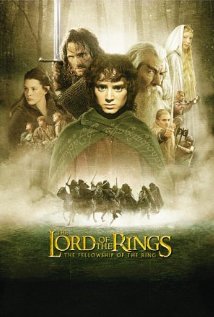 The Lord of the Rings: The Fellowship of the Ring (2001, PG-13)
Rarely do we spare the time, effort, and expense to watch a movie in the theater, but back in 2001 we ventured into the cold of a Massachusetts winter, in my eagerness to see what the filmmakers had made of one of my all-time favorite books (and Porter's eagerness to see New Zealand, one of his all-time favorite countries, the setting for the film).
I was prepared to be disappointed, as I've yet to find a movie more appealing than the book on which it is based. I was not prepared to be bored. I don't bore easily, but this film succeeded: I couldn't wait for the three hours to be over.
Nine years later I decided it was time to give the film another chance. Whether I like it or not, this version has entered the popular consciousness, and for most people, The Lord of the Rings IS the movie. Having recently re-read the book, I ordered the first of the trilogy from Netflix, determined to watch with a more open mind.
This time I was able to see a few elements in the movie's favor. The artists are better visualizers than I am: I'm usually eager to get on with the story and don't spend the time necessary to get a good picture of the scene, no matter how well described; for the same reason, I don't bother, when reading silently, to figure out the pronunciation of difficult words and names. In this sense, the movie made the setting more real to me, and from my (more careful) recent reading of the book I think they did a fair job. I know they tried to be true to the story.
I've also begun to give movie-makers more slack when it comes to faithfulness to the book. I've come to realize that the movie medium simply is not good at producing the kind of depth and completeness that a book can, and very often events must be telescoped or otherwise changed to tell the story on film. For this reason I was willing to put up with at least some of the many deleted and altered scenes.
On the other hand, it's not right to change the very nature of the characters. The most grievous offense I noted in 2001 was what the movie did to the character of Aragorn, and his relationship with Arwen. The second viewing only strengthened that conviction. Frankly, the movie’s Aragorn is a wimp, with none of the power, strength of character, and knowledge of his heritage and destiny so clearly portrayed in the book. And Arwen, though in the book she is both ancient and wise, is not a warrior, and does not rescue Frodo and bring him to Rivendell, peculiar and unnecessary additions made in the movie.
Goodness is extraordinarily difficult to show on film. I have yet, for example, to see a movie that portrays Jesus as anyone one might care to listen to, let alone follow or die for. In fact, he mostly seems to be played a lot like Aragorn. The Fellowship of the Ring’s effort results in making the characters appear more stoned than spiritual. If the expression can be forgiven when talking about hobbits and elves, the characters don’t seem human enough: they are so other-worldly as to be unreal.
So I was disappointed, but why was I bored? I find The Lord of the Rings so exciting and compelling that I’ve lost track of the number of times I’ve read the book. Each time I pick it up, I find something new, inspiring, or simply delightful. Why was the movie boring? Primarily because it was 90% battles and chase scenes. Substitute cars for horses, and guns or light sabers for swords, and it is the same as hundreds of other movies and television shows. Oftentimes I felt caught in the middle of the kind of video game I don’t even like watching.
My tolerance for fights and chases is extremely low: I’m always thinking, “Can we get this over with and go on to the real action, please?” And, no, I don’t mean romance and the “chick flick” kind of action, which I find at least as dull. Conversations, reflections, revelations, mysteries, character development, growth and discovery—that’s what makes a story interesting for me. The Fellowship of the Ring has it all aplenty, but the movie does not. Therein lies the problem.
But hey, the scenery was great.
Would I recommend the movie to anyone? I don't know. If it leads people to read The Lord of the Rings who otherwise would not, that would be a good thing. In my opinion it's one of the greatest books written in recent history—maybe even ever, but I'm not qualified to make that sweeping a judgement. Another reason to promote the film may be that it tells a much better story than most films now available, and therefore deserves credit by default.
I'm not convincing myself. So much of what is great about the book is simply not there in the movie at all. There's a deep, strong, spiritual dimension to the book—wrestling with issues of good, evil, temptation, free will, responsibility, duty, friendship, honor, faithfulness, love, joy—that the movie lacks. Is there any point in getting a mere surface—and therefore false—view of the story?
I'd love to hear from those of you who enjoy the movie version. What do you like? What makes it a good movie for you? Do you see the spiritual qualities that I find absent in the film? If you've also read the book, how would you compare the two versions?
Reading old newspapers is always eye-opening, even when they are from years I myself lived through. While researching for another project, I came upon an old Ann Landers column, published in 1967. What a difference 40 years makes. Would Ann have given the advice in this excerpt even 10 years later?
Dear Ann Landers: I feel like I am living in the dark ages. My husband refuses to allow me to wear shorts in the summer or stretch pants in the winter. — Texas Woman
Dear Woman: I say if a husband is opposed to shorts and stretch pants for ANY reason, a wife should respect his wishes. There are plenty of attractive skirts you can wear, and I hope you will.
First I fumed, then I laughed. All the emotions you would expect. He “refuses to allow” her to choose her own clothing? As if she were a child under three? (Or maybe under two—I believe Faith has a lot of say in what she wears. And opinions, as well.) These days “controlling what you wear” makes the list of traits of an abusive relationship. These days an advice columnist would be more likely to excoriate the man and maybe suggest the woman ignore him, or even leave.
And therein lies the bit of sorrow I feel that we have left those days behind. How often in the 21st century do we get advice to respect someone else’s wishes over our own? To think less selfishly? I’m reminded of Ann Landers’ own (later) advice to women unhappy in a relationship: Ask yourself: “Am I better off with him, or without him?” Always, “What is best for me?” and rarely, “What is best for others?”*
We have lost as well as gained.
Permalink | Comments
Category Random Musings
 Confessions and Reflections of a Traveler, by Brett R. McLean (Iona Press, Vancouver, 200)
If you can't judge a book by its cover, you can't judge it by random samples, either.
Both of our book-loving girls married book-loving men, so a visit to the grandchildren often leads to picking up random books, which might be found anywhere in the house. This particular book was on the bathroom reading shelf, and I found myself picking it up several times a day. In this manner I read many small samplings of the book, taken randomly from the middle.
McLean and a college companion decided one summer to travel across the United States on half a shoestring. Since this is what Porter did some 20 years earlier, I thought the book might be a good gift for some upcoming occasion. To be certain, I decided to borrow the book and begin at the beginning.
Whoa. Nothing I had read in the bathroom had prepared me for what the book was really about: philosophy. That's not McLean's fault; he says so up front. But I'd never read the front, nor, amazingly, encountered any of his dissertation on the history of philosophy, for which the travelogue is merely a series of examples.
I'm not sure this deserves to be called a review, since I was borrowing a borrowed book and reading on a very tight deadline. I ready very quickly over the philosophy, and I'm sure that if I'd had time to be interested in the history of philosophy, I'd have gotten more out of it. But as a book about travelling across America—and therefore appropriate as the gift I was looking for—Confessions and Reflections of a Traveler fails.
What still amazes me is that I missed the main point of the book in all my bathroom reading. My eyes must have unconsciously selected the parts I'd find most interesting, which in the main was the travel stories.
There was one exception: One time I found myself in the middle of the story of a plane crash, in which the survivors found themselves on an island. Still thinking I was reading the story of McLean's journey, I became more and more confused as details emerged. I didn't remember news of that particular crash, but even though I'm not always up on current events, surely I couldn't have avoided hearing about this bizarre story as it unfolded.
Reading the entire book made the puzzle clear: McLean uses not only his own experiences to explain various philosophies in action, but also two examples from pop culture: The Lord of the Rings, and an American television show called Lost. The latter was the source of the plane crash adventure.
I'm not above using stories, fiction or non-fiction, to help me understand and explain life. In many ways that's the best part of reading. But for some reason it really annoyed me in this book. Less so the examples from Lost, since I knew nothing at all about the show, but I kept disagreeing with what McLean said about Tolkien's work, and that short-circuited whatever point he was trying to make.
Philosophy, like history, is not something the completely ignorant (like me) can grasp without a fair amount of effort. I'm finally beginning to make headway in history; when I get around to putting the same effort into philosophy*, it might be good to revisit this book.
I suppose it's cheating to make two posts in a row about someone else's post, but I can't pass up this great Conversion Diary guest post by Simcha Fisher. Her analogy between childbirth and the Child-birth (Christmas) is an imaginative tour de force worthy of Ray Bradbury. (If her writing is less brilliant and esoteric than Bradbury's, it is still excellent, and definitely more uplifting.)
It would be stretching "fair use" too far to quote as much as I'd need to to make her point. Go to the original and follow her from Advent (third trimester) through Christmas (birth, and the first few weeks after) and Epiphany (the light at the end of the tunnel) to Ordinary Time (the return to normal life, with a big difference). Enjoy!
Permalink | Comments
Category Children & Family Issues
Jon's long-time friend Sara Foss writes a newspaper column in my old home town. Recently the family stopped by for a visit, and ended up featured in the latest Foss Forward. Having given Jon ample time to post about it himself, I'm breaking the news here, along with some of my favorite excerpts. :)
[M]y friend Jon; his pregnant wife, Heather; and their three young children — ages 2, 4 and 7 — visited my home in Albany.
Naturally, I was all freaked out about having a bunch of kids descend upon my one-bedroom apartment, which lacks toys, children’s books and games. I did run out and buy pretzels and graham crackers, so that they could have a snack, but for the most part I felt woefully unprepared to entertain my young visitors.
Fortunately, the New York State Museum is right around the corner, and after a brief stint in my apartment, in which the girl played with my collection of turtle knickknacks (I even filled a bowl with water so that she could watch the plastic wind-up turtle paddle around) and her brothers improvised a game of darts in the bedroom, we headed up the street. I suspected the kids would enjoy riding on the carousel, looking at gems and stuffed animals and playing on the computers in the Discovery Room, and I was right.
In truth, I never should have worried about whether I would be able to entertain Jon’s family for an afternoon.
I’ve known Jon since I was 2, and I sensed that his kids were a lot like him — curious, imaginative, friendly, eager to do new things and see new places. What I enjoyed most about them was how well they played on their own; I didn’t have to worry about entertaining them because they entertained themselves. In fact, it seemed like they had just as much fun running up and down the sidewalk and jumping in snowbanks as hanging out in the museum, and their antics reminded me a bit of how Jon and I used to play in the snow when we were kids.
The subject of the article is the habit people have of comparing children, especially babies, with their parents: "He sure looks like his mom"; "That's Uncle Frank's nose"; "She walks just like her father." Sara would agree with Porter's mother, who always insisted, "They look like themselves."
I'll admit to playing the game, including very recently with Joseph, who I think looks very much like his dad from the nose up and his mom from the nose down—based on baby pictures of both.
Jon’s older boy had always struck me as very Jon-like — highly verbal at a young age, interested in puzzles and games, etc. — but now I see more of his mother in him, especially in his face.
I remarked upon this, and Jon said that when they visit his hometown, everyone comments on how much the older boy looks like him — “It’s Jon!” — while Heather’s relatives and friends always note his resemblance to her.
The younger boy did look a lot like Jon, as well as Jon’s brothers, while I had a tough time figuring out exactly who the girl reminded me of, if anyone.
Here's my contribution to the debate about Jonathan. To be fair, I need a similar photo of Jon; it's hard for those of us who didn't know him as a blond boy not to be influenced by hair color. And I would be remiss if I did not point out that "highly verbal at a young age, interested in puzzles and games, etc." is also a fair description of Jonathan's mother. :)

Permalink | Comments
Category Everyday Life
 Stephan's thoughtful parents gave Porter a jar of Speculoos à Tartiner for Christmas, and I can't wait to try it. It's made by Lotus, the same folks who make the incredibly delicious Biscoff cookies Porter occasionally brings home from a plane flight.
I don't have as much quarrel with the TSA as many people do, but I am tired of having my luggage singled out for hand inspection nearly every time I fly. On my most recent trip to Switzerland, I wasn't particularly surprised to find the tell-tale TSA notice in my checked bag when it and I were finally reunited (that's another story), because I was carrying a large, metal cylinder filled with dangerous ... candy canes. The can did a great job of protecting the fragile candy, but must have looked intimidating on the x-ray. There is no packing job so good that the TSA can't make a hash of it, but the only victim of their efforts was one crushed chocolate truffle. We promptly destroyed the evidence.
On the way home I thought I had a chance of escaping. I had a few bizarre encounters with airport security—none of which involved pat-downs, I'm glad to say—but it wasn't until I landed in Charlotte that my checked bag became a problem.
First, I was singled out for special treatment at Customs, because I'd answered honestly the question, "Are you bringing any food into the country?" That always gets me into trouble, although normally as soon as I explain that the food is chocolate, cookies, and similar items, they lose interest.
Not this time. Everything, including my purse, went through a scanner. "What's in the jar?" I was asked. "It's kind of like peanut butter," was the best I could do, but it was sufficient. The pleasant Customs officials released me, and I thought I was home free.
Not too surprisingly, however, Customs and the TSA don't share all their information. When I retrieved my bag in Orlando, it was not the unscathed piece of equipment I had re-checked in Charlotte. That my special Towers-Perrin strap was ripped was clearly the fault of some mechanical demon, but what accounted for the odd shape of the bag? When I opened the bag to check for damage, it was clear that someone had gone through the contents. No way would I have left fragile items on the very top, unprotected by several layers of clothing! Amazingly, all appeared to be well, despite the mangling. But who had done the inspection? It must have been done in Europe, I reasoned, because I could see no TSA slip. It wasn't until a few days later, when I removed the Speculoos jar from its protective wrapping, that I found the notice from the TSA, carefully wrapped around the jar.... To give them credit, they did return the glass jar to its bubble wrap, and no damage was done.
I'm really looking forward to tasting that which caused so much concern. If it's as good as I hear, I may be braving TSA and Customs inspections on subsequent trips.
That's all I was going to say. But in researching Speculoos à Tartiner for this post, I came upon this post by pastry chef David Lebowitz. While drooling wandering around his site I also discovered a post about his visit to Lausanne, Switzerland. At least one of my readers will not want to miss it.
Permalink | Comments
Category Travels Everyday Life Food
Two, apparently unrelated, stories shook my complacency this morning, particularly in their juxtaposition.
First (h/t MMG), this disturbing TED talk by Hanna Rosin: New data on the rise of women.
UPDATE August 6, 2019 Apparently this post has become corrupted over time. The link to the TED talk still works, but all text relating to the mysterious second story is missing. And while I continue to love the St. Crispin's Day speech from Henry V, I now have no idea how it might have been related here.
Permalink | Comments
Category Children & Family Issues
 The Vintage Bradbury: Ray Bradbury's Own Selection of His Best Stories, by Ray Bradbury (Vintage, 1990) (original copyright 1965)
I picked this book out from my son-in-law's collection because my nephews had recently read Something Wicked This Way Comes for their book club, and I realized I hadn't read any Bradbury in a long time.
Now I'm probably done for another five years or so. Some of the stories were enjoyable, but most I found too weird and depressing for me. Tales of bizarre "healers" whose treatment of choice turns out to be rape, and of children plotting to kill their parents—not to mention babies murdering their mothers!—are not worth spending precious reading time on. I'm very sensitive to the content of what I read and watch—One Flew Over the Cuckoo’s nest troubled me for years—and find it better not to give my mind too many dark ideas upon which to brood.
On the other hand, nobody writes like Ray Bradbury. I wish he had put his imagination and incredible descriptive skills to a more uplifting purpose; he’s a genius, without doubt. His stories are about as close to poetry as prose can get—at least not without falling into the outlandish world of James Joyce.
And family is family. Ray Bradbury is my sixth cousin twice removed. 
Now I'm probably done for another five years or so. Some of the stories were enjoyable, but most I found too weird and depressing for me. Tales of bizarre "healers" whose treatment of choice turns out to be rape, and of children plotting to kill their parents—not to mention babies murdering their mothers!—are not worth spending precious reading time on. I'm very sensitive to the content of what I read, or watch—One Flew Over the Cuckoo’s nest troubled me for years—and find it better not to give my mind too many dark ideas upon which to brood.
On the other hand, nobody writes like Ray Bradbury. I wish he had put his imagination and incredible descriptive skills to a more uplifting purpose; he’s a genius, without doubt. His stories are about as close to poetry as prose can get without falling into the outlandish world of James Joyce.Resolution #1, Read More Books, was by far the most successful of the dozen I developed throughout 2010. I read 65 books in the year: fiction and non-fiction, from children's lit to an 800-page survey of ancient history. This is a marked improvement over recent years, and I attribute it to (1) recognizing that I had let other activities replace the habit of reading, (2) deciding to make the change, and (3) setting up a system of measurement (a simple, but public, list) whereby I could see my progress or lack thereof. This resolution is a keeper.
What did I learn most from this experience? The realization that we can probably no longer call ourselves a literate nation. Is there really much difference between someone who can't read and someone who doesn't? I'm a fast reader and a good one; I love to read books and I watch television only rarely; I'm a homemaker whose children are grown. What's more, few of the books I read were difficult, and I counted audio books as well. In short, I have everything going for me when it comes to reading, and I made the goal as easy as possible to reach. Yet it took a deliberate, sustained effort to read at a rate of just over one book per week. It is now clear to me that if we want to recover literacy, it's not going to happen without serious, determined work. Nor can we leave the effort to our schools, which to give them credit have been trying every trick in the book and then some to get kids to read, but which cannot seem to produce many graduates who read without coercion. Literacy, like charity and world peace, must begin at home. How can kids learn the importance of books if they never see their parents reading?
Or ... wait. Kindles. iPads. Could it be that Books + Electronic Devices = Literacy for the Next Generation? Stranger things have happened.
For the curious, here is my list for 2010, sorted alphabetically. A chronological listing, with links, is here.
- The Abernathy Boys by L. J. Hunt
- Between Heaven and Hell by Peter Kreeft
- Born to Run by Christopher McDougall
- The Brain that Changes Itself by Norman Doidge
- The Brothers Karamazov by Fyodor Dostoevsky (audio book, abridged)
- Christians Are Hate-Filled Hypocrites ...and Other Lies You've Been Told by Bradley R. E. Wright
- The Chronicles of Narnia: The Lion, the Witch, and the Wardrobe by C. S. Lewis
- The Chronicles of Narnia: Prince Caspian by C. S. Lewis
- The Chronicles of Narnia: The Voyage of the Dawn Treader by C. S. Lewis
- The Chronicles of Narnia: The Silver Chair by C. S. Lewis
- The Chronicles of Narnia: The Horse and His Boy by C. S. Lewis
- The Chronicles of Narnia: The Magician’s Nephew by C. S. Lewis
- The Chronicles of Narnia: The Last Battle by C. S. Lewis
- The Chronological Guide to the Bible, published by Thomas Nelson
- Common Sense 101: Lessons from G. K. Chesterton by Dale Ahlquist
- Covenant and Communion: The Biblical Theology of Pope Benedict XVI by Scott W. Hahn
- The Curious Incident of the Dog in the Night-Time by Mark Haddon
- Ender's Game by Orson Scott Card
- Eugenics and Other Evils by G. K. Chesterton
- Everything I Want to Do Is Illegal by Joel Salatin
- Food Rules by Michael Pollan
- Forgotten God: Reversing Our Tragic Neglect of the Holy Spirit by Francis Chan (audio book)
- The Four-Story Mistake by Elizabeth Enright
- Free-Range Kids: How to Raise Safe, Self-Reliant Children (Without Going Nuts with Worry) by Lenore Skenazy
- Fruitless Fall: The Collapse of the Honey Bee and the Coming Agricultural Crisis by Rowan Jacobsen
- Getting Things Done by David Allen
- The Gobblestone School by Jacob Schriftman
- Gold: The Final Science Fiction Collection by Isaac Asimov
- Healing Through Exercise by Jörg Blech.
- The History of the Ancient World: From the Earliest Accounts to the Fall of Rome by Susan Wise Bauer
- The Hobbit by J.R.R. Tolkien
- Homeschooling for the Rest of Us by Sonya Haskins
- Inconstant Moon by Larry Niven
- In Defense of Food by Michael Pollan
- In Tune with the World by Josef Pieper
- Into the Silent Land: A Guide to the Christian Practice of Contemplation by Martin Laird
- It Happened in Italy by Elizabeth Bettina
- A Journal of the Plague Year by Daniel Defoe
- Just Courage by Gary Haugen (audio book)
- A Little Princess by Frances Hodgson Burnett
- The Lord of the Rings: The Fellowship of the Ring by J. R. R. Tolkien
- The Lord of the Rings: The Two Towers by J. R. R. Tolkien
- Magic: The Final Fantasy Collection by Isaac Asimov
- Martin Luther: In His Own Words (audio book, includes The Small Catechism, 95 Theses, On Faith and Coming to Christ, On Confession and the Lord's Supper, Of the Office of Preaching, Excerpt from Luther's Tower Experience, and The Last Written Words of Luther)
- Mayflower by Nathaniel Philbrick
- Murder Must Advertise by Dorothy Sayers
- No More Christian Nice Girl by Paul Coughlin and Jennifer D. Degler
- Non Campus Mentis by Anders Henricksson
- The Omnivore's Dilemma by Michael Pollan
- The Philosophy of Tolkien by Peter Kreeft
- The Pursuit of God by A. W. Tozer (audio book)
- Rabbit Hill by Robert Lawson
- Ready for Anything by David Allen
- Saint Patrick by Jonathan Rogers
- The Saturdays by Elizabeth Enright
- The Selfless Gene by Charles Foster
- Speaker for the Dead by Orson Scott Card
- Spiderweb for Two: A Melendy Maze by Elizabeth Enright
- Stained Glass Elegies by Shusaku Endo
- Stones into Schools by Greg Mortenson
- Theatre Shoes by Noel Streatfeild
- Then There Were Five by Elizabeth Enright
- Thinking in Pictures: My Life with Autism by Temple Grandin
- Three Cups of Tea by Greg Mortenson and David Oliver Relin
- Weapons of Mass Instruction by John Taylor Gatto
1. The Abernathy Boys by L. J. Hunt
2. Between Heaven and Hell by Peter Kreeft
3. Born to Run by Christopher McDougall
4. The Brain that Changes Itself by Norman Doidge
5. The Brothers Karamazov by Fyodor Dostoevsky (audio book, abridged)
6. Christians Are Hate-Filled Hypocrites ...and Other Lies You've Been Told by Bradley R. E. Wright
7. The Chronicles of Narnia: The Lion, the Witch, and the Wardrobe by C. S. Lewis
8. The Chronicles of Narnia: Prince Caspian by C. S. Lewis
9. The Chronicles of Narnia: The Voyage of the Dawn Treader by C. S. Lewis
10. The Chronicles of Narnia: The Silver Chair by C. S. Lewis
11. The Chronicles of Narnia: The Horse and His Boy by C. S. Lewis
12. The Chronicles of Narnia: The Magician’s Nephew by C. S. Lewis
13. The Chronicles of Narnia: The Last Battle by C. S. Lewis
14. The Chronological Guide to the Bible, published by Thomas Nelson
15. Common Sense 101: Lessons from G. K. Chesterton by Dale Ahlquist
16. Covenant and Communion: The Biblical Theology of Pope Benedict XVI by Scott W. Hahn
17. The Curious Incident of the Dog in the Night-Time by Mark Haddon
18. Ender's Game by Orson Scott Card
19. Eugenics and Other Evils by G. K. Chesterton
20. Everything I Want to Do Is Illegal by Joel Salatin
21. Food Rules by Michael Pollan
22. Forgotten God: Reversing Our Tragic Neglect of the Holy Spirit by Francis Chan (audio book)
23. The Four-Story Mistake by Elizabeth Enright
24. Free-Range Kids: How to Raise Safe, Self-Reliant Children (Without Going Nuts with Worry) by Lenore Skenazy
25. Fruitless Fall: The Collapse of the Honey Bee and the Coming Agricultural Crisis by Rowan Jacobsen
26. Getting Things Done by David Allen
27. The Gobblestone School by Jacob Schriftman
28. Gold: The Final Science Fiction Collection by Isaac Asimov
29. Healing Through Exercise by Jörg Blech.
30. The History of the Ancient World: From the Earliest Accounts to the Fall of Rome by Susan Wise Bauer
31. The Hobbit by J.R.R. Tolkien
32. Homeschooling for the Rest of Us by Sonya Haskins
33. Inconstant Moon by Larry Niven
34. In Defense of Food by Michael Pollan
35. In Tune with the World by Josef Pieper
36. Into the Silent Land: A Guide to the Christian Practice of Contemplation by Martin Laird
37. It Happened in Italy by Elizabeth Bettina
38. A Journal of the Plague Year by Daniel Defoe
39. Just Courage by Gary Haugen (audio book)
40. A Little Princess by Frances Hodgson Burnett
41. The Lord of the Rings: The Fellowship of the Ring by J. R. R. Tolkien
42. The Lord of the Rings: The Two Towers by J. R. R. Tolkien
43. Magic: The Final Fantasy Collection by Isaac Asimov
44. Martin Luther: In His Own Words (audio book, includes The Small Catechism, 95 Theses, On Faith and Coming to Christ, On Confession and the Lord's Supper, Of the Office of Preaching, Excerpt from Luther's Tower Experience, and The Last Written Words of Luther)
45. Mayflower by Nathaniel Philbrick
46. Murder Must Advertise by Dorothy Sayers
47. No More Christian Nice Girl by Paul Coughlin and Jennifer D. Degler
48. Non Campus Mentis by Anders Henricksson
49. The Omnivore's Dilemma by Michael Pollan
50. The Philosophy of Tolkien by Peter Kreeft
51. The Pursuit of God by A. W. Tozer (audio book)
52. Rabbit Hill by Robert Lawson
53. Ready for Anything by David Allen
54. Saint Patrick by Jonathan Rogers
55. The Saturdays by Elizabeth Enright
56. The Selfless Gene by Charles Foster
57. Speaker for the Dead by Orson Scott Card
58. Spiderweb for Two: A Melendy Maze by Elizabeth Enright
59. Stained Glass Elegies by Shusaku Endo
60. Stones into Schools by Greg Mortenson
61. Theatre Shoes by Noel Streatfeild
62. Then There Were Five by Elizabeth Enright
63. Thinking in Pictures: My Life with Autism by Temple Grandin
64. Three Cups of Tea by Greg Mortenson and David Oliver Relin
65. Weapons of Mass Instruction by John Taylor Gatto
Permalink | Comments
Category Everyday Life
I started 2011 early, being at the time six hours ahead of most of my readers. But as I did not get back into this country until very late last night, I lost that advantage and then some. In an unusal and daring move, I did not take my computer with me this trip. (At each of the many airport security checks, I proudly answered, "no" when the agent pointed to my backpack and queried, "computer?") This step was not as meritorious, nor as risky, as it might seem, since I had three other computers at my disposal at my destination, but one must begin somewhere.
Despite the opportunity to indulge in e-mail and blog checking on an almost daily basis, real-life events (remember real life?) pared that to essentials. In other words, I returned home to an intimidating backlog for both. By eating the elephant one bite at a time I am making progress, but some areas are not getting their usual attention, so if you wrote something important and I haven't responded, feel free to try again.
And Facebook? I'm not even going to try to catch up. If I missed a major life event you posted only on Facebook, have pity on me, forgive me, and let me know about it some other way.
Permalink | Comments
Category Computing Everyday Life

