
Since Hurricane Irene has been flirting with our friends and family all along the East Coast, I'm opening up this post as a place for updates, should you want to post any.
I'll start: If it weren't for the news we'd have never known Irene went by. Perhaps it was a little cooler and more humid than we'd normally expect for August, but we're back to hot-hot-hot now—and no less humid.
Next up, I'd like to hear from our nephew in Virginia, who should be feeling Irene's effects right now....
Update, placed here because I can't figure out how to put pictures in comments. Tree down at the Flounder (one of three trunks, actually). Click for larger view.

Photo credits PJS
More photos from PJS, 10 a.m.-ish. That's the view from the Flounder, not from a boat!


(Please note that comments have spilled over to a second page. Click the "Next" button at the top of the comments section to get to the most recent updates.)
Permalink | Comments
Category Hurricanes and Such
London, 1969: I was lost, though I didn't know it yet. For reasons I no longer remember, some friends and I had become separated from the rest of our group. Certain that we were in the right place, and expecting them to show up at any moment, we sat and waited. And waited, and stared at the wall-sized poster of a man, a singer. It was emblazoned, "Englebert Humperdinck."
The only Englebert Humperdinck I'd heard of was a composer. Said composer being long dead, I suppose the up-and-coming singer thought the cool name was up for grabs.
I would have thought that by now the name was again available for recycling, but Englebert Humperdink, the singer, is alive and singing. How do I know, and why do I particularly care? Not for his music, for sure (I still prefer the dead composer), but because our friend AL is booked to sing three shows with him! How cool is that!
(P.S. After some negotiation of the British telephone system, we left the 1969 Humperdink behind and were reunited with our friends.)
Permalink | Comments
Category Everyday Life
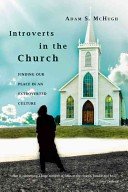 Introverts in the Church: Finding Our Place in an Extroverted Culture, by Adam S. McHugh (IVP Books, 2009)
(I wrote briefly about this book based on a Mars Hill Audio interview with its author; now I have finally read it myself and can do it more justice.)
Hello. My name is Linda, and I'm an introvert.
(Hi, Linda!)
That's the way I once thought about this aspect of my personality type, as many people still do. At best it's an affliction, a disease—if not evidence of weak character or even mental illness.
Rare is the book that will make me cry, unless it's in frustration over poor writing, but Introverts in the Church brought me to tears in the early chapters, as I recognized again and again how many of the characteristics of my own life fit into the introverted pattern. "I am not alone" is a most powerful emotion. I was also reminded of Marcus Buckingham's assertion that we spend too much time and effort trying to shore up our areas of weakness, and not enough building on our strengths. Somehow we have been sold on the idea that introverts should work hard at being more like extroverts, rather than applying our strengths for the common good. What's more, I discovered that in trying to act more like an extrovert (and doing it rather badly), I have myself misunderstood and hurt fellow introverts.
McHugh's focus is on how this dynamic plays out in the church, so the remainder of the book was not as emotionally moving as the beginning, but it, too, was revealing, as I gained insights into why introverts are often uncomfortable in modern churches, and why their unique gifts are just as important as those of extroverts—and may be especially valuable because we live in such an unbalanced time.
My comment that I should probably buy a copy of Introverts in the Church just so I could lend it out provoked the response, "Would you lend it to your introvert friends or your extrovert friends?" The obvious response is, "To both." To the introverts, so that they might experience the affirmation that their weaknesses are the flip side of strengths of which our world is in much need, and to the extroverts—exactly the same thing, actually, and so that they might understand, appreciate, and encourage the introverts in their lives.
As usual, there's no way a few quotes can do justice to the book, or give an adequate picture of what the author presents. What's more, long quotations are discouraging to most blog readers, myself included, I am somewhat embarrassed to say. Nonetheless, here is a small sampling of ideas that struck me, culled from the bookmarks that bristle all over the book's 200-some pages.
There are three primary characteristics of introversion, and the first has to do with energy source. ... Introverts are energized by solitude. We are recharged from the inside out, from the forces of our internal world of ideas and feelings. ... The second classic mark of introversion is internal processing. In our culture we are continuously bombarded by stimuli, in the forms of information, images, conversation, and a multitude of other data and experiences. In order for introverts' lives not to degenerate into disassociated states of confusion, we need to process these stimuli and integrate them into our lives. ... A third distinctive of the introverted temperament is the preference for depth over breadth [in relationships, interests, and our understanding of ourselves].
I can identify with nearly every one of McHugh's list of common attributes of introverts:
- Prefer to relax alone or with a few close friends
- Consider only deep relationships as friends
- Need rest after outside activities, even ones we enjoy
- Often listen but talk a lot about topics of importance to us
- Appear calm, self-contained and like to observe
- Tend to think before we speak or act
- May prefer a quiet atmosphere
- Experience our minds going blank in groups or under pressure
- Don't like feeling rushed
- Have great powers of concentration
- Dislike small talk
- Are territorial—desire private space and time
- May treat their homes as their sanctuaries
- Prefer to work on own rather than with a group
- May prefer written communication
- Do not share private thoughts with many people
Any introvert who finds himself trapped in an airplane seat next to a talkative neighbor will appreciate this quotation McHugh offers from Type Talk at Work:
"One of the big mistakes Extraverts make is to assume that if someone is not engaged with another person, that individual is simply not busy. So, it's okay to interrupt someone sitting and reading because that person is probably reading only because there's no one else with whom she can talk. You can only imagine what an Extravert thinks of someone who is sitting there not even reading but merely reflecting. Clearly that person needs to be put to some more useful task—such as listening to the Extravert's thoughts of the moment."
It's even less possible to summarize all McHugh has to say about how the church can nourish introverts and vice versa, but here's a sampling:
[I]t is a temptation for churches to define spiritual maturity as attendance: regular worship, participation in a committee or leadership team, and involvement in a small group. The implicit thought is that the mark of true, progressing discipleship is participation in an increasing number of activities. Along with attendance should come a steady increase in the number of people you know and who know you. ... Because of these assumptions in many churches about what constitutes participation, we can become convinced that the faithful word in the Christian life is always yes. When we are asked to participate in an activity or group or sharing time, if we are really committed to community, if we truly trust God, we think we must answer "yes." ... Yet no is an indispensable word for introverts who need solitude and space to refuel and reflect. Saying "no" at times enables us to wholeheartedly say "yes" at other times.
People in our culture need models of self-reflection, leaders who will teach them how to look inward and evaluate their motivations and choices. ... As Henri Nouwen said, "Our task is the opposite of distraction. Our task is to help people concentrate on the real but often hidden event of God's active presence in their lives. Hence the question that must guide all organizing activity in a parish is not how to keep people busy but how to keep them from being so busy that they can no longer hear the voice of God who speaks into the silence."
In my interactions with pastors over the past decade, I have been confounded by how few of them were adept in the discipline of listening. What should be an absolute prerequisite for entering ministry has been subordinated to the all important evangelical qualities of speech—teaching, persuasion, correction—or relegated to specific "side ministries." Our seminaries subject hopeful pastors to rigorous communication and preaching classes, but I have never seen a class or seminar offered on listening.
What a person in pain needs, on the deepest human level, is to not feel alone. What helps someone is people who will simply be there and help carry the burden without always trying to fix the situation.
When I was a college pastor, the students who came onto campus with the greatest maturity, spiritual depth and understanding of the gospel were invariably those who'd had a youth pastor or other mentor from their communities of faith take a special, personal interest in them. Moreover, many of those students had been the beneficiaries of a movement toward contemplative youth ministry, in which the primary role of youth pastors is less about creating entertaining programs and more about helping students cultivate an awareness of God's presence. Contemplative youth ministry is a promising new direction both for introverted youth workers and for the introverted students they lead.
"Contemplative youth ministry" instead of activity and entertainment? Where was that when our kids were of youth group age? I might have actually felt that the youth leaders were supporting our family instead of tearing down what we'd been faithful and at great pains to build.
[I]ntroverts often feel more freedom in worship services that feature traditional liturgy than they do in ones that feature more open, informal, unstructured styles of worship. Introverts often appreciate the depth of liturgical prayers and hymns, as well as the rich symbolism that fills traditional churches. ... Some introverts decry the shallowness of contemporary worship songs and their repetitive refrains, which can feel emotionally manipulative. They say that loud music disrupts their internal dialogue with the Spirit.
I never thought of worship-style preference as an introvert/extrovert distinction, and it's certainly not universal. Our own introverted pastor seems happiest with loud, rock, and demonstrative. But it does offer an explanation of many of my own worship experiences.
My hope is that churches will begin to recognize when their worship services are communicating to introverts that their ways of living and relating and worshiping are inferior or unfaithful. ... I would like for my fellow pastors to understand that hourlong sermons may overwhelm a sizable demographic of their congregations, and a two second silence for personal confession may feel like a mere hand wave at people who want to interact with God in a quiet way. In fact, as we find more balance in our worship, it will not only be introverts who benefit. Extroverts too will learn to listen for God in the cracks of their speech and grow in understanding that "in quietness and in trust shall be your strength" (Is 30:15).
My e-mail and blog activity will be curtailed, either somewhat or a lot, until we get a handle on some serious computer problems. Let me just say this about that: Computers ought to last at least long enough for them to become obsolete, which even in this fast-moving culture is more than 2 - 4 years. And laptops should last longer than their batteries.
All that to say, if you need to reach me, e-mail might not be the best medium for a while.
Permalink | Comments
Category Computing Everyday Life
I used to love shopping at Sears, insofar as someone who loathes shopping can, that is. But today my frustration meter pegged.
I'm rather picky about my clothes. Not in a fashion sense, but I want them to be comfortable, modest, and reasonably-priced. That's a combination much harder to find than it should be.
After much trial and error, I found shoes, shorts, and bras that I really like, all at Sears, and I greatly enjoyed being able to order them online without dealing with travel, crowds, and (above all) dressing rooms.
Until now.
Now Sears does not carry my clothes. Any of them. Not my bras, not my shorts, not my shoes. Now I must venture back out into the world of physical, retail stores and (ugh) Try. On. Clothes. That might not be so bad if I had any confidence that what I want will be there to find. Online searches have thus far revealed nothing equivalent.
Except, maybe, at K-Mart.
It appears that when Sears bought out K-Mart, they transferred the kind of clothes I like to the lower-class store. I wouldn't mind so much, but there's no K-Mart nearby. I'm guessing it may be worth the drive just to check it out, though.
Years ago, I volunteered at our local middle school. From what I learned there, I knew it was not a place I wanted our kids to attend. Most of the reasons were academic, but burnt into my brain still is the comment of one of the teachers to her class, in reference to someone I no longer remember: She was the kind of girl who buys her clothes at K-Mart.
Having bought many a clothing item at said store, back when there was one nearby, I knew we wouldn't fit in—nor want to.
Still, it galls—that my taste in clothing isn't good enough for Sears!
Permalink | Comments
Category Everyday Life
What's your gut reaction to this story?
There are more than 1,000 varieties of bacteria that live within the human gut, and an average person can have around 300 different varieties of the little critters living within them. Each type of bacteria not only supports one another but support your ability to digest food, stay healthy, and if your gut community is a bit off, perhaps gain weight or develop diabetes.
Or this one?
[The] often-overlooked network of neurons lining our guts that is so extensive some scientists have nicknamed it our "second brain". A deeper understanding of this mass of neural tissue, filled with important neurotransmitters, is revealing that it does much more than merely handle digestion or inflict the occasional nervous pang. The little brain in our innards, in connection with the big one in our skulls, partly determines our mental state and plays key roles in certain diseases throughout the body.
U.C.L.A.'s [Emeran] Mayer is doing work on how the trillions of bacteria in the gut "communicate" with enteric nervous system cells (which they greatly outnumber). His work with the gut's nervous system has led him to think that in coming years psychiatry will need to expand to treat the second brain in addition to the one atop the shoulders.
And from a much older source:
The eye cannot say to the hand, “I don’t need you!” And the head cannot say to the feet, “I don’t need you!” On the contrary, those parts of the body that seem to be weaker are indispensable, and the parts that we think are less honorable we treat with special honor. And the parts that are unpresentable are treated with special modesty, while our presentable parts need no special treatment. But God has put the body together, giving greater honor to the parts that lacked it, so that there should be no division in the body, but that its parts should have equal concern for each other. If one part suffers, every part suffers with it; if one part is honored, every part rejoices with it. (1 Corinthians 12:21-26)
If you can read this, thank a teacher.
I've seen it on bumper stickers for years, and just today at the bottom of my Penzey's Spices receipt. Only now did I finally wake up to the outrageous insult implied by that platitude.
With all due respect to teachers, of which there are some who are great and many, many more who do their jobs very well, how is it that we presume that a child, who requires only a reasonably supportive environment to learn to eat, to crawl, to walk, to understand, to talk, to love, to manipulate his environment—in short to acquire the essential skills of a lifetime in just a few years—how is it that we presume he cannot learn to read—a minor skill compared with all he has already learned—unless someone teaches him?
That's crazy talk.
I'm grateful for all who are willing to share their knowledge with others, and especially for those who make the sharing enjoyable. I suspect that those who do best, however, are the ones who realize they are not teaching so much as facilitating a child's natural learning.
But that turns out to be much too big an issue to write about just because I was annoyed by a bumper sticker, when I'm surrounded by vacation detritus, my husband is hungry, and I haven't yet managed that shower I promised myself after walking four miles in the 95 degree heat....
Permalink | Comments
Category Education Children & Family Issues Random Musings

