
 This actually seemed like a good idea at the grocery store.
V-Fusion, by the same folks who brought you, "I could have had a V-8." (More)
Funny how things click together in this world.
I would never have heard of the award-winning Swiss movie, Vitus, had it not happened to be featured in an article in the Hartford Courant when our daughter's Swiss in-laws happened to be in Connecticut, and happened to look through the newspaper. (Why, O why does English not have a word for the "our child's in-laws" relationship? I have need of it often enough.) Knowing my interest in Swiss German, her father-in-law cut out the article and sent it to me. (I am going to have to invent my own term, I can see.)
That was months ago, and only recently did I have the sense to see if trusty Netflix could provide the movie. Much to my surprise, they could! We watched it this afternoon. Our intention had been to watch part during lunch and finish it during dinner, but we couldn't bring ourselves to turn it off.I've deliberately not included any links to Vitus, because they contain spoilers that I certainly would not have liked to have known about before seeing the film. But I do recommend it, as we thoroughly enjoyed it. It's PG, with a few words I wouldn't want the grandkids to pick up, but that would require reading the subtitles. I'd say they'd probably lose interest in a foreign-language film, but Swing Girls was a hit even though in Japanese.
Vitus combines some of my favorite themes: brilliant children, music, and loving families. Sure, I could complain about one or two things, but overall it was a delightful movie. Actually, the main disappointment was the language, which was falsely billed as Swiss German. I caught a few Swiss German words (and felt for the student being told by his teacher to speak High German only), but mostly I'd say I understood far too much of the German for it to have been anything other than High German throughout most of the film. I'd be interested in the verdict of those who know better, however. The characters freely mix English words and phrases in their speech, so maybe they are equally freely mixing the two Germans, and I'm only catching the few High German words and the much fewer Swiss German phrases I know. Or Swiss German words similar enough to High German that they sound familiar to my ear.
One question I had from the beginning was how they managed to get the actors to look so much as if they were really playing the piano—it looked far too good to be fakes. Here's the answer: Teo Gheorghiu, who plays the older Vitus.
How do we know this is really a Swiss film? The characters carry their cut flowers upside down!
Studies showing that teachers will form expectations of a student's character and ability based on nothing more than his or her name are unfortunately nothing new. Students with "traditional," common names are more likely to receive higher ratings on both academic performance and behavior than those with names perceived as odd. What makes this article worth commenting on is not the results of the study, but the names themselves.
(More)The study reveals that . . . traditional names such as Charlotte, Sophie, Marie, Hannah, Alexander, Maximilian, Simon, Lukas and Jakob are consistently linked to strong performance and good behaviour. Non-traditional names such as Chantal, Mandy, Angelina, Kevin, Justin and Maurice, on the other hand, are associated with weak performance and bad behaviour.
When we first moved to Central Florida in the mid-1980s, the region was setting record lows. Freezes, and the subsequent descent of developer-vultures, killed off most of the local citrus industry. No one who was not here during those times can believe we had fired up the furnace by the end of September—we, who were fresh from the north country and happy to keep our home cooler than was comfortable for our neighbors.
I won't be tempted to cite our current heat wave as evidence of global warming, because I understand Central Florida experienced a similarly miserable October back in 1961, but our experiences here certainly attest to the variability of climate. It's hot. And humid. And miserable. (More)Permalink | Read 1922 times | Comments (1)
Category Everyday Life: [first] [previous] [next] [newest]
My recent visit with our grandchildren reminded me of why I don't like video/computer games. I don't mean I don't like to play them; I know all too well how addicted I can get if I allow myself to get started.
It began, of course, with television. When the technological wonder entered my home when I was seven, I was already familiar with its delights, thanks to the generosity of our neighbors. We matured together, television and I, and with such a sibling it's no wonder we bonded strongly as the years passed. It was not a healthy bond, and I'm thankful that I went to college before televisions were ubiquitous in the dormitories, because those four years of abstention were the beginning of my liberation. It would be many years and much struggle before I could declare myself free, but never again would the glowing opium box control my life. (More)Writing in the Wall Street Journal, physician Scott Gottlieb blames governmental overcaution for the shortage of H1N1 flu vaccine. Unlike Europe, the U.S. (1) does not allow additives to the vaccine that stimulate the immune system and make a smaller dosage effective; (2) requires single-dose syringes, which require less of the mercury-containing preservative thimerosol than do multi-dose vials; and (3) continues to use the slower, egg-based manufacturing system rather than a new procedure using mammalian cells.
President Obama, the doctor believes, should be pushing us forward, dropping the precautions put in place to protect us. Perhaps the doctor has forgotten 1976, when President Ford's swine flu vaccination program resulted in an unacceptable level of fatal or debilitating side effects. Perhaps he has also forgotten the thalidomide tragedy, in which our cautious Food and Drug Administration's refusal to approve the new drug largely spared our children the horrible birth defects that afflicted the Europeans.
My hat's off the the president on this one. Or it would be, if I were wearing one, which I hardly ever am.School at the Daley household could hardly have been called normal, since Grandma was there as a distraction and Mommy was sick for the first part of my visit. Nonetheless, I enjoyed my glimpse into the official, sit-at-the-table side of their 24/7 educational process.
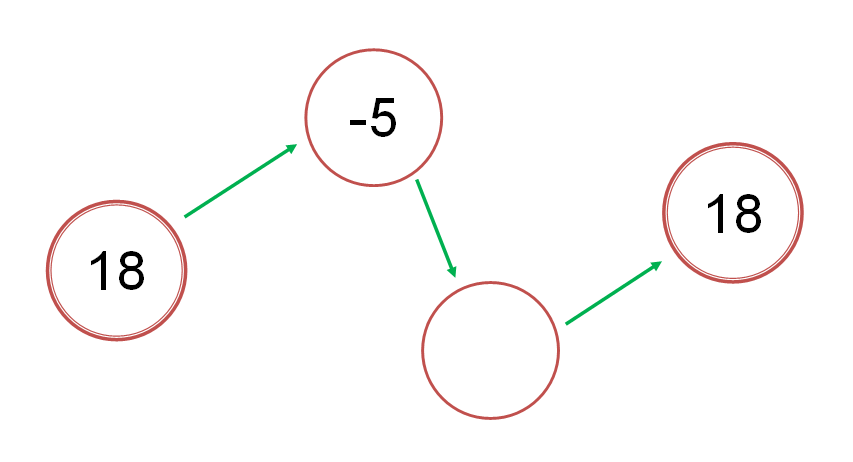
Jonathan is not at the moment as excited about math as he is about reading—unlike his Aunt Janet at that age, for whom reading was all right but math was a bowl full of candy. He's doing well, though, with basic addition and subtraction (and even some simple multiplication and division), and enjoys the "math paths" that Grandma sends him in the mail, problems like this one:
The Advent Conspiracy has nothing to do with my favorite computer adventure game.
Advent, celebrated during the four weeks before Christmas, is a season of the liturgical church year, a time of repentance and reflection in preparation for the coming of Christ, both as God who became man in a particular time and place (Christmas), and as God who will return to judge the world at its ending (the Second Coming).
That's the theory anyway. In practice, it's a hard season to observe in a culture where Christmas events start before Hallowe'en* and the celebrations—instead of extending from Christmas Eve until Epiphany on January 6th—end abruptly about noon on December 25th. Between Hallowe'en hype and Christmas hype, Advent—like Thanksgiving—gets lost.
Someone told me last year about the Advent Conspiracy, and I hope whoever it was will forgive me for not remembering. I've searched all my e-mails and family blogs and come up empty. This year, however, it was my sister-in-law who brought it up; her family is spearheading their church's incarnation of the idea.
I have a natural suspicion of "movements" and bandwagons, but so far I've seen nothing wrong, and much good, about this one. It's a simple formula for making Christmas more delightful:
Worship Fully It starts with Jesus. It ends with Jesus. This is the holistic approach God had in mind for Christmas. It’s a season where we are called to put down our burdens and lift a song up to our God. It’s a season where love wins, peace reigns, and a king is celebrated with each breath. It's the party of the year.
Spend Less We like gifts. Our kids really like gifts. But consider this: America spends an average of $450 billion a year every Christmas. How often have you spent money on Christmas presents for no other reason than obligation? How many times have you received a gift out of that same obligation?....We’re asking people to consider buying ONE LESS GIFT this Christmas. Just one. Sounds insignificant, yet many who have taken this small sacrifice have experienced something nothing less than a miracle: They have been more available to celebrate Christ during the [A]dvent season.
Give More God’s gift to us was a relationship built on love. So it’s no wonder why we’re drawn to the idea that Christmas should be a time to love our friends and family in the most memorable ways possible. Time is the real gift Christmas offers us, and no matter how hard we look, it can’t be found at the mall. Time to make a gift that turns into the next family heirloom. Time to write mom a letter. Time to take the kids sledding. Time to bake really good cookies and sing really bad Christmas carols [or really good Christmas carols]. Time to make love visible through relational giving.
Love All When Jesus loved, He loved in ways never imagined. Though rich, he became poor to love the poor, the forgotten, the overlooked and the sick. He played to the margins. By spending less at Christmas we have the opportunity to join Him in giving resources to those who need help the most. When Advent Conspiracy first began four churches challenged this simple concept to its congregations. The result raised more than a half million dollars to aid those in need. One less gift. One unbelievable present in the name of Christ.
Advent Conspiracy accepts no money and encourages participants to share a variety of ideas on how to give presence this Christmas. But they also have a particular concern for the millions of people who suffer and die for lack of clean water, and for three years have supported the work of Living Water International.
The solution to this problem is directly beneath our feet. Drilling a fresh water well is a relatively inexpensive, yet permanent solution to this epidemic. $10 will give a child clean water for life. That's not an estimate. It's a fact. And here's another fact: Solving this water problem once and for all will cost about $10 billion. Not bad considering Americans spent $450 billion on Christmas last year. Our hope is that, by celebrating Christ in a new way at Christmas, the church can serve as the leading movement behind ending the water crisis once and for all.
LWI earns a four-star (highest) rating from Charity Navigator. So does World Vision, one of my favorite charitable organizations, which has a Gift Catalog filled with ways to help, from water wells to farm animals to (one of my favorites) microfinance loans.
Your church doesn't participate in Advent Conspiracy? You don't have a church? Not to worry! Participation in this conspiracy is open to all.
Permalink | Read 2021 times | Comments (2)
Category Random Musings: [first] [previous] [next] [newest]
President Obama has declared the swine flu outbreak to be a national emergency. I'm not sure that's all that bad of a measure, given that it lifts some governmental rules for hospitals that probably weren't a good idea in the first place. But as Susan McWilliams points out in this Front Porch Republic post, our media-hyped fears seem 'way out of line. It's hard not to quote her entire post.
(More)What Thucydides helps us to see [in his description of a plague in Athens during the Pelopponesian War], as George Kateb has written, is “the ways in which fear of death through contagion disorganizes all human relations”:
It is the peculiar power of contagious disease to isolate people from each other; normal communal ties give way before the desire of every man to avoid contact which could bring on the disease and with it, death. The wish to remain free of sickness overrides all duty and all affection.
The plague resulted in what Kateb calls “a kind of negative state of nature: instead of the war of all against all, there was the avoidance of all by all.” What is ultimately most horrifying about the plague is how it exposes the fragility of civilization. You might not be able to build Rome in a day, but you can destroy Athens in a few weeks.
I know I've been out of the comics loop for a while—having recently had three grandchild-comics available for my entertainment—but what's with the volunteerism theme? I'm all for volunteer work, and think that one of the sad results of the "women's movement" was the conversion of so many volunteer hours into paid employment. But when comic strip after comic strip at the same time starts pushing volunteer work, it sounds creepy, like groupthink. Like the Florida public school system, which several years ago began requiring volunteer work from their students, many of whom probably cannot spell, much less define, "oxymoron." (More)
Permalink | Read 7728 times | Comments (7)
Category Random Musings: [first] [previous] [next] [newest]
Thirty years ago today was one of the most difficult and delightful days of my life. To our wonderful firstborn, I wish a
HAPPY 30th BIRTHDAY!
(You were worth the effort.)
Permalink | Read 1908 times | Comments (0)
Category Everyday Life: [first] [previous] [next] [newest]
Like many people, I have mixed feelings about Facebook, finding it simultaneously useful and annoying. But here's a funny thing about Facebook, as reported by Eric Schultz, who is the Chairman of the Board of the New England Historic Genealogical Society and writer of The Occasional CEO. (The NEHGS library, both online and in person, is one of my favorite and most helpful resources for genealogical research.)
This last summer, in the midst of its 164th year, NEHGS had the single greatest month of membership growth ever. Ever.
The reason? Facebook.
Yep, that surprised the board, too.
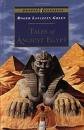 Tales of Ancient Egypt, by Roger Lancelyn Green (Puffin Books, 2004)
King Arthur was my introduction to Roger Lancelyn Green's books, and this inspired me to find more by the same author. Tales of Ancient Egypt did not disappoint. Egyptian gods, goddesses, stories, geography and history are rather muddled in my head, and this book is a great help in beginning to sort them all out. Like Green's Arthur stories, the tales are simultaneously appropriate and enjoyable for children and adults.
Two stories particularly interested me. One is the Egyptian take on the story of Helen of Troy. (Hint: The real Helen remained safely hidden in Egypt until Menelaus could reclaim her; it was a sort of spirt double that went to Troy with Paris and inspired all the Greek-Trojan bloodletting.)
The fascination of the second, entitled Se-Osiris and the Sealed Letter, lies in what it did to my understanding of the Biblical story of the Exodus. In The Sealed Letter, Egyptian magicians boast of their prowess with claims such as, "I could bring a great darkness over the land of Egypt that would last for three days," and "I...could bring a blight upon Egypt that would destroy its crops for one season." The Exodus story of Moses and the plagues always seemed unsatisfactory to me, first in the very strangeness of God using plagues of blood, locusts, darkness, etc. to motivate Pharaoh, and second that the Egyptian magicians would counter Moses's plagues with plagues of their own, rather than the much more logical (and useful) removal of the effects the plagues.
What this Egyptian tale shows me, however, is that God was speaking to the ancient Egyptians within the context of their own culture, in a language they understood.Our own homeschooling experiences were far shorter than I would have liked, so it has been fun watching other family members in their adventures. (It has also been nothing short of astonishing to see what resources are now available, rather like the difference between a gas station convenience store and a Super-Wegmans grocery store.)
It is especially fun to watch the grandkids' schooling, since our own children were in public school at this stage. On the one hand, school time is very short, even for kindergarten, when measured by organized, sit-at-the-table time, and Heather's still working on the best way to balance everyone's needs. On the other hand, education, if not school, is clearly going on 24/7, and one cannot argue with the results.
Jonathan can read. It is still laborious enough that he tires easily, but he has reached the stage where what he needs most is simply to read, which he is happy to do, whether to himself or to others. And not only books, but signs, maps, computer screens, anything and everything.
I think more reading goes on here than anything else. Noah asks to be read to at any spare moment (or not so spare), usually the same books over and over and over again, until he knows the story well enough to "read" it himself. It's a hoot to hear him tell The Three Billy Goats Gruff: You wouldn't understand much if you didn't already know the story, but he has all the nuances and tones of voice down pat, from "It only I, the little billy goat," to "I coming to GOBBLE YOU UP!"
This post clearly isn't going to cover all I had planned, so I'll cut it short and post it anyway. Being part of the adventure doesn't leave much time to write about it.If there's an advantage to Mommy being sick, it's that Grandma got to supervise, i.e. watch, Noah doing his chores. His is not a difficult regimen, but still pretty impressive for a three-year old, particularly the enthusiasm with which he demonstrated his skills.
- Clear his own breakfast dishes off the table and put them in the dishwasher.
- Brush his teeth.
- Make his bed.
- Sweep under the table, which is only fitting, since most of the crumbs seem to be his.
- "Help Mommy," which on this particular day meant cleaning the tub in the bathroom.
Permalink | Read 1869 times | Comments (0)
Category Children & Family Issues: [first] [previous] [next] [newest] Everyday Life: [first] [previous] [next] [newest]

