
We finally saw Lin-Manuel Miranda's Hamilton.
I've been aware of the show for some ten years. In April of 2016 I wrote,
An Occasional CEO post about entrepreneurship [I've removed the link because it no longer works] has against all odds made me excited about a new Broadway show. I'll be happy to wait for a production that is less expensive and closer to home, or on video. But I want to see "Hamilton."
We did briefly consider seeing it during our visit to New York City in November of that year—before we decided to settle for visiting Alexander Hamilton's grave in Trinity Church Cemetery instead. And then ... Hamilton really took off. It became popular. Everybody had to see it! It became available around the country, and even, I'm told, on Disney+, of all things. So of course, contrarian that I am, I lost interest.
And then...we went on a cruise. And one day, exhausted by our intense excursion schedule—who said cruises were supposed to be restful?—we collapsed in our stateroom, flipped on the video screen, and took a look at the movie offerings. The choices were many, but nothing I wanted to see...except...except...there was Hamilton! A recording of the stage production, with the original cast, including Lin-Manuel Miranda himself. So we settled in for an adventure.
As is the case with much of my family, my reflex upon sitting down in front of a movie or TV show is to fall asleep, no matter how interested I think I am in what I'm watching. That was not the case with Hamilton, which kept my attention from beginning to end.
I wasn't expecting that at all. It's been a long time since I've been so moved by a show. For a few minutes it was disorienting: the style of music was totally foreign to me, and seeing Aaron Burr as a black character was as odd as the time I watched a version of the Mikado in which the characters were all British. But the strangeness passed quickly as I became engrossed in the production. Which was brilliant: from the interpretation of the story to the believability of the characters to the cleverness of the stage set. Best of all, perhaps, was a faithfulness to the historical story that I've rarely found in theatrical adaptations. The production feels authentic despite—or perhaps even because of—its unusual setting
After that experience, I was shocked to read part of a conversation that my friend Eric—the same whose post had introduced me to Hamilton in the first place—had with ChatGPT about the show, in which the LLM made the following observation:
The Obama-era optimism and "America as an unfinished project" theme landed differently in 2015 than it does after years of political polarization. Historians and writers have increasingly criticized the show for sanitizing the Founding Fathers, particularly Alexander Hamilton's and others' relationships to slavery. The casting and "America then told by America now" concept, which once felt revolutionary, is no longer quite as novel. Some of the hip-hop references and stylistic choices are now identifiable as distinctly 2010s.
That criticism was as shocking to me as Aaron Burr shooting directly at Alexander Hamilton in the duel instead of "throwing away his shot" as Hamilton himself did. Hamilton moved me deeply, for reasons that had absolutely nothing to do with immigrants or slavery or President Obama or musical styles or anything that could possibly be considered political or cultural, let alone outdated. It touches on deep subjects and emotions and problems common to "all sorts and conditions of men" at all times, and deserves to be recognized for the classic that it is.
And then there is my own, personal, gut-level identification with the show. Hamilton hit me right where I live.
Just before the intermission, in the song, "Non-Stop":
Why do you write like you’re running out of time?
Write day and night like you’re running out of time?
Ev’ry day you fight, like you’re running out of time
Like you're running out of time
Running out of time
Are you running out of time?
How do you write like tomorrow won’t arrive?
How do you write like you need it to survive?
How do you write ev’ry second you’re alive?
And then, at the very end, in "Who Lives, Who Dies, Who Tells Your Story?"
Who lives, who dies, who tells your story?
When you're gone, who remembers your name?
Who keeps your flame?
Who tells your story?
She tells our story
And when my time is up, have I done enough?
Will they tell our story?
Will they tell your story?
And when my time is up, have I done enough?
Will they tell my story?
In two songs, this crazy musical about one of America's Founding Fathers nailed much of what drives my life and work these days.
It was an incredible experience.
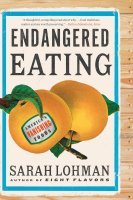 Endangered Eating: America's Vanishing Foods by Sarah Lohman (W. W. Norton & Company, 2023)
The first Sarah Lohman book I read was her excellent, if overly-political, Eight Flavors. After waiting nearly two more years for a good price on Endangered Eating, which is the book of hers that had first caught my eye, I gave up and bought it. It probably was not worth the $10 I spent because it is now available in our library; that's what I get for being impatient. But it's not a bad thing to support people who can write well.
The negatives that I saw in Eight Flavors are in Endangered Eating to an even greater extent, so let's get them over with first.
- No matter how many times Lohman emphasizes the point, native Americans and black Africans did not live in perfect, idyllic societies before meeting white people. And all the problems of the world cannot be attributed to white, European, heterosexual, Christian men. These points were pounded into my head in school starting in fourth grade, and reinforced in some of my favorite childhood books. I bought into the concept, even to the extent of determining that I would have to become a Catholic, that being the only way I could opt out of the hated WASP designation. (I didn't, having discovered other alternatives to Catholicism as I grew older, but that's how strongly I felt.) I'm done with that now, and have no patience with those who push that attitude. Foremost, it is patently false; secondarily I refuse to let my own history, heritage, and culture be the only one it's not acceptible to celebrate and be proud of.
- Nor does her ranting change the fact that capitalism is the economic system most likely to allow liberty and prosperity to thrive, and to be spread most fairly amongst the population.
- In Lohmans' writing, the inconsistency of racial/ethnic capitalization drives me crazy. A person is Black, or Indigenous -- but white, or brown. It makes no sense and happens too often to be an unintentional slur.
- As I've said repeatedly, there's no point in pushing people to accept language that for many of us has always been considered off-limits, offensive, and vile, while at the same time putting formerly-acceptible words on the naughty list. I would say that goes tenfold for formal writing, e.g. books. I find the language in this book unacceptable, even as spoken language, but especially in a book that wants me to take it seriously.
- And what's this new averson to the word "slave"? Everywhere she could use that simple and heretofore useful word, she replaces it with "enslaved," as if making the word into two syllables somehow makes the concept less horrible. (I can't read "enslaved" without thinking of Robert Heinlein's Citizen of the Galaxy, and Thorby Baslim's frustrations trying to talk with those who don't understand the condition of slavery. When his grandfather insists on referring to Thorby's former condition by a more acceptible name, Thorby retorts, I was sold and I was a slave!)
I guess I should have been warned about the political sermonizing; not only from my experience with Eight Flavors but also from this description in the introduction.
He looked confused when he spotted me—a tattooed, blue-haired young woman—trudging up his driveway.
Politics I can generally ignore if the content is good, but I was also disappointed in that. Not that the stories weren't fascinating, but from reading the previews I had expected something different. I have for years been greatly concerned over the obvious fact that our crops, our livestock, and our food supply in general are being bred/engineered primarily for something other than nutrition and flavor. For convenience, for pest resistence, for super-production, for robustness during transport, for long shelf-life—but taste and healthfulness fall far down on the list. I had hoped that Endangered Eating would address this problem, and although it touches on it, that is not the focus. I was particularly disappointed in the section on apples, the promise of which alone encouraged me to buy the book. As it turns out, however, Lohman is not concerned with the great diminution of apple varieties and taste in general, but only for the production of apple cider—and only the production of alcoholic cider. There's not one mention of the violence that the act of pasteurization does to the flavor of regular cider, nor of the breeding of apples for sweetness, which has resulted in several new varieties all of which taste insipid to me. The wide variety of flavorful, tart apples has completely disappeared, not only from our grocery stores but even from the specialty stores like Whole Foods and Sprouts. At least that's true in Florida—when we travel north in the fall it is not so much for the colorful leaf displays as to be able to taste good apples again.
My own frustrations aside, Endangered Eating is well-written and engaging. You don't have to like Lohman's politics, nor her focus, to appreciate that.
Here is a handful of passages I made note of while enjoying the book:
I admired the efforts of the costumed performers but struggled with the idea of appropriating historical Islamic culture to celebrate the American date industry.
I will comment no further here on the pressure not to "appropriate" other cultures other than to say that it is as ludicrous as telling a Chinese violinist that she can't play Bach because she isn't German.
As consumers, what we expect from food is consistency. We have an expectation that every package of dates (or craisins, or red seedless grapes, or whatever) we buy from the grocery store will taste the same.
Add that to the above list of what the industry values more than good nutrition and flavor in our food. Having once been privileged to have access to an orchard where the juice they sold varied by what variety of orange was in season (sadly, it was out and turned into a housing development), I can say with authority that the determination to make every glass of orange juice taste the same is an abomination.
In these early plantations, the cane grown was all native Hawaiian varieties. Laborers harvested cane by hand and cut it with a cane knife, a short machete with a hook on the end. Fresh-cut cane was carried to oxcarts and transported to the mill, which was a small machine, about a foot square, mounted outdoors on a pillar. Cane was fed into the side of the mill and passed back and forth through the rollers by two workers, while a third man led a mule or ox in a circle attached to a long wooden arm that powered the rollers’ movement. The juice flowed out a tap in the side and was collected for processing.
I noted this passage because it reminded me of our trip to Brazil in 1978. This process was very like the roadside stands where one could watch the sugar cane go from stalk to juice, and then drink the sweet liquid. The juice was more along the lines of maple sap than syrup: it tasted mostly like water that was somewhat sweet. But by looking at the teeth of the vendors, one could guess that drinking cane juice instead of water (which was common in the cane fields) was generally not a good idea.
By the mid-twentieth century, work at a Hawaiian sugar plantation meant a stable, well-paying job with union protection. But a workplace that respects its workers is too expensive for capitalism; sugar production was moved to countries without unions and worker protections, where the bottom line was as low as possible. Hawaii could not compete with growers in India, Brazil, and the Dominican Republic. In those countries, land costs as well as labor costs are lower, and sugar production is often subsidized by the government. American consumers expect a low price on a bag of white cane sugar, and one of the results of this expectation was the end of sugar cultivation in Hawaii.
I won't argue with the evils of choosing cost as the primary value in any industry, but I will note that when a government subsidizes a product, that is hardly free-market capitalism.
Rum is a colonial by-product. While sugarcane is native to the Pacific, Western colonizers brought the technology to process sugar into molasses, and then to process molasses into rum. So, is it appropriate to take kupuna kō [Hawaiian legacy sugarcane] and use it to make a product that came from Hawaii’s colonizers?
...
Before I came to Hawaii, I had loved the idea of preserving a traditional crop through a craft spirit. But now, the idea wasn’t sitting as pleasantly. When white Americans came to Hawaii, they forced Hawaiians to reject their own culture. The missionaries replaced the Hawaiians’ religion, encouraged them to cover their bodies with Western clothes, and prevented them from dancing the hula. The plantation owners replaced diverse Hawaiian agriculture with monocrops and eventually replaced the Hawaiian queen with their own government. But colonizers will allow a part of a culture to exist as long as it is prettily packaged for white, Western consumption. Docile, smiling hula girls are acceptable; so is Hawaiian music when it’s sung by white Americans like Elvis Presley or Annette Funicello. The distilleries on Hawaii use the images and stories of Hawaiian culture in their branding. How long before single-varietal-pressed legacy sugarcane juice appears in organic markets next to the coconut water? And when it does, will it be a blessing that preserves kupuna kō, or cultural appropriation that steals identity—and profits—from native Hawaiians?
...
Hawaiian legacy sugarcane collections...mean that an endangered plant is being preserved. But many Hawaiians feel kupuna kō should never be commercialized. There are already Hawaiians out there individually preserving their traditions in a rapidly changing world, as their ancestors did before them. An outsider like me can’t know how many stands of kupuna kō grow in backyards and how many varieties have continued to grow for generations, passed down in the same family. There’s a part of me that feels that these backyard stands of kupuna kō, harvested and sliced into chunks for thirsty kids, are the best kind of preservation. Not everything is for everyone, and Hawaiians have had enough taken from them.
The destruction of the native plants left the marsh vulnerable to salt-tolerant invasive plants, in particular, the ecosystem-destroying trio of purple loosestrife, narrow-leaf cattail, and, worst of all, phragmites.
Invasive phragmites, a genus of reed grasses, arrived on the East Coast in the early nineteenth century, probably from Europe. Phragmites spread rapidly with the construction of the highway system in the 1950s, its seeds latching on to cars and semi trucks and spreading to susceptible areas like the depleted Mentor Marsh. If you’ve ever driven on a highway, you’ve seen phragmites; one of its favorite habitats is the polluted ditches alongside roadways. It’s very recognizable by its feather-duster-like seed heads. It’s often over 14 feet tall and grows in dense patches, choking out native vegetation, creating a monoculture and biological desert.
Lohman is talking here about the destruction of wild rice habitats in the northern Midwest, but the destructive power of phragmites, and the difficulty of eradicating it, is well known to those of us on the coast of Long Island Sound.
Today, there are fewer than 100 apple varieties grown commercially. ... By the 1920s, apple growers focused on only a few varieties of “culinary apples” designed to succeed in grocery stores.
Many of the earliest Southern cookbooks were written by white women but filled with recipes created by Black cooks. Today, we look at these cookbooks through the lens of stolen, usually uncredited, culture.
I asked David how his quest to locate lost Southern culinary plants began. He traced the movement back to chef Alice Waters in the 1970s. She had inspired chefs to seek out produce that tasted like something, often heirloom varieties. “Grains and vegetables created since the early twentieth century were not sensory tested,” David explained. “Taste was always a secondary consideration to productivity, early maturation, processability, disease resistance, pest resistance. There was this call, where are the ingredients?” He said Waters insisted on “asserting the primacy of taste over other qualities in a plant.”
The Carolina Runner peanut’s small size made it harder to harvest by hand than newer cultivars, and the new machinery was designed for larger nuts. The Carolina Runner may have been the best-tasting, but out of convenience it was rapidly replaced by other varieties. The last Carolina Runner went into the ground in the late 1920s, and by the 1950s, it was thought to be not just functionally extinct but extinct extinct. Gone.... Then, nearly a century later, when David Shields was able to acquire twenty of the rarest peanuts on the planet, he sent them to Clemson University’s Coastal Research and Education Center outside of Charleston.
A rare success in recovering lost foods! This reminds me of the people who saved much local and ethnic music by traveling from small community to small community and making a record of the people's music. Mass media and massive agriculture are doing their best to erase local cultures and foods, but backwater villages and the backyards of old houses may still have much to offer.
The Kindle version of The Fall of Heaven: The Pahlavis and the Final Days of Imperial Iran is currently on sale a for $1.99. If you care to understand more about what is going on in the Middle East at the moment, this is excellent background and too good to pass up. It's also a page-turning story.
I wrote the following back in 2017, after my first reading of the book. Nine years later, I stand by my first impressions.
- The road to hell is paved with good intentions. Jimmy Carter is undoubtedly an amazing, wonderful person; as my husband is fond of saying, the best ex-president we've ever had. But in the very moments he was winning his Nobel Peace Prize by brokering the Egypt-Israel Peace Treaty at Camp David, he—or his administration—was consigning Iran to the hell that endures today. Thanks to a complete failure of American (and British) Intelligence and a massive disinformation campaign with just enough truth to keep it from being dismissed out of hand, President Carter was led to believe that the Shah of Iran was a monster; America's ambassador to the United Nations, Andrew Young, likened the Shah to Adolf Eichmann, and called Ruhollah Khomeini a saint. Perhaps the Iranian Revolution and its concomitant bloodbath would have happened without American incompetence, disingenuousness, and backstabbing, but that there is much innocent blood on the hands of our kindly, Peace Prize-winning President, I have no doubt.
- There's a reason spycraft is called intelligence. Lack of good information leads to stupid decisions.
- Bad advisers will bring down a good leader, be he President or Shah, and good advisers can't save him if he won't listen.
- The Bible is 100% correct when it likens people to sheep. Whether by politicians, agitators, con men, charismatic religious leaders (note: small "c"), pop stars, advertisers, or our own peers, we are pathetically easy to manipulate.
- When the Shah imposed Western Culture on his people, it came with Western decadence and Hollywood immorality thrown in. Even salt-of-the-earth, ordinary people can only take so much of having their lives, their values, and their family integrity threatened. "It does not do to leave a live dragon out of your calculations."
- The Shah's education programs sent students by droves to Europe and the United States for university educations. This was an unprecedented opportunity, but the timing could have been better. The 1960's and 70's were not sane years on college campuses, as I can personally testify. Instead of being grateful for their educations, the students came home radicalized against their government. In this case, "the Man," the enemy, was the Shah and all that he stood for. Anxious to identify with the masses and their deprivations, these sons and daughters of privilege exchanged one set of drag for another, donning austere Muslim garb as a way of distancing themselves from everything their parents held dear. Few had ever opened a Quran, and fewer still had an in-depth knowledge of Shia theology, but in their rebellious naïveté they rushed to embrace the latest opiate.
- "Suicide bomber" was not a household word 40 years ago, but the concept was there. "If you give the order we are prepared to attach bombs to ourselves and throw ourselves at the Shah's car to blow him up," one local merchant told the Ayatollah.
- People with greatly differing viewpoints can find much in The Fall of Heaven to support their own ideas and fears. Those who see sinister influences behind the senseless, deliberate destruction during natural disasters and protest demonstrations will find justification for their suspicions in the brutal, calculated provocations perpetrated by Iran's revolutionaries. Others will find striking parallels between the rise of Radical Islam in Iran and the rise of Donald Trump in the United States. Those who have no use for deeply-held religious beliefs will find confirmation of their own belief that the only acceptable religions are those that their followers don't take too seriously. Some will look at the Iranian Revolution and see a prime example of how conciliation and compromise with evil will only end in disaster.
- I've read the Qur'an and know more about Islam than many Americans (credit not my knowledge but general American ignorance), but in this book I discovered something that surprised me. Two practices that I assumed marked every serious Muslim are five-times-a-day prayer, and fasting during Ramadan. Yet the Shah, an obviously devout man who "ruled in the fear of God" and always carried a Qur'an with him, did neither. Is this a legitimate and common variation, or the Muslim equivalent of the Christian who displays a Bible prominently on his coffee table but rarely cracks it open and prefers to sleep in on Sundays? Clearly, I have more to learn.
- Many of Iran's problems in the years before the Revolution seem remarkably similar to those of someone who wins a million dollar lottery. Government largess fueled by massive oil revenues thrust people suddenly into a new and unfamiliar world of wealth, in the end leaving them, not grateful, but resentful when falling oil prices dried up the flow of money.
- I totally understand why one country would want to influence another country that it views as strategically important; that may even be considered its duty to its own citizens. But for goodness' sake, if you're going to interfere, wait until you have a good knowledge of the country, its history, its customs, and its people. Our ignorance of Iran in general and the political and social situation in particular was appalling. We bought the carefully-orchestrated public façade of Khomeini hook, line, and sinker; an English translation of his inflammatory writings and blueprint for the establishment of an Islamic republic in Iran came nine years too late, after it was all over. In our ignorance we conferred political legitimacy on the radical Khomeini while ignoring the true leaders of the majority of Iran's Shiite Muslims. The American ambassador and his counterpart from the United Kingdom, on whom the Shah relied heavily in the last days, confidently gave him ignorant and disastrous advice. Not to mention that it was our manipulation of the oil market (with the aid of Saudi Arabia) that brought on the fall in oil prices that precipitated Iran's economic crisis.
- The bumbling actions of the United States, however, look positively beatific compared with the works of men like Muammar Gaddafi of Libya, and Yasser Arafat and his Palestine Liberation Organization, who funded, trained, and armed the revolutionaries.
- The Fall of Heaven was recommended to me by two Iranian friends who personally suffered through, and escaped from, those terrible times.
The following excerpt from the Introduction to The Fall of Heaven matters much to me because at the time of the Revolution I had heard and absorbed the accusations against the Shah, and believed Khomeini was acting out of a legitimate complaint with regard to the immorality of some aspects of American culture. See the above comment about sheep....
The controversy and confusion that surrounded the Shah's human rights record overshadowed his many real accomplishments in the fields of women's rights, literacy, health care, education, and modernization. Help in sifting through the accusations and allegations came from a most unexpected quarter, however, when the Islamic Republic announced plans to identify and memorialize each victim of Pahlavi "oppression." But lead researcher Emad al-Din Baghi, a former seminary student, was shocked to discover that he could not match the victims' names to the official numbers: instead of 100,000 deaths Baghi could confirm only 3,164. Even that number was inflated because it included all 2,781 fatalities from the 1978-1979 revolution. The actual death toll was lowered to 383, of whom 197 were guerrilla fighters and terrorists killed in skirmishes with the security forces. That meant 183 political prisoners and dissidents were executed, committed suicide in detention, or died under torture. [No, I can't make those numbers add up right either, but it's close enough.] The number of political prisoners was also sharply reduced, from 100,000 to about 3,200. Baghi's revised numbers were troublesome for another reason: they matched the estimates already provided by the Shah to the International Committee of the Red Cross before the revolution. "The problem here was not only the realization that the Pahlavi state might have been telling the truth but the fact that the Islamic Republic had justified many of its excesses on the popular sacrifices already made," observed historian Ali Ansari. ... Baghi's report exposed Khomeini's hypocrisy and threatened to undermine the vey moral basis of the revolution. Similarly, the corruption charges against the Pahlavis collapsed when the Shah's fortune was revealed to be well under $100 million at the time of his departure [instead of the rumored $25-$50 billion], hardly insignificant but modest by the standards of other royal families and remarkably low by the estimates that appeared in the Western press.
Baghi's research was suppressed inside Iran but opened up new vistas of study for scholars elsewhere. As a former researcher at Human Rights Watch, the U.S. organization that monitors human rights around the world, I was curious to learn how the higher numbers became common currency in the first place. I interviewed Iranian revolutionaries and foreign correspondents whose reporting had helped cement the popular image of the Shah as a blood-soaked tyrant. I visited the Center for Documentation on the Revolution in Tehran, the state organization that compiles information on human rights during the Pahlavi era, and was assured by current and former staff that Baghi's reduced numbers were indeed credible. If anything, my own research suggested that Baghi's estimates might still be too high. For example, during the revolution the Shah was blamed for a cinema fire that killed 430 people in the southern city of Abadan; we now know that this heinous crime was carried out by a pro-Khomeini terror cell. Dozens of government officials and soldiers had been killed during the revolution, but their deaths were also attributed to the Shah and not to Khomeini. The lower numbers do not excuse or diminish the suffering of political prisoners jailed or tortured in Iran in the 1970s. They do, however, show the extent to which the historical record was manipulated by Khomeini and his partisans to criminalize the Shah and justify their own excesses and abuses.
Permalink | Read 422 times | Comments (0)
Category Reviews: [first] [previous] [next] [newest] Hurricanes and Such: [first] [previous] Politics: [first] [previous] [next] [newest] Glimpses of the Past: [first] [previous] [next] [newest]
In 2025 I read 35 books, among my lowest annual totals and less than half 2024's count. I know of no particular reason for that, unless it is that six of the books were by Brandon Sanderson; dropping one of his books on your foot could send you to the emergency room. But some years are just like that: You get extra busy, other things take higher priority, there's a different mix of easy reading and that which takes more time and effort. I am content, although I do hope to read more in 2026.
The statistics:
- Books read this year: 35 (average 2.9 per month)
- Total books read since 2010: 1067
- Total unique books (not counting multiple readings since 2010): 914
- Fiction: 26 (74%)
- Non-fiction: 8 (23%)
- Other: 1 (3%)
- Months with most books: September (7)
- Month with fewest books: February, March, and April tied (1)
- Authors read most frequently: Laura Ingalls Wilder (9), Brandon Sanderson (6), J. R. R. Tolkien (4), S. D. Smith (3)
Here's the list, sorted by title. The ratings (★) and warnings (☢) are on a scale from 1 to 5, with 1 being the lowest/mildest. Warnings, like the ratings, are highly subjective and reflect context, perceived intended audience, and my own biases. They may be for sexual content, language, violence, worldview, or anything else that I find objectionable. Nor are they completely consistent; your mileage may vary.
| Title | Author | Category | Rating/Warning | Notes |
| Antipode | Heather Heying | non-fiction | ★★★★ | |
| The Bible: New Testament | King James Version | non-fiction | ★★★★★ | |
| The Bible: New Testament | New International Version, modern edition | non-fiction | ★★★★★ | Almost unbearable due to stilted PC language and frequent use of "they" as singular. |
| The Bible: Old Testament | New International Version, modern edition | non-fiction | ★★★★★ | In the 1970's this was an excellent translation, but its modern form is like fingernails on a blackboard with its avoidance of gendered pronouns. |
| The Bible: Psalms | New Living Translation | non-fiction | ★★★★★ | Somewhat interesting but awkward, feels slangy and inaccurate. It was kind of fun, and not necessarily easy, trying to map these psalms with the psalms that I know. Also, the avoidance of words like "mankind" is annoying. |
| Citizen of the Galaxy | Robert Heinlein | fiction | ★★★★ | |
| Facing the Beast | Naomi Wolf | non-fiction | ★★★★ | |
| The Green Ember Lost Tales: The Lost Key | S. D. Smith | fiction | ★★★★ | |
| Haiku Origami and More | Judith Newton and Mayumi Tabuchi | non-fiction | ★★ | |
| Helmer In the Dragon Tomb | S. D. Smith | fiction | ★★★★★ | |
| Helmer In the Dragon Tomb | S. D. Smith | fiction | ★★★★★ | Read twice this year |
| Hidden Figures | Margot Lee Shetterly | non-fiction | ★★★★★ | Even better than the movie, with much more information |
| Little House 1: Little House in the Big Woods | Laura Ingalls Wilder | fiction | ★★★★★ | |
| Little House 2: Farmer Boy | Laura Ingalls Wilder | fiction | ★★★★★ | |
| Little House 3: Little House on the Prairie | Laura Ingalls Wilder | fiction | ★★★★★ | |
| Little House 4: On the Banks of Plum Creek | Laura Ingalls Wilder | fiction | ★★★★★ | |
| Little House 5: By the Shores of Silver Lake | Laura Ingalls Wilder | fiction | ★★★★ | |
| Little House 6: The Long Winter | Laura Ingalls Wilder | fiction | ★★★★★ | |
| Little House 7: Little Town on the Prairie | Laura Ingalls Wilder | fiction | ★★★ | Includes an insensitive but culturally appropriate minstrel show |
| Little House 8: These Happy Golden Years | Laura Ingalls Wilder | fiction | ★★★ | |
| Little House 9: The First Four Years | Laura Ingalls Wilder | fiction | ★★★ | |
| The Lord of the Rings 1: The Fellowship of the Ring | J. R. R. Tolkien | fiction | ★★★★★ | |
| The Lord of the Rings 2: The Two Towers | J. R. R. Tolkien | fiction | ★★★★★ | |
| The Lord of the Rings 3: The Return of the King | J. R. R. Tolkien | fiction | ★★★★★ | |
| Percy Jackson and the Olympians 3:The Titan's Curse | Rick Riordan | fiction | ★★★★ | |
| Podkayne of Mars | Robert Heinlein | fiction | ★★★★ | |
| The Stone Soldier and the Lady | Blair Bancroft (Grace Kone) | fiction | ★★★ ☢ | |
| Stormlight 0: Warbreaker | Brandon Sanderson | fiction | ★★★★★ ☢ | Much better on the second reading. The sex scenes themselves are minimal and chaste, but some are more arousing than I appreciate. As usual, it is quite violent. But it's a great story, and although it was published in 2009, the idea of hidden forces pushing people towards war and the deliberate incitement to fear and hate seem prescient in 2025. |
| Stormlight 1: The Way of Kings | Brandon Sanderson | fiction | ★★★★ ☢ | Gripping, thought-provoking, too violent. Earned another star on second reading. |
| Stormlight 2: Words of Radiance | Brandon Sanderson | fiction | ★★★★ ☢ | Gripping, thought-provoking, too violent; again, better on second reading |
| Stormlight 3: Oathbringer | Brandon Sanderson | fiction | ★★★★★ ☢ | Probably my favorite of the series. |
| Stormlight 4: Rhythm of War | Brandon Sanderson | fiction | ★★★ ☢ | This took me till more than 40% through to get more than mildly interested. Too many battle scenes, and those scenes too long. Also, too much modern pop psychology that I already get too much of on Facebook. But the second half of the book had me hooked. The ending is somewhat unsatisfactory. |
| Stormlight 5: Wind and Truth | Brandon Sanderson | fiction | ★★★★ ☢ | Much better than #4. Still too much psychology, too much violence. But still a remarkable book and series. |
| Tales from the Perilous Realm | J. R. R. Tolkien | other | ★★★★★ | Some fiction, some non-fiction. Contains "Leaf by Niggle," my favorite of Tolkien's short stories. |
| Team Burger Shed | Tavin Dillard | fiction | ★★★ | Starts slow, but ends well; better if you picture it being a stand-up comedy routine rather than a book. |
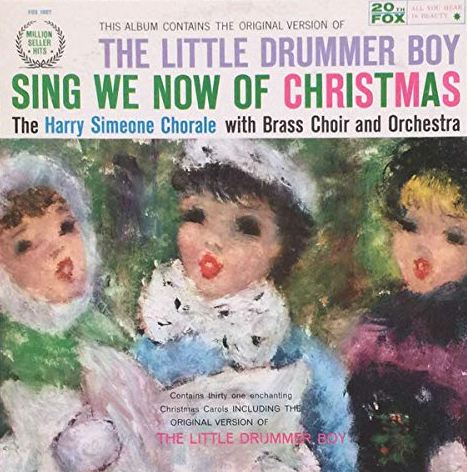
We have so many wonderful Christmas albums, collected for well over half a century, many wonderful, wonderful works reaching from the 21st century back to almost as long as Christmas music has existed.
But the one that most strongly and emotionally says Christmas to me is the Harry Simeone Chorale album, "Sing We Now of Christmas." It was released in 1959 and is my earliest memory of Christmas music. To my great joy, I recently found the album available on YouTube. The cover is a little confusing, because it shows the title as "The Little Drummer Boy," and the image is different. But the songs are the same. This link, Sing We Now of Christmas, will take you to a playlist where you can hear the whole album in order, or return and play your favorites.
I realize that my love of this recording of Christmas songs is wrapped up in the aura of a very happy childhood and all that I loved about the Christmas season, so your mileage may vary. But, as objectively as I can manage, I maintain it's one of the best compilations for telling the story of Christmas coherently through song while including both the old familiar carols and lesser-known songs from more distant times and places.
Although I read all of the original Harry Potter books when they first came out, I saw only a few of the films. Thanks to a friend's gift, however, we've recently been watching the early ones, and I was able to enjoy them thoroughly because it's been so long since I read the books that I can't whine about the differences.
A few days ago we viewed Goblet of Fire for the first time. You can imagine the powerful impact of the following scene. I knew I had to find it online and share it here.
Permalink | Read 1241 times | Comments (0)
Category Reviews: [first] [previous] [next] [newest] Politics: [first] [previous] [next] [newest] Everyday Life: [first] [previous] [next] [newest] Inspiration: [first] [previous] [next] [newest] Here I Stand: [first] [previous] [next] [newest] Heroes: [first] [previous] [next] [newest]
Tom Lehrer didn't quite make it to his 100th birthday, and I'm sure he could have written a song about that.
I discovered him when I was in junior high school, and his album That Was the Year That Was is one of the few records I owned before marriage. I can't say as my parents approved of all of the songs—in retrospect I can see why—but they generally put up with my adolescent idiosyncracies.
Here's a great obituary for Lehrer from The Economist, cleverly interwoven with lines from his multitudinous satirical songs. You can read it for free, but you have to jump through a bunch of hoops that may or may not be worth the trouble. You need to enter, not just the usual name and e-mail address, but also your profession and industry. Worse, you have to fit your life into their limited boxes, which has never been easy for me. "Retired" and "Homemaker" are not options. On the other hand, writing homeschool reports has made me pretty good at stuffing whatever it was we were doing into conventional terminology.
His childhood had been a breeze of maths and music, with a preference for Broadway shows. He entered Harvard at 15 and graduated at 18, the sort of student who brought books of logical puzzles to dinner in hall, and, on the piano in his room, liked to play Rachmaninov with his left hand in one key and his right a semitone lower, making his friends grimace. He seemed bound for a glittering mathematical career, but then the songs erupted, written for friends but spreading by word of mouth, until he was famous. He wrote each one in a trice and performed, increasingly, in night clubs. By contrast his PhD, on the concept of the mode, vaguely occupied him for 15 years before he abandoned it.
Oh fame! Oh accolades! He had toured the world and packed out Carnegie Hall. Yes, they really panted to see a clean-cut Harvard graduate in horn-rimmed glasses pounding at a piano and singing: sometimes stern, sometimes morose, but often joyose, as he twisted in the knife. [Is that a typo for joyous, or a deliberate portmanteau of joyous and morose?]
When he suddenly stopped, and the output dropped, he was presumed dead. No, Tom Lehrer replied. Just having fun commuting between the coasts, teaching maths for a quarter of the year, ie the winter, at the University of California in sunny Santa Cruz, and spending the rest of the time in Cambridge, Massachusetts, being lazy. Never having to shovel snow; never having to see snow. And, being said to be dead, avoiding junk mail.
I wonder how he managed the last. We're still getting junk mail for Porter's father, who has been actually dead for six years.
Did he ever have hopes of extending the frontier of scientific knowledge? Noooooo, unless you counted his Gilbert & Sullivan setting of the entire periodic table. He would rather retract it, if anything. He still taught maths, along with musical theatre, and that was his career. He had never wanted attention from people applauding his singing in the dark. His solitary, strictly private life made him happy; to fame he was indifferent. In 2020 he told everyone they could help themselves to his song rights. As for him, he returned to his puzzle books, as if he had never strayed.
Requiescat in pace, Tom Lehrer. Thanks for all the fun.
Many years ago, when Inspector Morse first aired on PBS, we watched several episodes, and have since enjoyed the whole series, plus the spin-offs Lewis (aka Inspector Lewis) and Endeavour. The stories, especially the more recent ones, often reflect objectionably "Hollywood" values, and there's a tinge of darkness that might not make them good fare for one who is already depressed. But it's hard to have police shows and murder mysteries without darkness, and the series are so very well crafted and acted that even the depressing parts are more like the spices that add depth and flavor to a stew.
And I love the music by composer Barrington Pheloung.
Here's the Morse theme:
The theme for Lewis (aka Inspector Lewis) I didn't find as moving as that for Morse and Endeavour, but it fits the show, which might be my favorite of the three due to Lewis' sidekick James Hathaway (played by Laurence Fox) and their interactions.
Endeavour brings back a variation on the original theme. I love those horns!
I've made no secret of the fact that I don't like the movie Forrest Gump. The era of the late 60's and early 70's was a really weird time for our country (and much of the Western world): uncomfortable, ugly, deranged, disagreeable, void of reason and sense. Quite a bit like the last decade or so, in fact. Watching Forrest Gump brought all that back, and I appreciated neither the reminder nor what I believe was an attempt to whitewash the times.
You'd think I'd have the same reaction to Pirates of Silicon Valley, which I watched recently, since it deals with some of the same era. But I enjoyed it thoroughly. Here's the description from Eric Hunley's Unstructured.
Pirates of Silicon Valley is a 1999 American biographical drama television film directed by Martyn Burke and starring Noah Wyle as Steve Jobs and Anthony Michael Hall as Bill Gates. Spanning the years 1971–1997 and based on Paul Freiberger and Michael Swaine's 1984 book Fire in the Valley: The Making of the Personal Computer, it explores the impact that the rivalry between Jobs (Apple Computer) and Gates (Microsoft) had on the development of the personal computer. The film premiered on TNT on June 20, 1999.
Two things made this a movie I would enjoy watching again. One is that it shows the good, the bad, and the ugly of that era without either oversensationalizing it or making excuses. The Promethean heroes who brought the power of computers to Everyman were severely flawed, but they were still heroes.
Even more than that, I loved the movie because it brought back good memories, especially at the beginning. The early days of computing were messy, but they were also exciting. I still remember sitting in a small room at the University of Rochester's Goler House, listening to Carl Helmers expounding on the wonders of the Apple 1 computer, which he demonstrated using a cassette tape as an input device. Porter and I looked at each other and said, "I want to buy stock in this company!" Unfortunately, Apple was not publicly traded then, and when it did go public, we were out of the loop and missed the IPO of $22/share and the chance to turn $1000 into $2.5 million. (My father did the same thing when he chose to buy our first house instead of investing the money in Haloid, as recommended by a friend who had just visited the company. Haloid later became Xerox.) We didn't get rich, but we did enjoy being on the fringes of the wild-and-woolly frontier.
Permalink | Read 1260 times | Comments (1)
Category Reviews: [first] [previous] [next] [newest] Computing: [first] [previous] [next] [newest] Glimpses of the Past: [first] [previous] [next] [newest] Heroes: [first] [previous] [next] [newest]
Thanks to the very valuable eReaderIQ, I learned that C. S. Lewis's The Screwtape Letters is currently on sale at Amazon for $0.00. You can't beat that price for excellent content, and it also includes Screwtape Proposes a Toast.
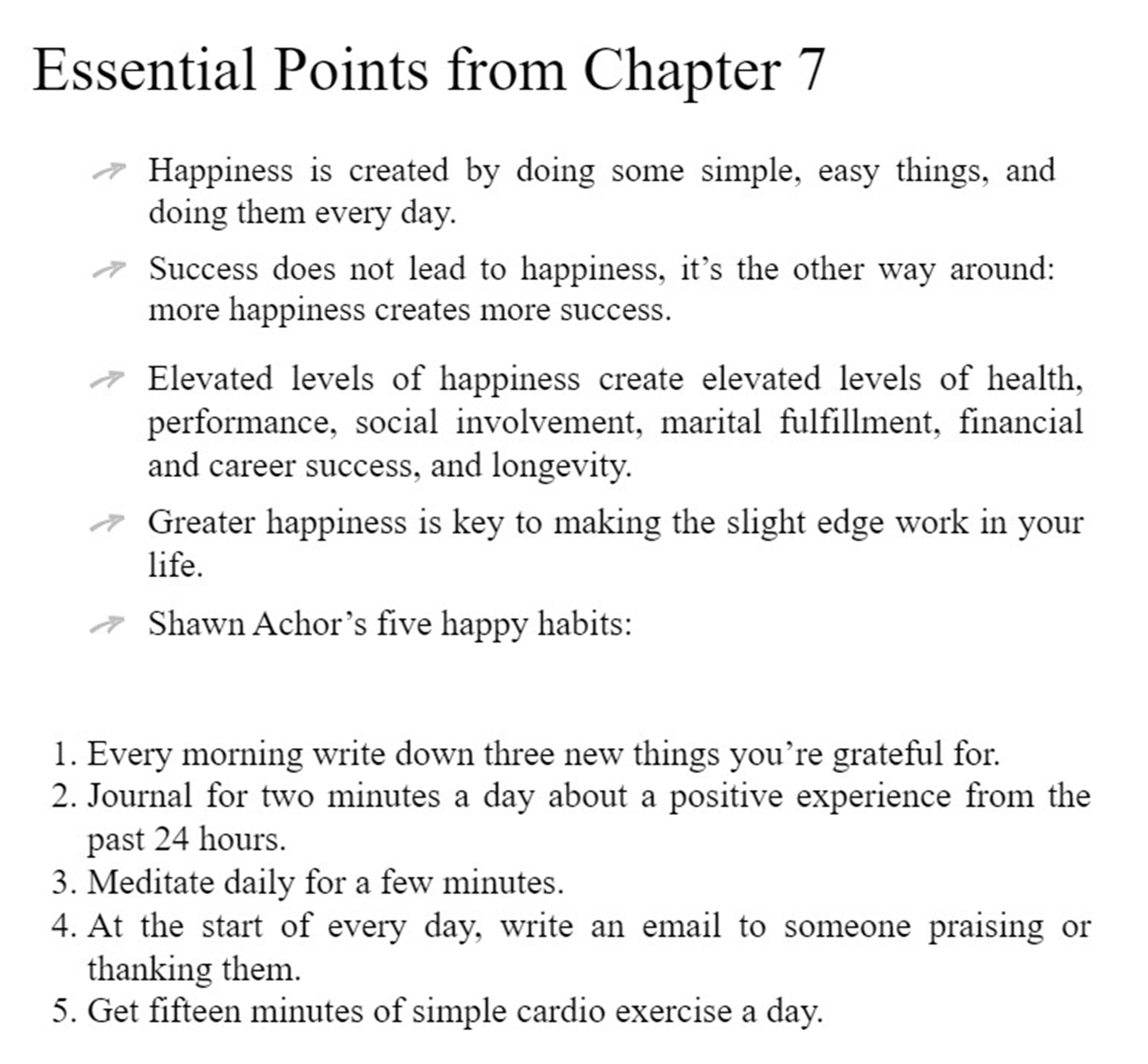
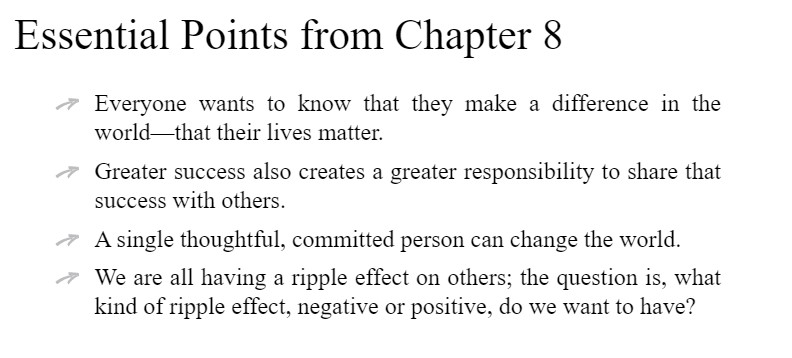
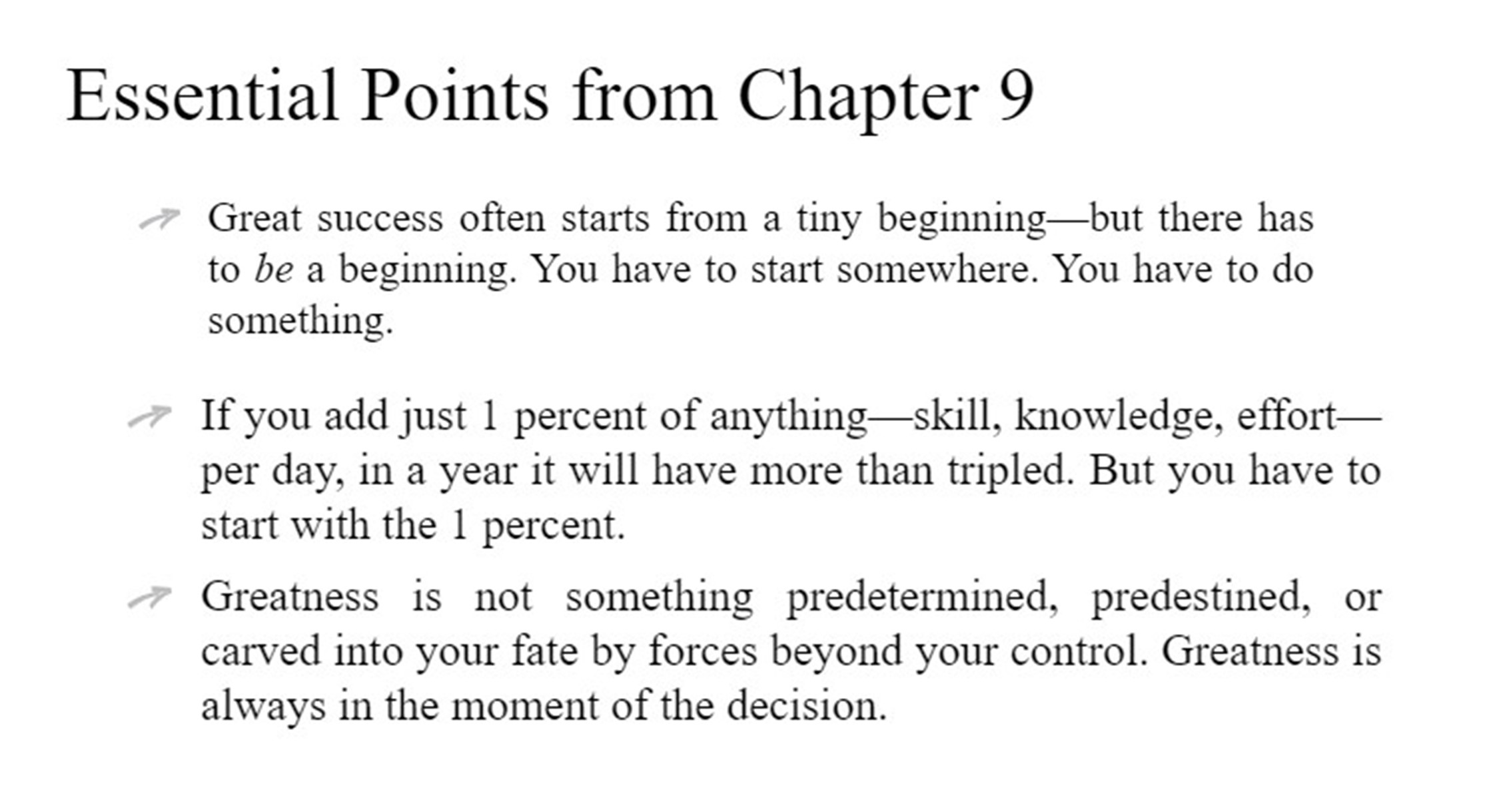
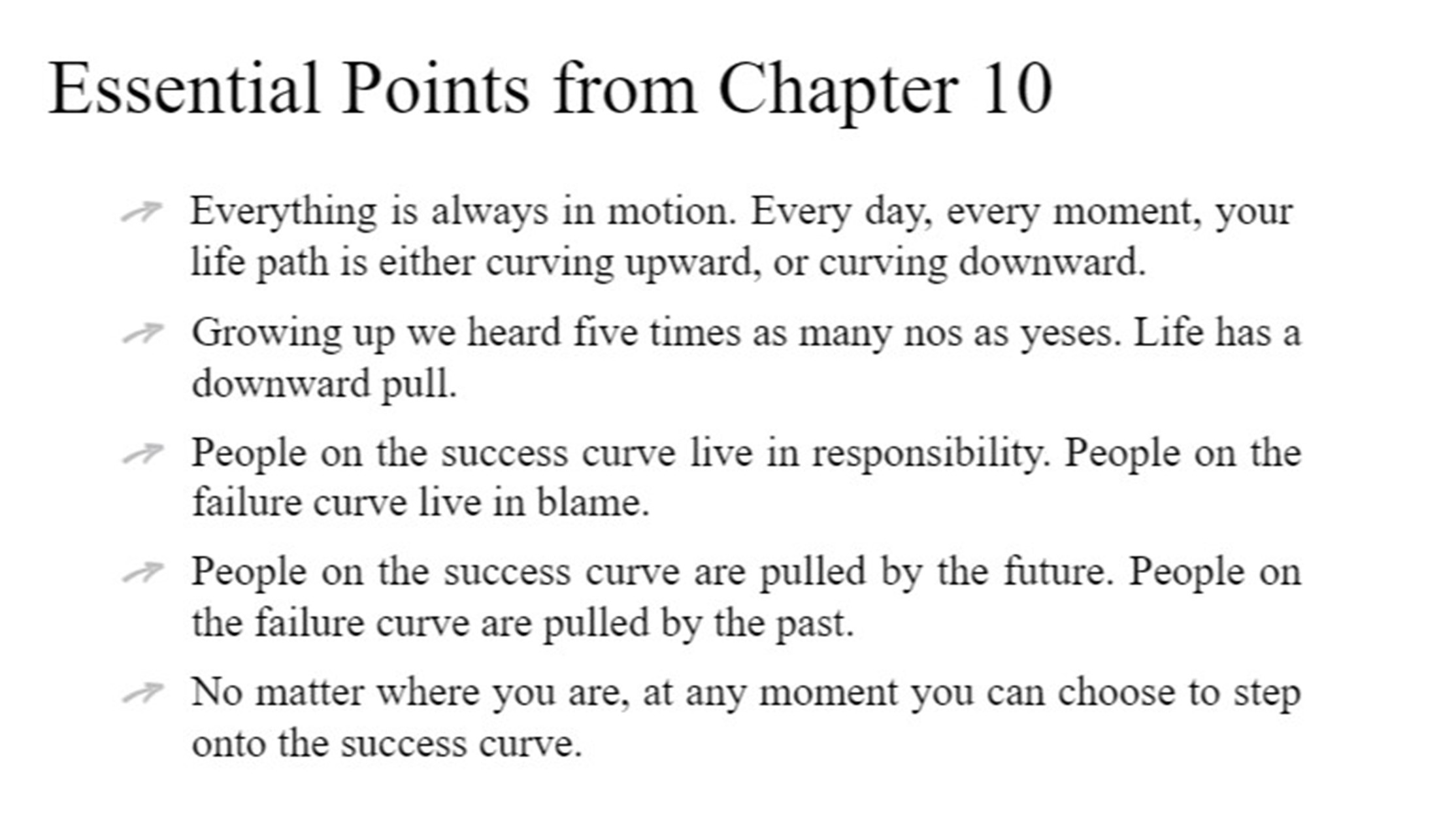
 The Slight Edge: Turning Simple Disciplines into Massive Success and Happiness by Jeff Olson (Greenleaf Book Group, 2013)
The trouble with having a very long "to read" list is that by the time I get around to reading a book, I'm likely to have forgotten who recommended it to me. That's the case with this one. But someone did, and I recently read it.
The Slight Edge is not a book I would necessarily have picked up on my own, especially not after having flipped through it. It has the feel of one of those self-help books that spend a lot of words reiterating things we already know. And really, it could have been a lot shorter; in this, it has the defects of a Presbyterian sermon, only worse.
And yet, it was Martin Luther, I believe, who when asked, "Why do you preach on justification by faith every week?" replied, "Because you forget it every week." Sometimes we need to be reminded of what we already know. And sometimes the 40th repetition finally gets through.
Most of what Jeff Olson says here can be summarized by referring to the ancient story of the rice on the chessboard. You've heard it before: small actions (good or bad), repeated consistently and persistently over time, can result in huge gains (or losses) that can change your life dramatically.
What's the purpose of still another book telling us what we should already know? Is The Slight Edge worth reading for you? I have no idea. It's not great writing, and, as I said, repetitive. But I was able to read it for free thanks to our library, and found it worth the greater cost in time. Sometimes even those of us who don't have that many more squares on our chessboards need reminding of the simplest strategies.
Also, I found the second half much better than the first, as Olson expands his ideas further. I still wouldn't call it good writing, but there are a lot of good ideas there. Even if we've heard them a hundred times before. Martin Luther would understand.
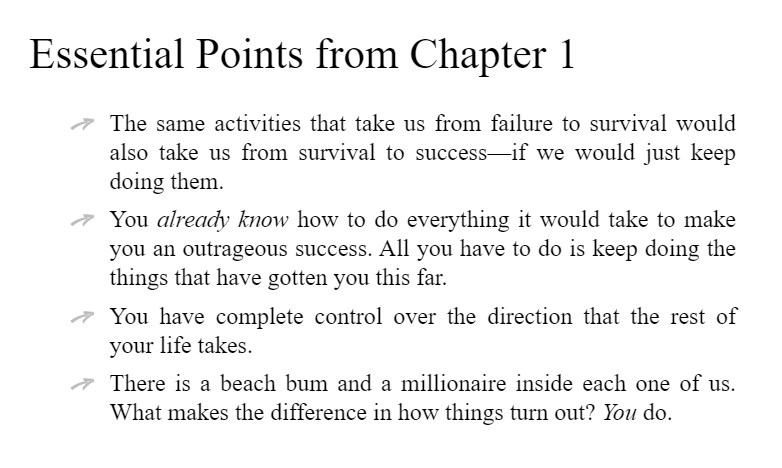
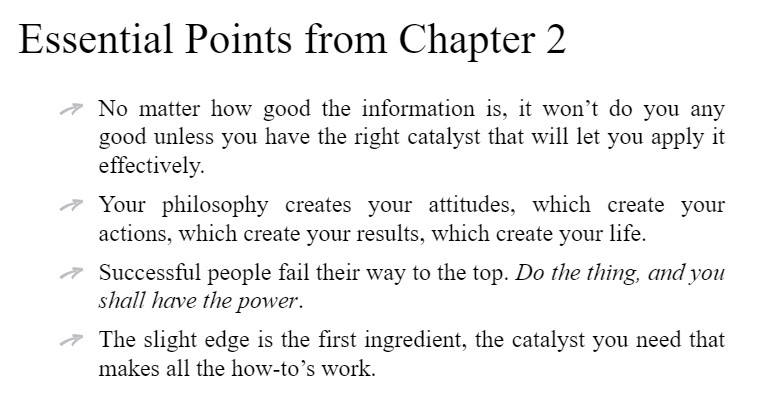
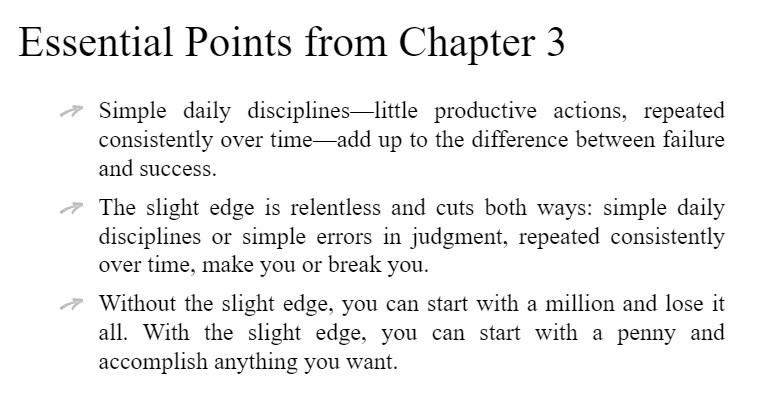
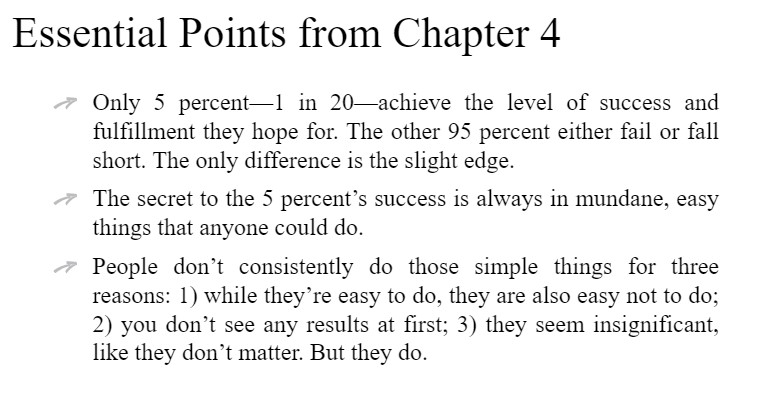
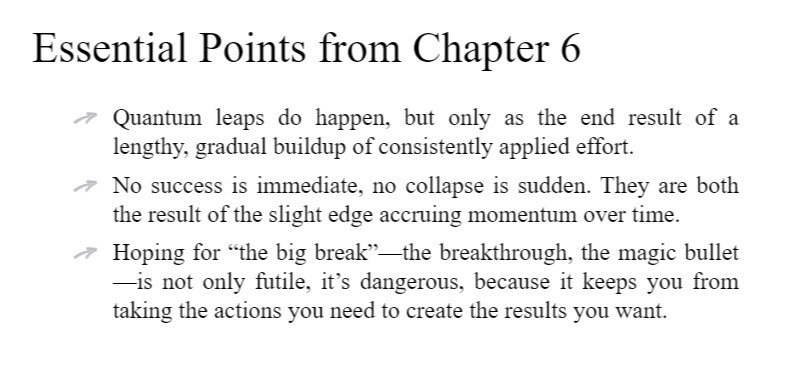
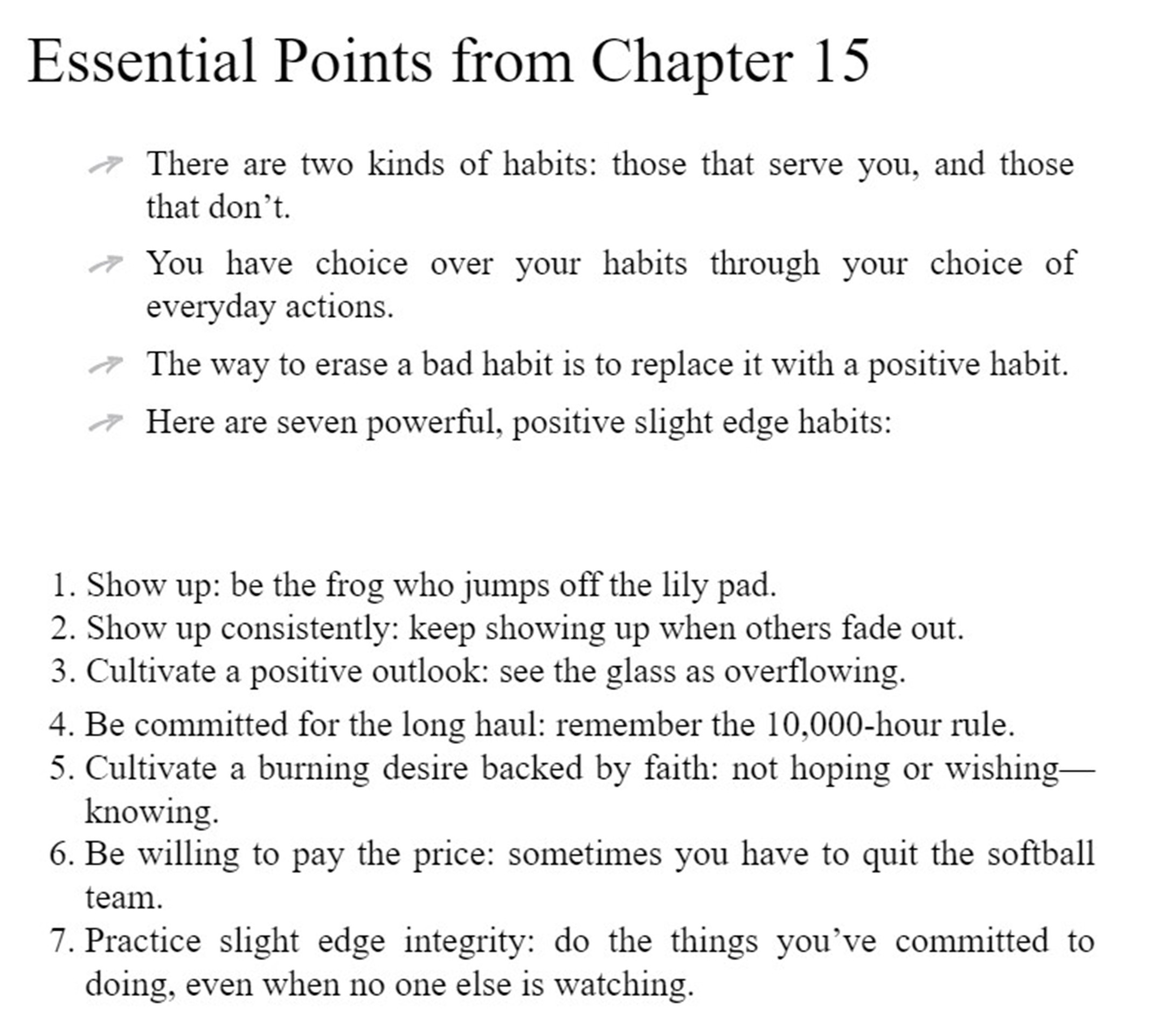
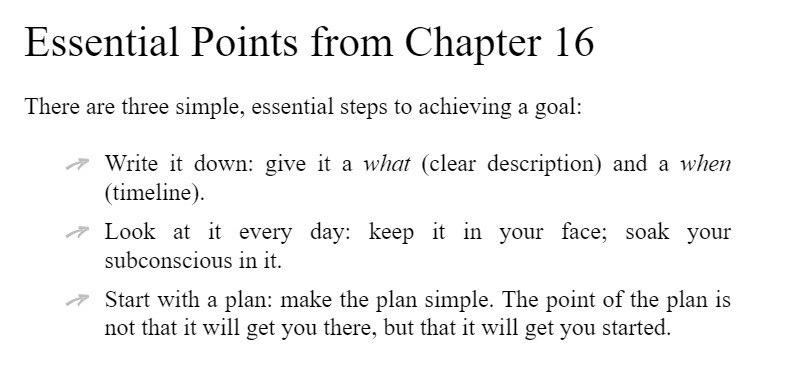
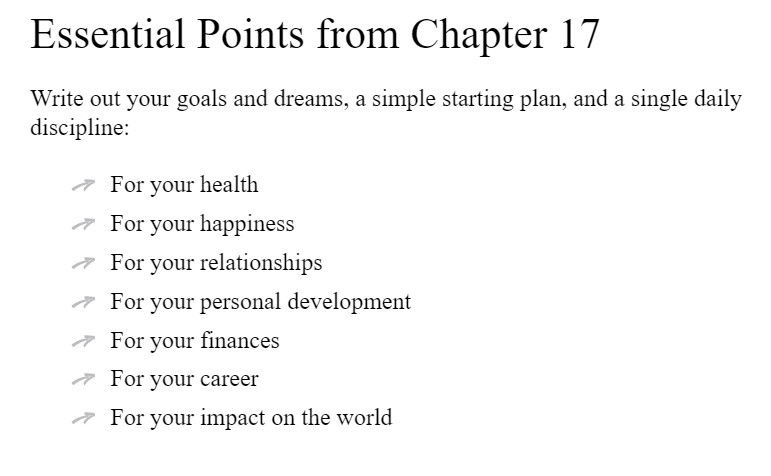
I'll reproduce each of the chapter summaries here. I don't know as they'll mean much to you if you haven't read the book, but they may give you a taste. And if you have read the book (like me) you may find them helpful reminders of what you learned (again). (Click on a page to enlarge it.)
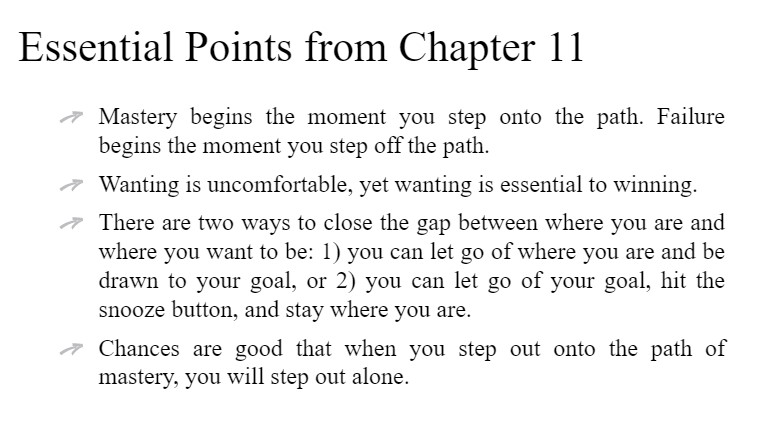
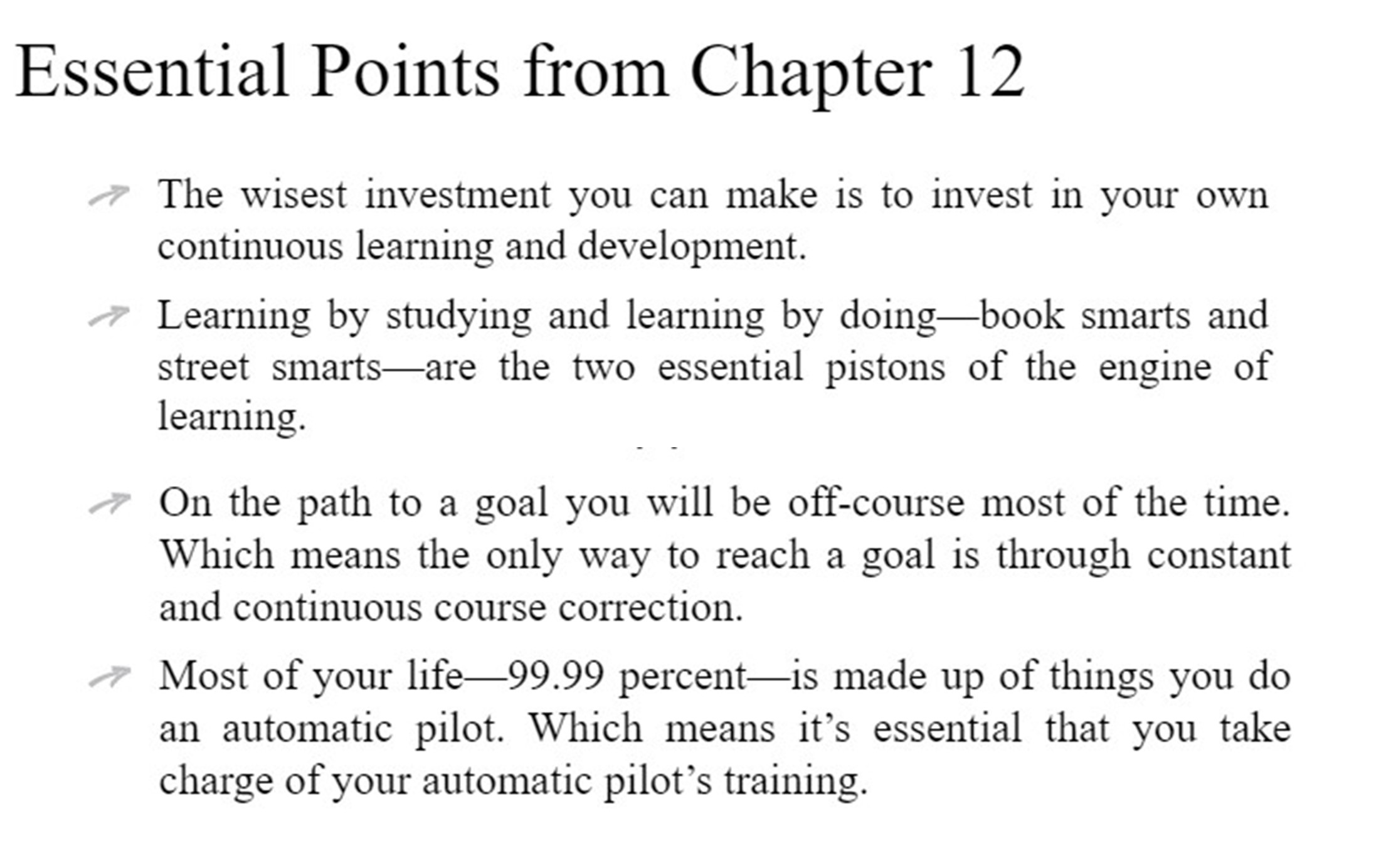
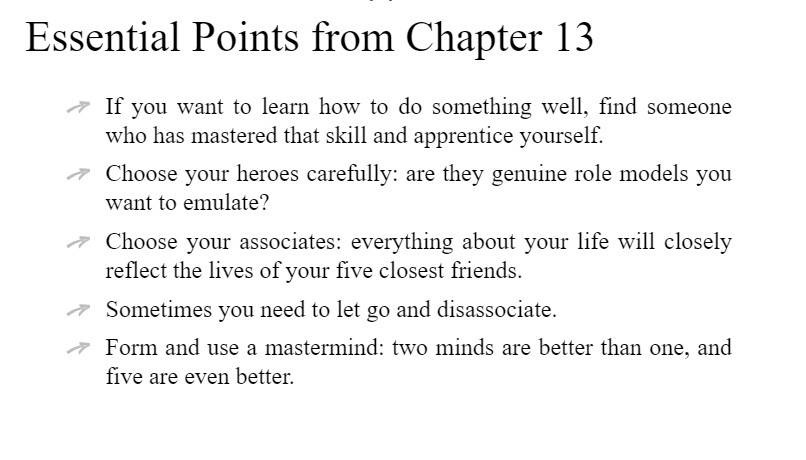
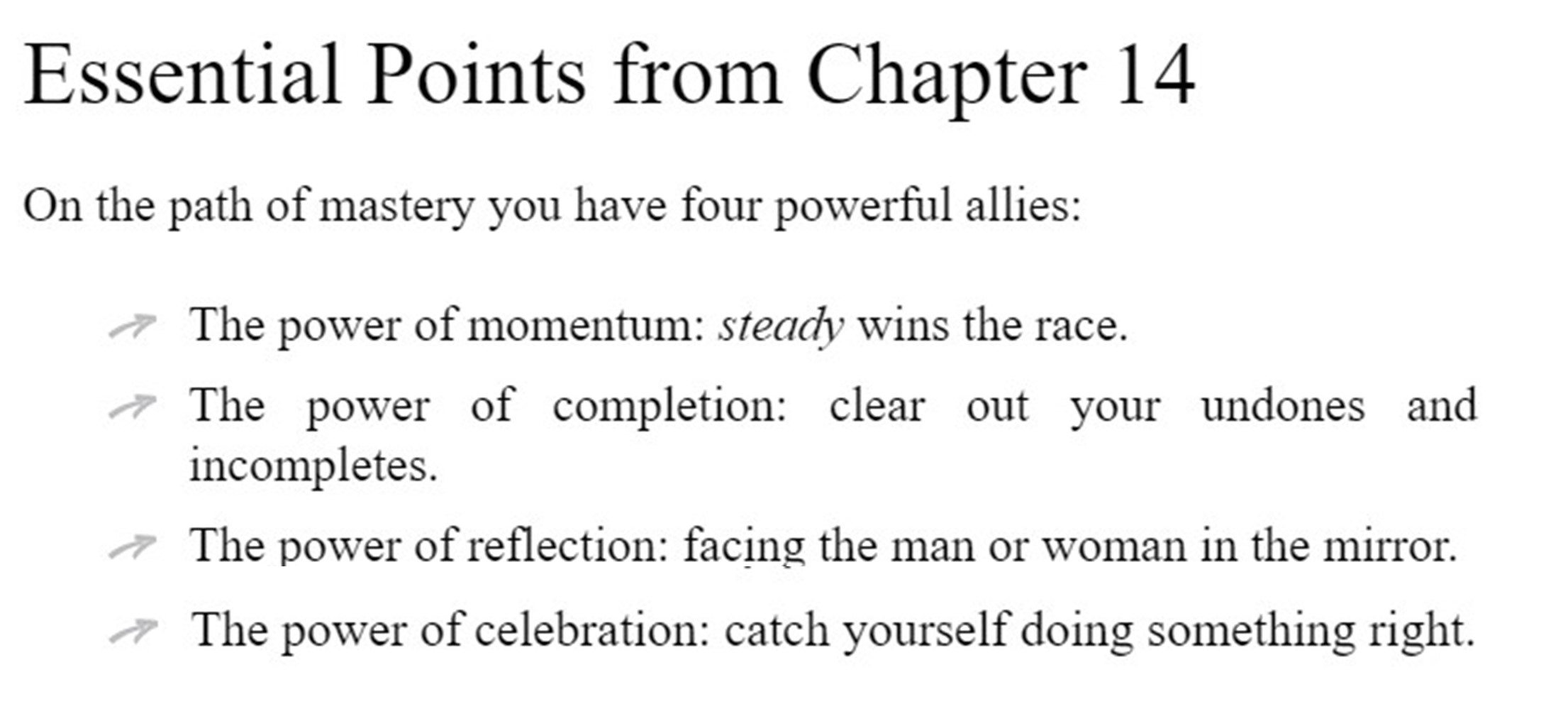
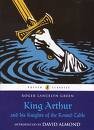
 King Arthur and His Knights of the Round Table by Roger Lancelyn Green (1953)
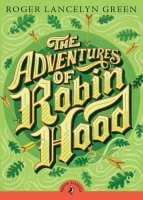
The Adventures of Robin Hood by Roger Lancelyn Green (1956)
Roger Lancelyn Green's assembling and retelling of the stories of King Arthur and of Robin Hood makes me want to read his other collections of ancient tales (e.g. Egyptian, Greek, and Norse); he writes well and provides an excellent introduction to these classic stories. The only negative I would report about these particular editions is that the publisher apparently decided it would be a good idea to append a stomach-turning school-ish section. ("Can you see any similarities between Arthur and modern heroes such as Harry Potter or Luke Skywalker?") Somehow I don't think Green would have approved at all.
One thing I found delightful in both books was recognizing in Green's work echoes of the writing of C. S. Lewis and J. R. R. Tolkien. Not in the sense of copying or imitation, but that they all spring from the same roots.
Another is that these stories of chivalry and idealized behavior make it clear both that heroes are flawed people, and that they are nonetheless heroes.
In the 1950's and early 1960's, when I was young, our hero stories were highly sanitized—and not just those for children. What mattered was the good that was done; negative events and characteristics were largely ignored. Fables are expected to be larger-than-life (think Paul Bunyan), but real people, no matter how amazing, should be, well, real people. It's important to know that God can do extraordinary things with ordinary people—being weak, fallen, broken, and/or stupid is no excuse for not doing the right thing.
Later decades turned the idealized hero narrative 180 degrees. It became de rigueur to take the people we admire and portray them not so much as flawed, but evil; to take delight in showing people at their worst, and pointing out that the good they did might have actually been harmful. This may have been a necessary corrective for a brief time, but it is the worse of the two errors.
Green does not hesitate to admit the flaws, errors, and sins of his characters, but lets their heroic actions shine. It's a good balance.
 Citoyen de la Galaxie by Robert A. Heinlein (original publication 1957, this French edition 2011)
Back in August, I quoted a passage from Robert Heinlein's Citizen of the Galaxy. Inspired by this, and a good deal available for the Kindle version, I decided to reread it—in French.
It was a surprisingly delightful experience.
I had three years of mediocre French classes in high school, and have been working very casually, though consistently, with DuoLingo since I was a beta tester for them back in 2012. I have many frustrations with DuoLingo, but this week I discovered that it has actually given me a lot of French vocabulary and a pretty good feel for grammatical structures. I really enjoyed reading Citoyen de la Galaxie.
Naturally I didn't read it as quickly as the English version, but I surprised myself. My goal had been to work my way through ten pages per day. Instead, I was so caught up in the story that I finished it in just about a week.
It must be admitted that I was not a stranger to the story, which helped enormously. I first read Citizen of the Galaxy when I was in elementary school, and I've reread it several times since. How many times I have no idea, but I know that I last read it in 2017—before that, I don't know, except that it was earlier than 2010, when I began keeping track of the books I read. As I read the French, I was astonished to find the words of the English version coming back to me. Between that, the DuoLingo vocabulary, and occasional help from the Kindle French-English dictionary available at a touch, the reading was easy enough to keep me going.
I would not at all expect the same ease with an unfamiliar book. But the experience was exciting, especially since I would often find myself actually thinking in French for a few minutes after a session of reading.
 I've learned to avoid food items labelled "no sugar added," because that usually does not mean the product is less sweet, but is artificially sweetened. When I picked up this bottle of ketchup, I expected to find sucralose, which I detest, in the ingredient list. I was surprised and pleased to see that the sweetener in this case was not sucralose, but rather stevia.
Ingredients: tomato concentrate from red ripe tomatoes, distilled white vinegar, salt, natural flavoring, stevia leaf extract, onion powder.
I had to laugh at the claim "Sweetness from PLANTS" on the label. Just what do they think sugar cane is, an animal?
But I got over it, and decided to try a bottle.
Much to my surprise, I loved it at first taste, and have so far had no cause to change my mind. It doesn't taste artificial, and has a brighter, fresher taste than regular ketchup. Time will tell, but I may be a convert.
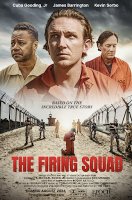 The Firing Squad
The first thing I must say about this movie is that it did everything I asked of it, and did it well.
The temperature and humidity were as bad as anything Florida had to offer, and promised to get worse in the afternoon. The place we were staying in Connecticut has no air conditioning, and the breeze that usually makes hot temperatures bearable if not actually pleasant was not doing well, and promised to be nonexistent at low tide.
One of the first places Willis Carrier introduce his miraculous invention was the movie theatres, to which people flocked for relief from hot city summers. We followed suit, choosing to watch The Firing Squad because we were under the erroneous impression that it was produced by the same folks as the wonderful and moving Sound of Freedom. I wish it had been, because the true story it tells, which made the news all over Asia, never seemed to make any headway here in the West.
It's a powerful, true story that deserves a better movie.
I don't properly appreciate great production values until I see a movie where they're lacking. The story is great, but I confess to cringing through much (though not all) of the movie. There were just too many things that didn't ring true. One of the least important yet most annoying to me was this: How can you have a movie, set in an Indonesian prison, with heat and rain and mud and work details, and whatever inhumane conditions one might expect in such a place—and the prisoners' bright orange uniforms remain clean and pressed throughout? Trivial, perhaps, but it sure struck a discordant note.
Speaking of notes, I did appreciate that when the men were singing Amazing Grace in the chapel service, some of them were off pitch. Now that was realistic.
I also wish the reformed characters showed in the movie some grief and repentence for their heinous crimes. I'll bet the real men did.
Great story, mediocre movie. Only you can decide if you'll put up with the latter for the former. And I must say that movies made outside of the high-budget, Hollywood world are getting better, and that's something. Here's an interview with two of the actors that you might find interesting.
But as I said, The Firing Squad did exactly what I asked of it, providing us with two hours of cool, dry comfort. Definitely worth the price of admission. I suppose we could have gone to the grocery store instead, which was also air conditioned—but that would have cost a whole lot more.

